If you're living in an RV, a tiny cabin, or a bare-bones off-grid structure without a septic system, the question that trips people up isn't "how do I go to the bathroom." It's "where does it actually go after that, and am I about to poison my own well or get fined by the county." That gap between having a toilet and having a legal, safe way to dispose of what comes out of it is where a lot of off-grid setups quietly fail.
This isn't the composting toilet post, and it isn't the outhouse post. If you're building a permanent pit toilet or comparing composting units, we've already covered building a proper off-grid outhouse and how composting toilets actually work. This post is for the messier middle ground: small rigs and cabins that produce actual liquid blackwater (from a cassette toilet, a marine toilet, or a small holding tank) and need somewhere legitimate for it to go when there's no septic field on the property.
Why this is a different problem than a septic system
A conventional septic system works because it has a tank that separates solids from liquids, and a leach field that lets soil bacteria finish the job of breaking down effluent before it reaches groundwater. That combination takes space, the right soil, and a permit. A lot of off-grid parcels don't have any of the three, at least not yet. Steep ground, thin soil over bedrock, a high water table, or a lot too small for a legal setback from a well are all common reasons people end up without a septic system even though they'd prefer one.
Small rigs (travel trailers, teardrops, converted vans, one-room cabins with a cassette or porta-potti style toilet) sidestep the leach field problem by holding waste in a tank instead of releasing it into the ground at all. That solves the environmental problem, but it creates a logistics problem: now you have a tank of blackwater that has to go somewhere, on a schedule, without you getting sick, without the tank overflowing, and without you becoming the reason a stream or a neighbor's well gets contaminated.
The core rule: solids and liquids need different plans
The single biggest sanitation mistake in small off-grid setups is treating blackwater like greywater. Greywater from a sink or shower has soap and food particles but a much lower pathogen load than toilet waste, and some jurisdictions allow it to be released to a mulch basin or gravel bed on your own land (we cover the specifics in our greywater basics guide). Blackwater, meaning anything that's touched toilet waste, carries pathogens that can survive in soil and water for a long time. It needs to either be treated properly or hauled to a facility built to handle it. There is no safe shortcut where you just "let it soak into the ground" the way you might with rinse water from washing dishes.
If your toilet setup is a composting unit, you've already solved most of this, since the liquid and solid fractions are separated and the solid fraction is handled through composting rather than liquid disposal. If you're running any kind of holding tank system (cassette toilet, black tank in an RV, or a small chemical toilet), you're dealing with liquid blackwater disposal, and that's the focus here.
Legal dump stations: your first and best option
The cleanest solution, in every sense of the word, is a legal dump station. These exist specifically so RVs and rigs with holding tanks have somewhere to empty blackwater and greywater into a municipal or commercial sewer system, where it gets treated properly.
A few practical notes on using them well:
Many state rest areas, truck stops, and RV parks offer dump stations, sometimes for a small fee even if you're not staying there. Apps and RV directories list these, and it's worth keeping a running list of the two or three closest to your property.
Bring your own sewer hose and gloves. Shared equipment at a public station is not something you want to rely on for a clean seal.
Rinse your tank with a dedicated tank-rinse wand after dumping, not just a splash of water. Solids that stick to the tank walls are a common reason for that lingering RV toilet smell.
Use enzyme or bacterial tank treatments rather than heavy chemical ones if you're dumping into a municipal system that relies on biological treatment. Ask the receiving facility what it accepts, since biological treatment depends on live bacteria that some chemical additives are meant to suppress.
If you live off-grid full time and a legal dump station is more than a short trip away, the math changes: driving 40 minutes each way to dump a 30-gallon black tank is not something you want to be doing every few days. That's when it's worth looking at reducing how much liquid blackwater you generate in the first place, which usually means reconsidering the toilet, not the dump station.
Portable and pump-out services
In some areas, the same septic pumping companies that empty conventional tanks will also do portable pump-outs for RVs, tiny homes, and off-grid cabins with a holding tank. This is worth a phone call even if you assume your setup is "too small" to bother with. Pricing and availability vary a lot by region and by how rural you are, but for people who are living off-grid full time with a holding tank, a scheduled pump-out every few weeks can be more realistic than repeated trips to a public dump station, especially once you factor in fuel and time.
If you go this route, a few things make the relationship work better:
Make sure your tank has real, accessible plumbing for a pump-out hose, not a jury-rigged connection. This matters both for the tech doing the work and for you if you ever need to sell the property or explain the setup to a county inspector.
Keep a simple log of pump-out dates. It helps you spot when your usage has crept up (more people staying, a leak, etc.) and it's useful documentation if anyone ever asks how you manage waste on unpermitted or minimally permitted structures.
Building your own small treatment setup: when it's worth it, when it isn't
For people who plan to be off-grid for years rather than months, building a small on-site blackwater treatment system, essentially a scaled-down septic tank and mini leach field, sometimes makes more sense than endless hauling. This is a bigger project than it appears, and it's one where cutting corners has real consequences.
A few honest trade-offs:
Even small systems typically need a permit, and for good reason: a badly sited leach field can contaminate a well, a stream, or a neighbor's property. This isn't a place to go rogue. Check with your county's environmental health department before you dig anything. Our post on the permit and paperwork maze walks through how to approach these conversations without getting stonewalled.
Soil matters enormously here. A percolation test (perc test) tells you whether your soil can actually absorb and treat effluent at a safe rate. Sandy loam works well. Heavy clay or bedrock close to the surface often rules out a conventional leach field entirely, which is one more reason to understand your dirt before you commit to a piece of land, something we get into in our soil-before-land-tests piece.
Alternative systems exist for difficult sites: mound systems, aerobic treatment units, sand filters. They cost more and need more maintenance than a standard gravity septic system, but they can make a site workable that would otherwise be a dead end.
If your water table is high or your parcel is small, do not assume you can simply build a smaller version of a standard system. Undersized or badly placed systems fail in ways that are expensive and unpleasant to fix, and they're exactly the kind of thing that shows up as a red flag if you ever sell the property.
Where your well fits into all of this
The single most important number in any off-grid sanitation plan is the distance and the downhill relationship between your waste disposal (pit, tank, leach field, dump point) and your well or spring. Water moves through soil in ways that are easy to underestimate, especially after heavy rain or snowmelt saturates the ground. Most jurisdictions set minimum setback distances for exactly this reason, and those setbacks exist even when they're inconvenient for your site plan.
If you already have a well, it's worth testing your water periodically regardless of how confident you are in your sanitation setup, since a test can detect problems that taste and smell may not reveal. We've got a detailed rundown of what to test for and how often in our guide to testing off-grid water quality.
Living with a small blackwater system day to day
A few habits make holding-tank life considerably less miserable:
Use RV-safe, fast-dissolving toilet paper, or none at all if you're using bags or a cassette system, since paper that breaks down slowly is more likely to hang up in small tank valves.
Add a cup or two of water to the tank after each use if you're running a dry cassette system, so solids don't sit and dry against the tank walls.
Know your tank's real capacity versus its "usable" capacity. Tank sensors can foul and read wrong, so it is safer to plan around time and typical usage rather than trusting the gauge.
If you're sharing the space with kids or aging family members, factor in how tank capacity and dump frequency change with more people in the house. Our post on homeschooling and daily routines off-grid touches on how household size changes the math for off-grid systems, sanitation included.
The bottom line
There's no single right answer for blackwater disposal without a septic system, but there is a wrong answer, and it's improvising. Dumping blackwater into a hole in the ground, a ditch, or "somewhere out back" is restricted under most state onsite sewage rules, and it puts your own water supply and your neighbors' at risk. The legal, low-drama options, public dump stations, scheduled pump-outs, or a properly permitted small treatment system, all take a bit more planning up front than winging it, but they're the difference between off-grid living that's sustainable for years and a setup that quietly turns into a health hazard.
If you're still in the planning stages of your property and haven't nailed down how sanitation fits with your water source, your soil, and your county's rules, it's worth working through those questions before you finalize a build. Our FAQ covers some of the most common early questions people have, and if you want to dig through more on related topics like water storage, greywater, and permitting, the blog index is a good place to browse by subject.
The rest of the shortlist
Recommended off-grid gear
Affiliate disclosure: Some links on this site are affiliate links, including Amazon links: as an Amazon Associate I earn from qualifying purchases. Buying through one costs you nothing extra, and it never changes what I recommend.
Products appear here only when they match this article's subject. Selection is based on documented specs and owner reports, never on compensation; pages with no relevant gear carry none.
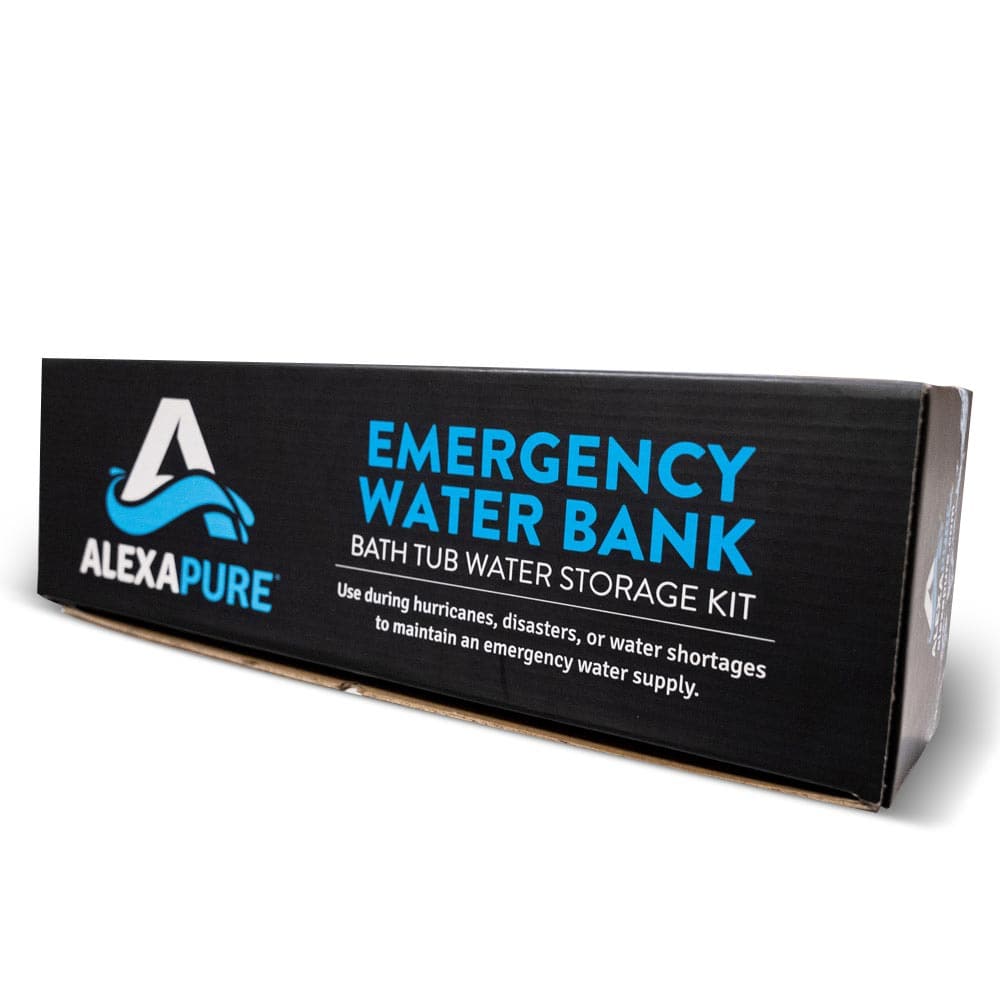
An emergency water bank with hand pump for storing a large volume of water before an outage or storm; check the current spec sheet for capacity details.
Why it's here: Listed because storage is the half of the water problem that filtration does not solve.
The Alexapure emergency water bank sold through Emergency Essentials, for storing a large volume of water before a storm or outage; check the current spec sheet.
Claim audit: 16 consequential claims checked against the article's sources; unsupported wording revised where it could not be substantiated.
Claim-by-claim audit (16 checked)
“A conventional septic system works because it has a tank that separates solids from liquids, and a leach field that lets soil bacteria finish the job of breaking down effluent befo…” (cited → epa.gov)
“Greywater from a sink or shower has soap and food particles but a much lower pathogen load than toilet waste, and some jurisdictions allow it to be released to a mulch basin or gra…” (rewritten to what the article can stand behind)
“Blackwater, meaning anything that's touched toilet waste, carries pathogens that can survive in soil and water for a long time.” (cited → epa.gov)
“If your toilet setup is a composting unit, you've already solved most of this, since the liquid and solid fractions are separated and the solid fraction is handled through composti…” (cited → epa.gov)
“Solids that stick to the tank walls are a common reason for that lingering RV toilet smell.” (rewritten to what the article can stand behind)
“Ask the receiving facility what it accepts, since biological treatment depends on live bacteria that some chemical additives are meant to suppress.” (rewritten to what the article can stand behind)
“Even small systems typically need a permit, and for good reason: a badly sited leach field can contaminate a well, a stream, or a neighbor's property.” (cited → doh.wa.gov)
“A percolation test (perc test) tells you whether your soil can actually absorb and treat effluent at a safe rate.” (cited → epa.gov)
“Heavy clay or bedrock close to the surface often rules out a conventional leach field entirely, which is one more reason to understand your dirt before you commit to a piece of lan…” (cited → epa.gov)
“Alternative systems exist for difficult sites: mound systems, aerobic treatment units, sand filters.” (cited → epa.gov)
“They cost more and need more maintenance than a standard gravity septic system, but they can make a site workable that would otherwise be a dead end.” (cited → epa.gov)
“Most jurisdictions set minimum setback distances for exactly this reason, and those setbacks exist even when they're inconvenient for your site plan.” (cited → doh.wa.gov)
“If you already have a well, it's worth testing your water periodically regardless of how confident you are in your sanitation setup, since a test can detect problems that taste and…” (rewritten to what the article can stand behind)
“Use RV-safe, fast-dissolving toilet paper, or none at all if you're using bags or a cassette system, since paper that breaks down slowly is more likely to hang up in small tank val…” (rewritten to what the article can stand behind)
“Tank sensors can foul and read wrong, so it is safer to plan around time and typical usage rather than trusting the gauge.” (rewritten to what the article can stand behind)
“Dumping blackwater into a hole in the ground, a ditch, or "somewhere out back" is restricted under most state onsite sewage rules, and it puts your own water supply and your neighb…” (rewritten to what the article can stand behind)
Before you go
One useful off-grid email a week.
Practical gear rundowns, honest how-tos, and plain-English guides from someone doing the homework in the open.
I am building a place for off-grid people to swap real answers: a forum by topic, classifieds for gear and services, and real estate for off-grid land and homes. It is new, so the early members shape what it becomes. A free account lets you post in all three.
No ER ten minutes away means you have to be your own triage nurse. Here's how to tell a bad bee sting from the real emergency, and what to actually stock.
In many off-grid disasters, the fire or flood itself isn't the decisive factor, it's the hour you waited too long to leave. Here's how to set real, numeric triggers before you need them.
Tax sale and sheriff's auction land looks like a bargain, but redemption periods, hidden liens, and unseen parcels turn a lot of cheap acreage into an expensive lesson. Here's how to vet a listing before you bid.