Plenty of people planning an off-grid setup spend weeks obsessing over solar arrays and water catchment, then treat wastewater as an afterthought, something to figure out once the sink is already draining onto the ground. That backwards approach is how cabins end up with soggy, smelly dead zones near the kitchen window and, in some counties, how homesteaders end up with a fine.
Greywater is not complicated once you understand what it is and isn't, but it does require some actual planning. This is the honest rundown: what counts as greywater, why it matters, what your real options are, and where people most often get it wrong.
What greywater actually is
Greywater is the wastewater that comes from sinks, showers, bathtubs, and washing machines. It is distinct from blackwater, which is anything that has come into contact with human waste, meaning toilet water and, depending on who you ask, kitchen sink water that carries food particles and grease.
That kitchen sink question matters more than people expect. Some jurisdictions exclude kitchen sink discharge from greywater because of its organic load, fats, and possible pathogens from raw meat or dairy, so check how your rules define it. If you're building a serious system, it's worth treating kitchen water separately or routing it to a different destination than your bathroom greywater.
Laundry water is its own category too. It's generally cleaner than kitchen water but can carry a heavy load of detergent, lint, and whatever was on your clothes (motor oil, garden soil, cleaning chemicals). This is one of the reasons laundry-to-landscape systems are popular: the volume is predictable, it comes in batches you can direct, and it doesn't carry pathogens the way blackwater does.
If you've already gone the route of a composting toilet, you've eliminated your blackwater problem almost entirely, which makes greywater the last major plumbing puzzle on an off-grid property.
Why you can't just let it run onto the ground
A lot of old-timer advice says "just let the sink drain out back," and in some very specific situations (low volume, well-drained soil, distance from any water source) that's roughly what a simple mulch basin does anyway. But there's a real difference between an engineered greywater system and just letting soapy water pool wherever gravity takes it.
The problems with unmanaged discharge:
Standing water breeds mosquitoes and smells bad. Even "clean" greywater goes anaerobic fast once it pools, and anaerobic decomposition is what produces that rotten-egg smell.
Soap and detergent residue builds up in soil. Over months, high-sodium detergents can change soil structure and hurt plants, especially if you're using regular laundry soap instead of a plant-safe, low-sodium, phosphate-free formula.
Pathogen risk is real, even from "clean" sources. Shower water carries skin bacteria; kitchen water can carry foodborne bacteria. It's not sewage, but it's not drinking water either.
It can contaminate your own water supply. If your greywater outlet is uphill or too close to your well, spring, or rain catchment cistern, you risk cross-contaminating the water you're trying to protect. This is the same logic covered in guides on collecting and storing rainwater safely: keeping water sources clean means controlling everything upstream and around them.
It's often against local code. Many counties regulate greywater discharge even on rural, off-grid parcels, particularly if there's any well or surface water nearby. Ignoring this isn't just a legal risk, it's a real health risk for your neighbors downhill.
The three basic approaches
There isn't one "correct" greywater system. What's right depends on your climate, soil, volume of water used, and how much you want to build versus buy.
1. Simple mulch basins (branched drain to landscape)
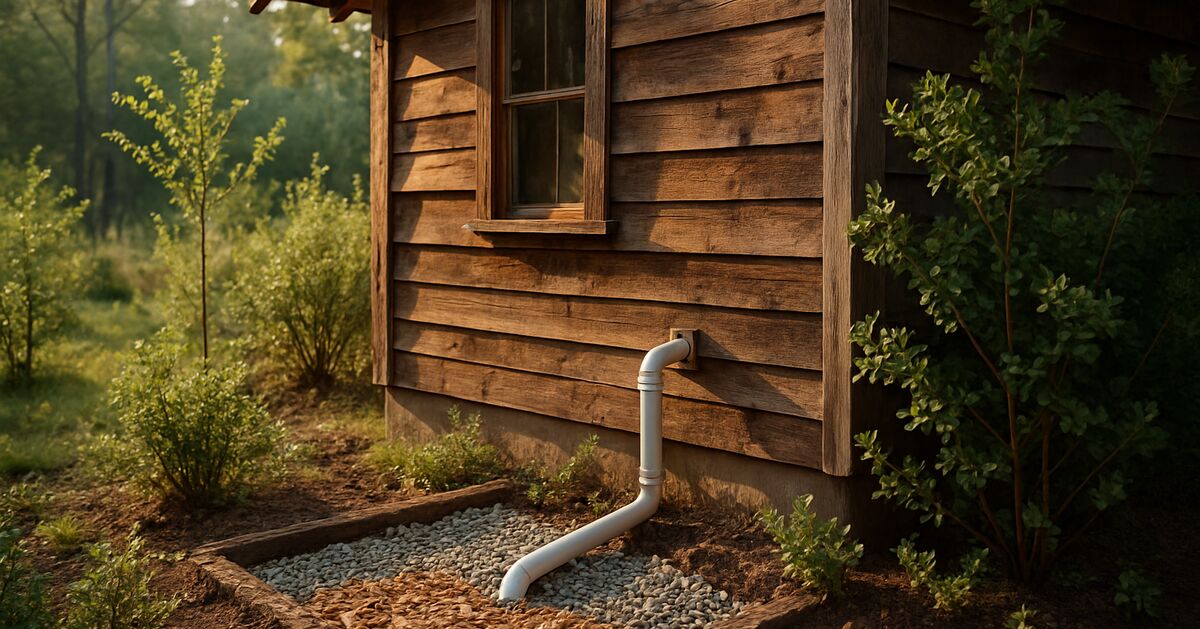
This is the classic laundry-to-landscape or shower-to-landscape setup: a pipe carries greywater from the drain to a shallow mulch-filled basin around trees or shrubs, usually via gravity, sometimes with a small diverter valve so you can switch between the basin and a standard drain.
Pros: cheap, low-tech, no moving parts to fail, and it actually helps plants (soap-free greywater is essentially nutrient-rich water).
Cons: only works for one or two low-volume sources, doesn't handle kitchen water well, and requires you to rotate which basin gets used so you don't oversaturate one spot.
This is the right starting point for a small cabin with one or two fixtures and well-drained soil.
2. Constructed greywater wetlands or infiltration beds
For a homestead with multiple fixtures (kitchen, bath, laundry all producing regular volume), a small constructed wetland or gravel infiltration bed does more work. Water flows into a lined or unlined bed filled with gravel and planted with water-tolerant species (cattails, iris, sedges), which filter and process the water biologically before it infiltrates into the surrounding soil.
Pros: handles higher volume, provides real treatment (not just dispersal), can look intentional and attractive rather than like a wet patch of dirt.
Cons: more construction work, needs a slight grade or a sized footprint, and needs to be planned around freeze depth in cold climates or it can stop functioning in winter.
3. Septic-style leach fields (scaled down)
If you have a full bathroom setup with a flush toilet (not a composting toilet) and real blackwater to deal with, you're likely looking at a conventional septic tank and leach field, sized to your usage, which is a different and much larger project involving percolation tests, permits, and real excavation. This is well outside "basic greywater" territory and is worth budgeting for separately, since costs vary widely with soil conditions and local permitting requirements.
For an off-grid cabin using a composting toilet, though, you can skip the septic tank entirely and focus your engineering effort on the greywater side, which is a much smaller and cheaper problem.
Sizing the system to your actual water use
Before building anything, get honest about how much water you're actually generating. This ties directly into how much water you're using in the first place, the same number that matters for your rainwater catchment planning and your filtration setup.
Rough numbers to work from:
Check your showerhead's rated flow, often printed on the fixture, and multiply by minutes of use to get gallons per shower.
A bathroom sink used for washing hands and brushing teeth adds a small daily amount per person that is worth measuring with a bucket rather than guessing.
A full load of laundry varies widely by machine, so check the manufacturer's water use per cycle for yours.
Kitchen dishwashing volume depends heavily on habits, so measure a few days of dishwater to get your own number.
For one or two people in a cabin, that can add up to 30 to 60 gallons a day of greywater, which is well within what a mulch basin system or small infiltration bed can handle. A larger homestead with a full family and a washing machine running several loads a week needs a bigger footprint, more basins, or a proper constructed wetland.
Absorption capacity depends heavily on soil type, since sandy soil drains far faster than clay, so size the basin from a measured drainage rate rather than a generic figure. If you don't know your soil's drainage rate, a simple perc test (dig a hole, fill it with water, time how fast it drains) tells you more than any online chart.
Soap matters more than people think
The single biggest mistake in DIY greywater systems isn't the plumbing, it's the soap. Many commercial dish soaps, shampoos, and laundry detergents contain sodium, boron, and other additives that can be hard on soil and plant roots when applied repeatedly to the same patch of ground, so check labels.
If you're routing greywater to your landscape, switch to biodegradable, low-sodium, phosphate-free soap and detergent. Look for products explicitly labeled greywater-safe or septic-safe, and avoid anything with "antibacterial" claims, since those chemicals are specifically designed to kill the microbial life your soil (and your greywater system) depends on to function.
This is also where kitchen grease becomes a real problem. Fats and oils poured down a drain solidify in pipes and coat soil particles, blocking the very infiltration you're relying on. Wipe pans before washing, use a grease trap or simple mesh strainer on the kitchen drain, and never treat your greywater system as a garbage disposal.
Winter and freeze considerations
If you're in a climate with real winters, your greywater plumbing needs the same freeze-protection thinking as your fresh water lines. Exposed pipe runs need to be buried below frost line or insulated and possibly heat-traced. Mulch cover insulates the ground somewhat, which can help a basin keep working in mild winters, while constructed wetlands generally treat less effectively once their plants go dormant.
Many off-grid cabins that are only occupied seasonally simply switch to a holding tank in winter and pump it out or haul it away, rather than trying to keep an infiltration system running through frozen ground. If that's your plan, size the tank generously and plan the logistics of hauling before winter arrives, not during the first freeze.
Permits, code, and the legal side
This is the part people skip and shouldn't. Many states have greywater codes that specifically exempt small residential systems under a certain gallons-per-day threshold from requiring a permit, which is genuinely useful for a small cabin. But "small residential exemption" usually comes with conditions: no ponding, a minimum setback from wells and property lines (often 50 to 100 feet from a well, more near surface water), and prohibitions on spraying or direct contact with edible plant parts (subsurface irrigation of fruit trees is usually fine, surface spray on lettuce is not).
Before building anything permanent, it's worth an actual call to your county's environmental health or building department. Off-grid doesn't mean off the books everywhere, and local rules may carry enforcement consequences, so ask your county what applies before you build.
Common mistakes worth avoiding
A few patterns come up again and again in greywater systems that fail or get abandoned within a year:
Undersizing for actual household growth. A system built for one person struggles when three more people move in or visitors start staying for weeks at a time.
No diverter valve. Every greywater line to landscape should have a simple valve that lets you switch back to a standard drain or holding tank, useful during illness (when you don't want sick-person greywater going to plants), heavy detergent use, or winter shutdown.
Routing to a single point instead of rotating. Using the same mulch basin every single day saturates the soil and eventually causes the exact standing-water problem you were trying to avoid. Branched systems with two or three basins let you rotate and rest each spot.
Ignoring the kitchen. People build a nice shower-to-landscape system and then keep dumping bacon grease and dish soap straight into a floor drain, undoing a lot of the benefit.
Skipping the perc test. Building an infiltration system on clay soil without adjusting size or design leads to chronic standing water no matter how well the pipes are laid.
Where to start if you're building from scratch
If this is your first greywater project, start small and simple. A single-fixture laundry-to-landscape or shower-to-landscape system with a diverter valve, a mulch basin, and low-sodium detergent is inexpensive, low-risk, and teaches you how your specific soil and household water use actually behaves before you invest in anything bigger. Expand to a constructed wetland or multi-basin branched system once you understand your real volume and have watched a season of use.
For a broader look at how greywater fits into the rest of an off-grid water setup, the gear guides organized by category are a good next stop, and the full archive of sanitation and water articles covers composting toilets, filtration, and catchment in more depth. If you've got a specific soil, climate, or code question that doesn't fit a general guide, reach out directly; a lot of greywater planning really does come down to local specifics that a generic article can't answer for you.
Greywater management isn't glamorous, but it's one of those systems that quietly determines whether an off-grid property feels sustainable or just feels like camping with extra steps. Get the basics right early, and it becomes one of the least thought-about parts of daily life out there, which is exactly the goal.
Claim audit: 18 consequential claims checked against the article's sources; unsupported wording revised where it could not be substantiated.
Claim-by-claim audit (18 checked)
“Greywater is the wastewater that comes from sinks, showers, bathtubs, and washing machines.” (cited → pubs.nmsu.edu)
“Some jurisdictions exclude kitchen sink discharge from greywater because of its organic load, fats, and possible pathogens from raw meat or dairy, so check how your rules define it…” (rewritten to what the article can stand behind)
“Over months, high-sodium detergents can change soil structure and hurt plants, especially if you're using regular laundry soap instead of a plant-safe, low-sodium, phosphate-free f…” (cited → pubs.nmsu.edu)
“Shower water carries skin bacteria; kitchen water can carry foodborne bacteria.” (cited → doh.wa.gov)
“Many counties regulate greywater discharge even on rural, off-grid parcels, particularly if there's any well or surface water nearby.” (cited → doh.wa.gov)
“If you have a full bathroom setup with a flush toilet (not a composting toilet) and real blackwater to deal with, you're likely looking at a conventional septic tank and leach fiel…” (cited → epa.gov)
“This is well outside "basic greywater" territory and is worth budgeting for separately, since costs vary widely with soil conditions and local permitting requirements.” (rewritten to what the article can stand behind)
“Check your showerhead's rated flow, often printed on the fixture, and multiply by minutes of use to get gallons per shower.” (rewritten to what the article can stand behind)
“A bathroom sink used for washing hands and brushing teeth adds a small daily amount per person that is worth measuring with a bucket rather than guessing.” (rewritten to what the article can stand behind)
“A full load of laundry varies widely by machine, so check the manufacturer's water use per cycle for yours.” (rewritten to what the article can stand behind)
“Kitchen dishwashing volume depends heavily on habits, so measure a few days of dishwater to get your own number.” (rewritten to what the article can stand behind)
“Absorption capacity depends heavily on soil type, since sandy soil drains far faster than clay, so size the basin from a measured drainage rate rather than a generic figure.” (rewritten to what the article can stand behind)
“Many commercial dish soaps, shampoos, and laundry detergents contain sodium, boron, and other additives that can be hard on soil and plant roots when applied repeatedly to the same…” (rewritten to what the article can stand behind)
“Look for products explicitly labeled greywater-safe or septic-safe, and avoid anything with "antibacterial" claims, since those chemicals are specifically designed to kill the micr…” (reasoning shown in the article)
“Many states have greywater codes that specifically exempt small residential systems under a certain gallons-per-day threshold from requiring a permit, which is genuinely useful for…” (cited → doh.wa.gov)
“But "small residential exemption" usually comes with conditions: no ponding, a minimum setback from wells and property lines (often 50 to 100 feet from a well, more near surface wa…” (cited → doh.wa.gov)
“Off-grid doesn't mean off the books everywhere, and local rules may carry enforcement consequences, so ask your county what applies before you build.” (rewritten to what the article can stand behind)
“Mulch cover insulates the ground somewhat, which can help a basin keep working in mild winters, while constructed wetlands generally treat less effectively once their plants go dor…” (rewritten to what the article can stand behind)
Before you go
One useful off-grid email a week.
Practical gear rundowns, honest how-tos, and plain-English guides from someone doing the homework in the open.
I am building a place for off-grid people to swap real answers: a forum by topic, classifieds for gear and services, and real estate for off-grid land and homes. It is new, so the early members shape what it becomes. A free account lets you post in all three.
No ER ten minutes away means you have to be your own triage nurse. Here's how to tell a bad bee sting from the real emergency, and what to actually stock.
In many off-grid disasters, the fire or flood itself isn't the decisive factor, it's the hour you waited too long to leave. Here's how to set real, numeric triggers before you need them.
Tax sale and sheriff's auction land looks like a bargain, but redemption periods, hidden liens, and unseen parcels turn a lot of cheap acreage into an expensive lesson. Here's how to vet a listing before you bid.