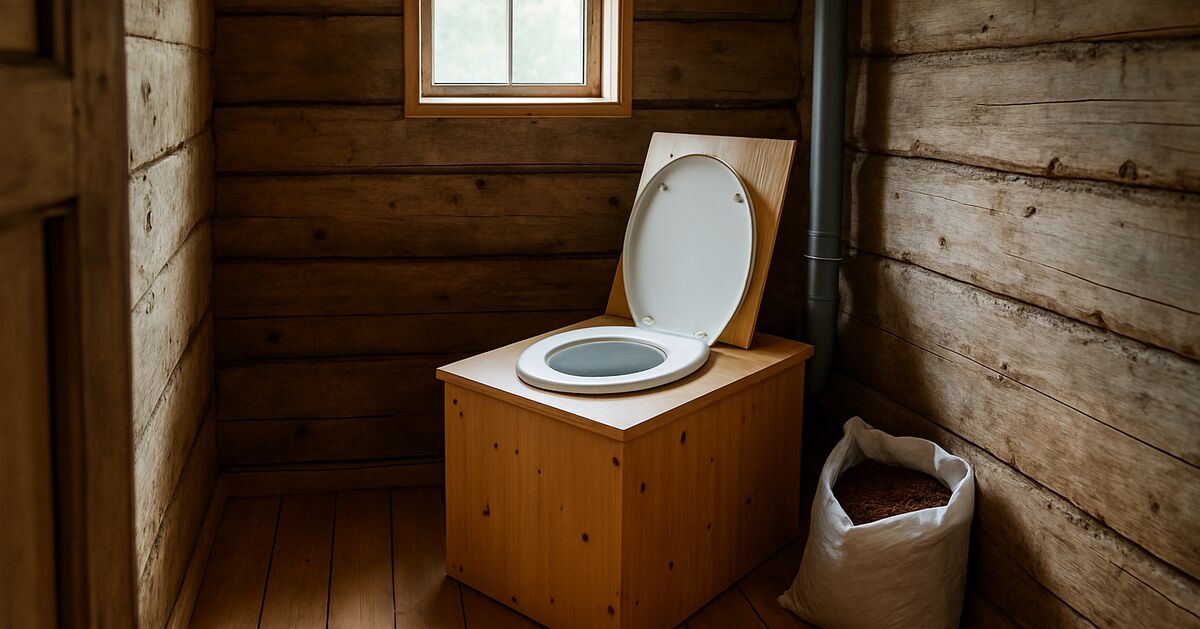
Nobody moves off-grid dreaming about their toilet. But within the first month of living without a septic hookup, you will think about it often, and for good reason. Sanitation is one of the few systems where a mistake doesn't just cost you money, it costs you comfort, health, and possibly a very bad smell in your living space for weeks. Composting toilets are one of the most misunderstood pieces of off-grid infrastructure, mostly because people picture either a smelly outhouse bucket or a magical appliance that turns waste into garden soil overnight. Neither picture is accurate. The real story is more interesting, and more useful.
The basic science: why composting toilets work at all
Human waste is mostly water and nitrogen-rich material. Left alone in a sealed container, it goes anaerobic (without oxygen), and anaerobic decomposition is what produces the classic sewage smell. That's what happens in a poorly maintained pit latrine or a five-gallon bucket left closed too long.
Composting toilets work by doing the opposite: they keep the material aerobic (with oxygen) and manage moisture so that odor-causing bacteria don't take over. Three things make this happen:
Separation of liquids and solids. Urine is the main source of excess moisture and also carries most of the nitrogen that causes ammonia smell. Well-designed composting toilets either divert urine away immediately or evaporate it quickly.
Carbon cover material. Adding a scoop of peat moss, coconut coir, sawdust, or dried leaves after each solid deposit balances the carbon-to-nitrogen ratio, absorbs moisture, and physically covers the material so odor and flies aren't an issue.
Airflow. Most units use a small fan (often 12V, drawing very little power) to vent air out and away from the living space, and to keep the composting chamber aerobic rather than stagnant.
Get those three things right and odor is generally manageable, because the chamber stays aerobic and vented air leaves the room. Get them wrong and you'll know within a day.
The two real categories (ignore the marketing terms)
Composting toilet brands use a lot of proprietary language, but functionally there are only two designs worth understanding.
Self-contained composting toilets
These are single units, everything happens in one chamber. Solids and cover material sit in a bin at the bottom, sometimes with a hand-crank agitator to mix things and speed aerobic breakdown. Urine is separated at the front of the seat and either drains to a small bottle/tank or is diverted outside through a hose.
These are the units commonly pictured: compact, self-contained, often marketed for tiny homes, vans, cabins, and boats. They're popular because they need no plumbing at all beyond an optional urine drain, and they can be installed in an afternoon.
The tradeoff is capacity. Manufacturers typically rate self-contained units for one or two people at a few weeks between solids emptyings, with the urine container needing frequent dumping if it isn't plumbed to a soakaway or greywater system, so check the rating for the model you buy. For a full-time family of four, that math gets rough fast.
Central (remote-chamber) composting systems
These separate the toilet fixture from the composting chamber. You use a normal-looking toilet upstairs, waste drops through a chute to a large composting tank in a basement, crawlspace, or outbuilding below. Because the chamber is much larger, it can hold months of material and often includes a slow rotating drum or tray system so finished compost migrates naturally to a removal tray while newer material continues breaking down above it.
These systems handle far more volume, which is why they are commonly chosen for full-time, multi-person, permanent homes. The tradeoff is upfront complexity: you need vertical space for the chute, a dedicated vent stack (usually powered by a small fan, sometimes with a heating element in cold climates to keep the fan drawing properly), and a real installation, not a weekend project.
What actually goes wrong (and how to avoid it)
Most complaints about composting toilets trace back to a handful of predictable mistakes, not to the technology itself.
Too much liquid in the solids chamber. This is a common cause of odor problems, since a wet chamber goes anaerobic. If urine diversion isn't sealed properly, or if someone (often a guest unfamiliar with the system) uses it like a regular toilet, the chamber gets wet, goes anaerobic, and smells. The fix is consistent urine diversion and, for central systems, occasionally checking that the diverter hasn't cracked or clogged.
Not enough cover material. Skimping on peat moss or coir to save money backfires. The cover material isn't optional decoration, it's doing real chemical work absorbing moisture and balancing nitrogen. Budget for it as a recurring consumable, the same way you'd budget for water filters or propane.
Poor venting. The fan isn't there for comfort, it's mechanically necessary to keep the chamber aerobic and to pull odor molecules outside instead of into the room. A fan on a failing 12V circuit or wired to an undersized battery bank will quietly stop working and you won't notice until the smell shows up. If your composting toilet fan shares a circuit with your solar setup, it's worth understanding your system's real capacity margins, which is the same principle covered in my guide to how much solar you actually need to live off-grid.
Overloading capacity. Every unit has a rated number of "uses per emptying" based on volume, not magic. Buying a unit sized for two people and running it full-time for a family of five means constant emptying and probably incomplete composting, since material gets removed before it's had time to break down.
Cold weather slowdown. Composting is a biological process, and biology slows down in the cold. In freezing climates, chambers in unheated spaces can nearly stop composting in winter. This isn't a defect, it's just chemistry, but it means winter emptying schedules and expectations need to be adjusted, and some central systems add heating elements specifically to address this.
Do you need a permit?
This is the question people skip and then regret skipping. Several states, including Vermont and Washington, publish rules that allow composting toilets under specific conditions, but "allowed" and "permitted without paperwork" are different things. Some counties treat them like any other sanitation system requiring a permit and inspection. Others have no framework at all, which can be either a green light or a bureaucratic dead end depending on the inspector. If you're building new construction or need it to pass a mortgage inspection, check with your local health department before you buy anything. This is genuinely one of the few areas of off-grid living where skipping the paperwork can bite you later, especially at resale.
What about the finished compost?
Here's an honest point that marketing tends to gloss over: material from a composting toilet, even fully broken down, is not the same as finished garden compost from a kitchen-scraps bin. Human waste can carry pathogens that survive incomplete composting, and some state guidance restricts where finished material may be used or requires further treatment before any land application, so read your own state's rules. Some jurisdictions require it be treated as solid waste and disposed of, not used at all. This varies enough by location that a blanket "just compost it and use it on your tomatoes" answer would be irresponsible. Treat the finished material with the same caution you'd want your own health department to require, and check local rules specifically for humanure use before doing anything with it.
So which type is actually worth it?
The honest answer depends heavily on how many people are using it and how permanent the setup is.
For a single person, a couple, or intermittent use (cabin, van, boat): A quality self-contained unit with a good urine-diverting seat is usually worth the cost. The installation simplicity outweighs the more frequent emptying, especially if you're not living there full-time. Look for units with a sealed urine diversion system and a genuinely quiet fan, since a loud fan is a common regret people don't anticipate before buying.
For a full-time family in a permanent home: A central system is the better long-term investment despite the higher upfront cost and installation complexity. The larger chamber volume means less frequent emptying, and the rotating tray or drum designs handle continuous, heavy use far better than a small self-contained bin ever could. Trying to run a family of four on a compact self-contained unit usually ends in frustration and someone emptying a bin every few days, which gets old fast.
For anyone testing the waters before committing: it's reasonable to start with a smaller self-contained unit even in a permanent home, live with it for a season, and upgrade to a central system once you understand your household's actual usage patterns. This avoids overspending on a large installation before you know if composting sanitation fits your life at all. My start here gear guide breaks down specific unit recommendations by household size if you want a starting point rather than researching every brand from scratch.
The real cost picture
Self-contained units span a wide price range, from basic manual models to larger-capacity units with better fans, so compare current listed prices before budgeting. Central systems cost considerably more once you add the tank, chute, ducting, and any heating elements for cold climates, often landing in the low thousands installed, sometimes more depending on how much carpentry and ductwork the space requires. Cover material (peat moss or coir) is a small but real ongoing cost, usually a modest amount per month depending on household size.
Compare that to a conventional septic system, where installation cost varies widely with soil conditions and permitting, and composting toilets can look cost-effective on land where poor percolation or rocky terrain makes a standard septic field difficult to install.
How it fits into the rest of your off-grid systems
Sanitation is one of those systems that rewards research before purchase. A bad solar decision costs you money and inconvenience. A bad sanitation decision costs you the ability to comfortably live in your own home. Take the time to size the system correctly, understand your local rules, and budget honestly for the ongoing consumables, and a composting toilet can genuinely be one of the more freeing pieces of off-grid infrastructure you own, no septic truck, no leach field failures, no dependence on a system buried in your yard that you can't see or easily fix.
If you're still deciding what fits your specific situation, browse my broader sanitation and gear coverage on the blog, or reach out through my contact page with your specific setup questions. I'm also happy to point you toward more background on how this publication approaches these topics on my about page.
Claim audit: 11 consequential claims checked against the article's sources; unsupported wording revised where it could not be substantiated.
Claim-by-claim audit (11 checked)
“Left alone in a sealed container, it goes anaerobic (without oxygen), and anaerobic decomposition is what produces the classic sewage smell.” (reasoning shown in the article)
“Manufacturers typically rate self-contained units for one or two people at a few weeks between solids emptyings, with the urine container needing frequent dumping if it isn't plumb…” (rewritten to what the article can stand behind)
“Get those three things right and odor is generally manageable, because the chamber stays aerobic and vented air leaves the room.” (rewritten to what the article can stand behind)
“These systems handle far more volume, which is why they are commonly chosen for full-time, multi-person, permanent homes.” (rewritten to what the article can stand behind)
“This is a common cause of odor problems, since a wet chamber goes anaerobic.” (rewritten to what the article can stand behind)
“Some counties treat them like any other sanitation system requiring a permit and inspection.” (cited → dec.vermont.gov)
“Several states, including Vermont and Washington, publish rules that allow composting toilets under specific conditions, but "allowed" and "permitted without paperwork" are differe…” (rewritten to what the article can stand behind)
“Human waste can carry pathogens that survive incomplete composting, and some state guidance restricts where finished material may be used or requires further treatment before any l…” (rewritten to what the article can stand behind)
“Some jurisdictions require it be treated as solid waste and disposed of, not used at all.” (cited → dec.vermont.gov)
“Self-contained units span a wide price range, from basic manual models to larger-capacity units with better fans, so compare current listed prices before budgeting.” (rewritten to what the article can stand behind)
“Compare that to a conventional septic system, where installation cost varies widely with soil conditions and permitting, and composting toilets can look cost-effective on land wher…” (rewritten to what the article can stand behind)
Before you go
One useful off-grid email a week.
Practical gear rundowns, honest how-tos, and plain-English guides from someone doing the homework in the open.
I am building a place for off-grid people to swap real answers: a forum by topic, classifieds for gear and services, and real estate for off-grid land and homes. It is new, so the early members shape what it becomes. A free account lets you post in all three.
No ER ten minutes away means you have to be your own triage nurse. Here's how to tell a bad bee sting from the real emergency, and what to actually stock.
In many off-grid disasters, the fire or flood itself isn't the decisive factor, it's the hour you waited too long to leave. Here's how to set real, numeric triggers before you need them.
Tax sale and sheriff's auction land looks like a bargain, but redemption periods, hidden liens, and unseen parcels turn a lot of cheap acreage into an expensive lesson. Here's how to vet a listing before you bid.