A power station that fits under your kitchen table and a solar array bolted to your roof with a wall of batteries in the shed are not two versions of the same product. They are different tools built for different problems, and one of the easiest mistakes when going off-grid is buying the wrong one for the life you actually live.
This isn't a "which is better" question. It's a "which is better for you, right now, at this stage of your homestead" question. Let's work through it honestly.
What a portable power station actually is
A portable power station is a battery, an inverter, a charge controller, and a set of outlets, all packaged into one box you can carry with one hand (or two, for the bigger ones). You charge it from a wall outlet, a car's 12-volt port, or a folding solar panel, and then you plug things into it directly. No electrician, no permits, no rewiring your house.
They range from small units that will keep your phone and a headlamp going for a weekend, up to larger models with 2,000 to 3,000+ watt-hours of capacity that can run a mini-fridge, a CPAP machine, a laptop, and some lighting for a day or two between charges. Some of the larger units on the market now support expansion batteries, letting you daisy-chain extra capacity without buying a whole new unit.
What they're genuinely good at:
Backup power during a grid outage, for lights, phones, medical devices, and the fridge
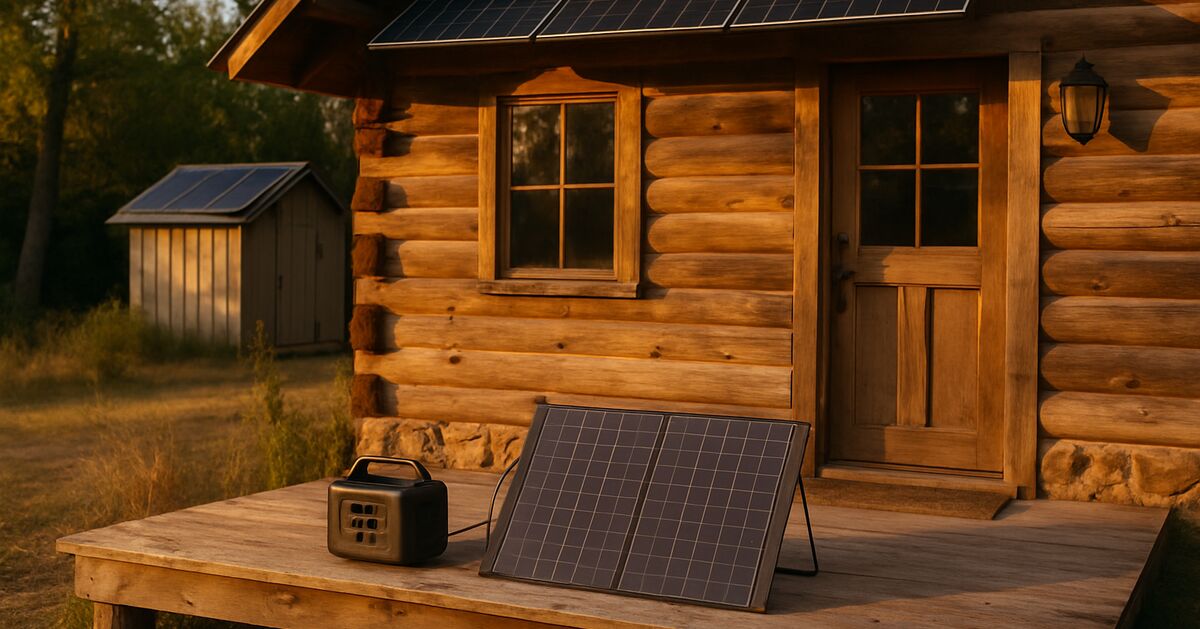
Powering a cabin, van, or RV where a hardwired system isn't practical or allowed
Running tools or small appliances at a job site or remote camp
A first step into solar for someone who isn't ready to commit to a whole-property build
What they are not good at:
Running a well pump, electric water heater, or central air conditioner
Providing power indefinitely without a lot of babysitting and recharging
Scaling cheaply. Compare the price per watt-hour of stacked units and expansion batteries against a purpose-built system before you commit, since packaged units include an inverter and case in every purchase.
What a full solar and battery system actually is
A whole-property system is built in place. It has roof-mount or ground-mount solar panels, a charge controller, an inverter (often a hybrid inverter that can also manage grid or generator input), a battery bank, and wiring that ties into your home's electrical panel, either as a full off-grid setup or as backup for specific circuits.
This is infrastructure, not an appliance. It's usually designed by sizing your actual daily energy use in kilowatt-hours, sizing panel capacity to your location's sun hours, and sizing battery storage to cover your typical use through a night and a few cloudy days. If you haven't done that math yet, my guide on how much solar you actually need to live off-grid walks through the calculation in plain terms, and it's worth doing before you spend a dollar on either path.
What a full system is good at:
Running your whole house: pump, fridge, washer, HVAC, everything, continuously
Recharging every day from the sun without you doing anything
Lasting decades with proper maintenance (panels are often rated for 20-25 years, and quality lithium batteries can last a decade or more with reasonable cycling)
Scaling to genuinely large loads if sized correctly from the start
What it is not good at:
Being cheap or fast. This is a project measured in weeks of planning and thousands of dollars, not a box that arrives on your porch
Being portable or reversible. Once it's installed, it's part of the building
Forgiving bad sizing. Undersize the battery bank or panel array and you'll be running a generator constantly to make up the gap
The honest cost picture
Prices move a lot based on brand, capacity, and how much of the labor you do yourself, but here's the realistic range.
Portable power stations are sold across a wide range, from small units good for phones and lights to large units with a few kWh of capacity and 2,000+ watts of continuous output, so check current listed prices before budgeting. Add solar panels to charge them off-grid and you're adding another $200 to $800 depending on wattage. For many people, a station plus a couple of folding panels lands somewhere between $800 and $2,500 total, ready to use the same day it arrives.
Full solar and battery systems vary enormously depending on whether you're supplementing a grid-tied home, building a backup system for a few critical circuits, or going fully off-grid. A modest cabin system is a several-thousand-dollar project, and current installer quotes are the only reliable number. A whole-house off-grid setup sized to run a well pump, fridge, and normal household loads through the year, with several days of battery reserve, costs substantially more, because you are paying for the battery bank, inverter, mounting, wiring, and if you hire it out, labor. Doing your own installation, where local codes and your own skill level allow it, can cut a meaningful chunk of that, but battery and panel hardware costs are largely fixed regardless of who does the labor.
The factors that move the price most: how many kilowatt-hours you use per day, how many days of battery autonomy you want, whether you're in a high-sun or low-sun region, and whether you're paying someone to design and install it versus doing it yourself.
Questions that actually decide this for you
Skip the marketing and ask yourself these instead.
Is this a full-time home or a part-time retreat? If you're at the property occasionally, a portable station recharged by folding panels may cover everything you need without ever touching a breaker panel. Full systems make more sense once you're living somewhere daily and need it to just work, automatically, without you thinking about it.
What's your actual daily energy use? Add up your fridge, lights, laptop, water pump, and anything else that draws power over 24 hours. If it's under 1-2 kWh a day, a couple of portable stations can realistically cover you, especially with clear sun for recharging. If you're well above that, especially with a well pump or electric heat, you're in full-system territory.
Do you need power for hours, or forever? Portable stations answer "get me through this outage or this weekend." Full systems answer "I never think about where my electricity comes from again." Be honest about which question you're actually asking.
What's your budget and your patience for a project? A power station is a weekend decision. A full system is a multi-week project involving research, possibly permits, and coordinating an installer or teaching yourself electrical work you've never done before. Both are valid, but they demand very different amounts of your time and attention.
Could you use both? This is an answer plenty of homesteaders land on instead of either extreme. A full system handles daily house loads, while one or two portable stations serve as a mobile power source for the barn, a job site, or a true grid-down emergency where your main system is damaged or your battery bank is drained after days of clouds. Redundancy matters more in an off-grid life than it does anywhere else, because there's no utility company to call when something fails.
The middle path most people actually take
Jumping straight to a whole-house system on day one is a big bet, and a single portable station often stops being enough as loads grow. A realistic path looks like this: start with a portable power station and a couple of solar panels to learn how much energy you actually use and how solar behaves through cloudy stretches and winter months. That real-world data, not a guess, is what makes a full system sizing correct the first time instead of after an expensive redo.
From there, many people expand into a small fixed system covering critical circuits (fridge, well pump, some lighting), and grow the battery bank and panel array over a year or two as budget allows. Solar componentry is modular by design. You can add panels and batteries later, as long as your charge controller and inverter were sized with room to grow, which is a detail worth specifying up front with any installer or online build kit.
If you're just starting to sort out what gear actually matters, my gear guides organized by category are built for exactly this stage, comparing real components instead of just brand names. And if you want to go deeper on any part of this decision, from batteries to inverters to panel types, my full archive at the blog covers each of those in detail.
Common mistakes to avoid
A few patterns come up again and again in off-grid forums and in the returns bin.
Buying a portable station for a job it can't do. These units are not sized for well pumps, space heaters, or air conditioners. Check the continuous watt rating, not just the watt-hour capacity, before assuming it'll run something.
Undersizing a full system's battery bank to save money. A system that can't get you through three cloudy days back to back means falling back on a generator, which erodes the whole point of going solar.
Ignoring winter sun hours. A system sized around summer sun will come up short in December and January in most northern latitudes. Size for your worst realistic month, not your best one.
Skipping the load calculation entirely. Whether you're buying a $300 power station or a $40,000 system, know your actual daily kilowatt-hour use first. Guessing leads to buying twice.
Assuming portable means disposable. Manufacturers rate lithium power stations for a set number of cycles, so check that rating and treat the unit accordingly. Treat it like the piece of infrastructure it is, not a gadget.
The bottom line
A portable power station is the right call when your need is occasional, your loads are modest, and you want something you can set up today with no wiring and no permits. A full solar and battery system is the right call when you're living somewhere full time, your loads are real (pumps, fridges, heat), and you want power that shows up automatically every morning without you managing it.
Off-grid households often end up owning some version of both, because redundancy is not a luxury out here, it's the plan for what happens when the main system needs a break. Whichever you start with, do the energy math first, buy for the load you actually have rather than the one you imagine, and leave room to grow. If you have specific questions about sizing your situation, my contact page is open, and you can read more about how this publication approaches these decisions on my about page.
Going off-grid isn't a single purchase, it's a series of right-sized decisions made over time. Getting this one right, portable versus permanent, saves you from the two most expensive mistakes in this hobby: buying too little power and having to redo it, or buying too much infrastructure before you know what you actually need.
The rest of the shortlist
Recommended off-grid gear
Affiliate disclosure: Some links on this site are affiliate links, including Amazon links: as an Amazon Associate I earn from qualifying purchases. Buying through one costs you nothing extra, and it never changes what I recommend.
Products appear here only when they match this article's subject. Selection is based on documented specs and owner reports, never on compensation; pages with no relevant gear carry none.
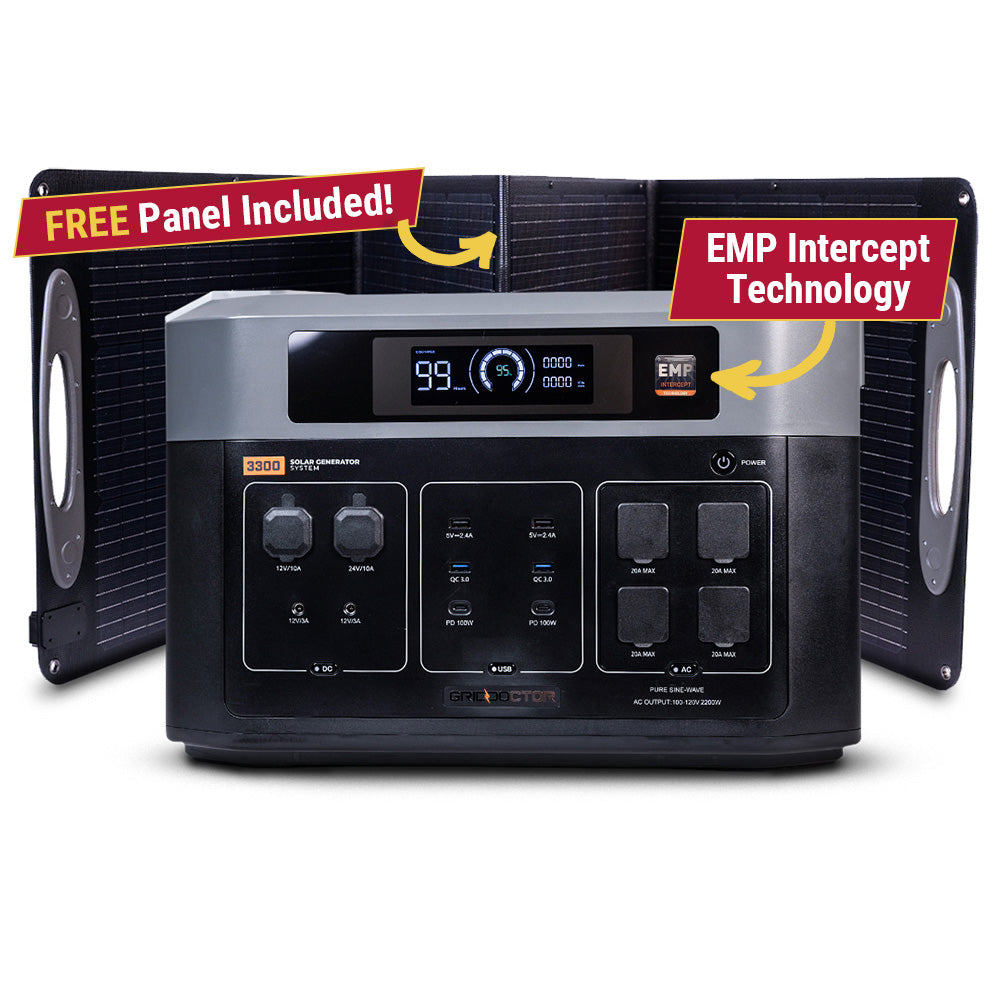
The Grid Doctor 3300 solar generator system sold with EMP shielding, a large portable power station for home backup and off-grid use; check the current spec sheet for details.
Why it's here: Listed with its EMP shielding as a stated feature, not a verified one. Judge it on the power specs first.
The Grid Doctor 3300-watt EMP-shielded solar generator sold through Emergency Essentials, a large power station for home backup and off-grid use; check the current spec sheet.
Why it's here: Listed through a second retailer so availability and pricing on this unit are not down to one storefront.
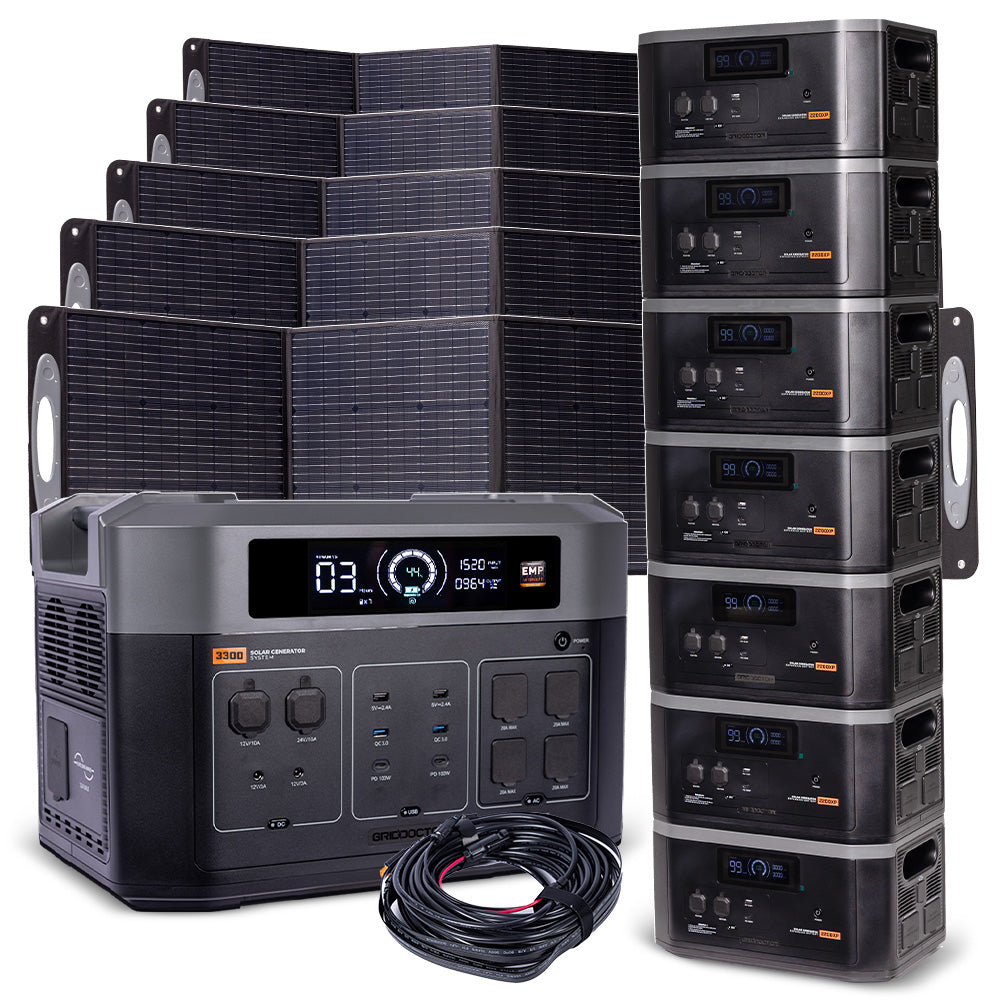
The Grid Doctor 3300 Power Tower, a large portable power station for home backup and off-grid systems; check the current spec sheet for capacity and output details.
Why it's here: Listed so form factor is part of the decision: this capacity class in a shape that stands rather than sits.
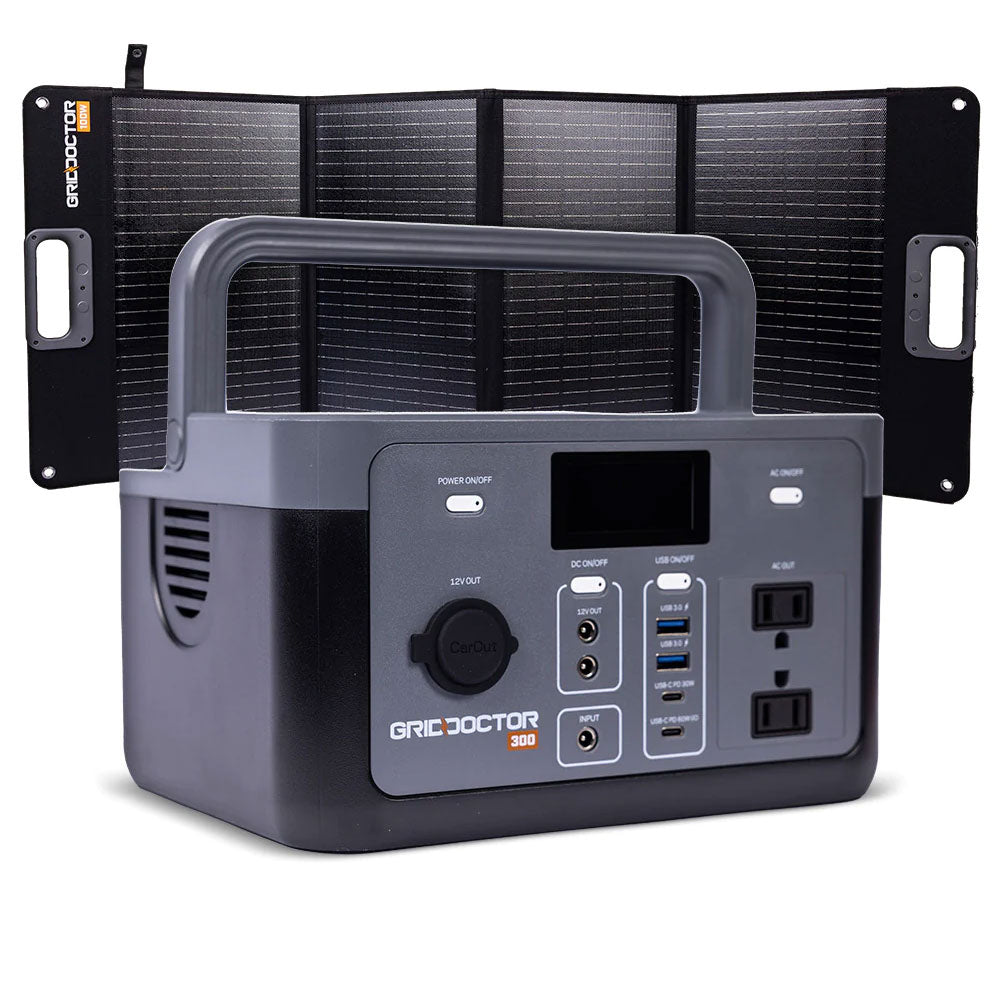
The Grid Doctor 300 solar generator bundled with a 100-watt solar panel, a compact power station for charging small devices; check the current spec sheet for details.
Why it's here: Listed as the small end: phones, lights and a radio, not a fridge. Sizing disappointment usually starts here.
Claim audit: 11 consequential claims checked against the article's sources; unsupported wording revised where it could not be substantiated.
Claim-by-claim audit (11 checked)
“They are different tools built for different problems, and one of the easiest mistakes when going off-grid is buying the wrong one for the life you actually live.” (rewritten to what the article can stand behind)
“Scaling cheaply. Compare the price per watt-hour of stacked units and expansion batteries against a purpose-built system before you commit, since packaged units include an inverter…” (rewritten to what the article can stand behind)
“Lasting decades with proper maintenance (panels are often rated for 20-25 years, and quality lithium batteries can last a decade or more with reasonable cycling)” (cited → energy.gov)
“**Portable power stations** are sold across a wide range, from small units good for phones and lights to large units with a few kWh of capacity and 2,000+ watts of continuous outpu…” (rewritten to what the article can stand behind)
“A modest cabin system is a several-thousand-dollar project, and current installer quotes are the only reliable number.” (rewritten to what the article can stand behind)
“A whole-house off-grid setup sized to run a well pump, fridge, and normal household loads through the year, with several days of battery reserve, costs substantially more, because …” (rewritten to what the article can stand behind)
“Doing your own installation, where local codes and your own skill level allow it, can cut a meaningful chunk of that, but battery and panel hardware costs are largely fixed regardl…” (reasoning shown in the article)
“This is an answer plenty of homesteaders land on instead of either extreme.” (rewritten to what the article can stand behind)
“Jumping straight to a whole-house system on day one is a big bet, and a single portable station often stops being enough as loads grow.” (rewritten to what the article can stand behind)
“A system sized around summer sun will come up short in December and January in most northern latitudes.” (reasoning shown in the article)
“Manufacturers rate lithium power stations for a set number of cycles, so check that rating and treat the unit accordingly.” (rewritten to what the article can stand behind)
Before you go
One useful off-grid email a week.
Practical gear rundowns, honest how-tos, and plain-English guides from someone doing the homework in the open.
I am building a place for off-grid people to swap real answers: a forum by topic, classifieds for gear and services, and real estate for off-grid land and homes. It is new, so the early members shape what it becomes. A free account lets you post in all three.
No ER ten minutes away means you have to be your own triage nurse. Here's how to tell a bad bee sting from the real emergency, and what to actually stock.
In many off-grid disasters, the fire or flood itself isn't the decisive factor, it's the hour you waited too long to leave. Here's how to set real, numeric triggers before you need them.
Tax sale and sheriff's auction land looks like a bargain, but redemption periods, hidden liens, and unseen parcels turn a lot of cheap acreage into an expensive lesson. Here's how to vet a listing before you bid.