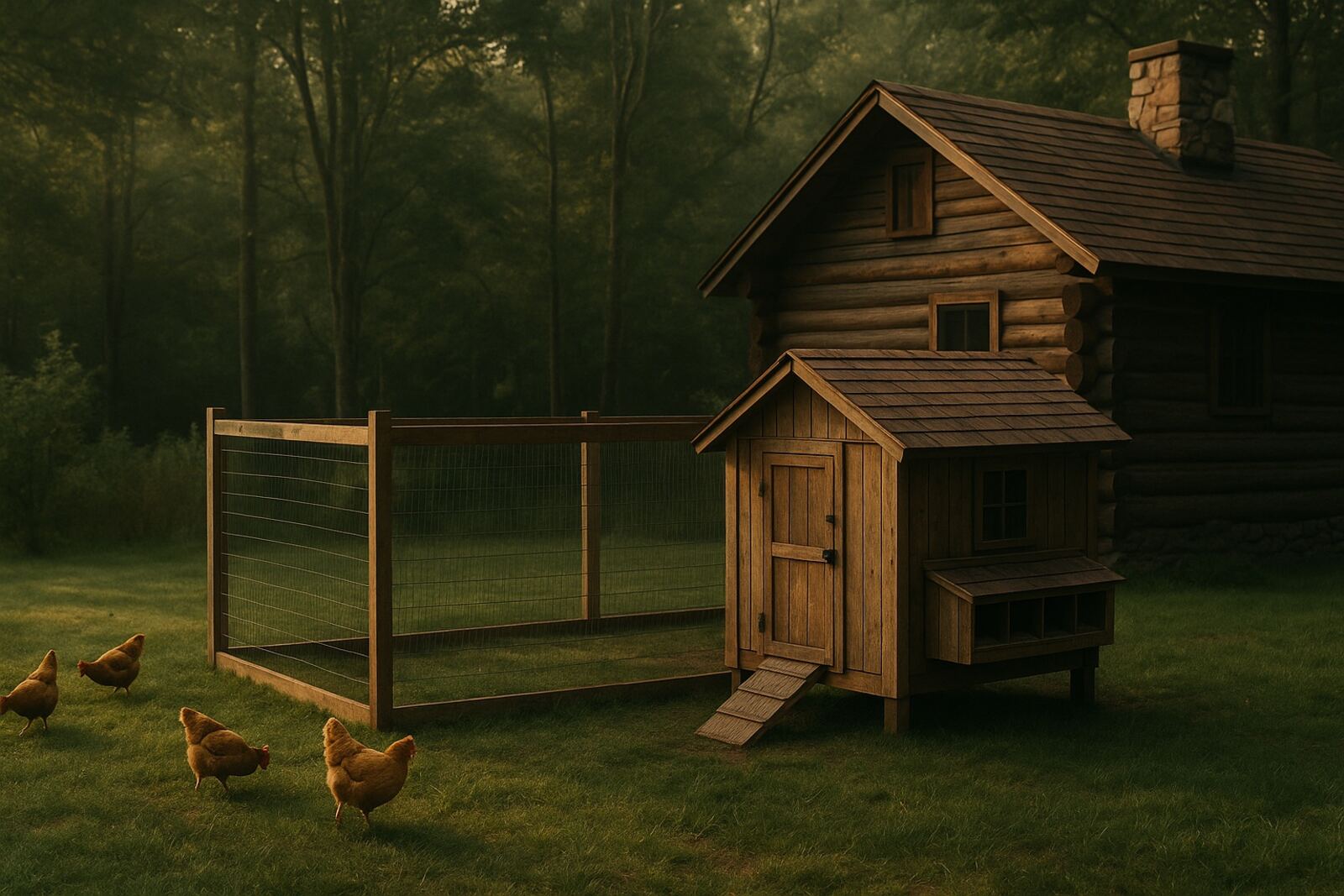
How many hens you actually need
Most calculators start with eggs per week you want on the table, then work backward. A healthy laying hen in her first two years typically gives you 4 to 6 eggs a week in spring and summer under good light and feed. That is the number people quote when they say "a hen a day," and it is true for maybe eight months of the year if you are lucky.
Winter changes the math. As daylight drops below about 12 hours, laying slows or stops for many breeds unless you add artificial light, and even then production usually drops to 2 to 4 eggs a week per hen. Age matters too. A hen's best laying year is her second year of life; by year three or four, production often falls by 20 to 30 percent, and by year five or six many hens are laying just a couple of eggs a week or have stopped seasonally altogether.
So if a household eats a dozen eggs a week, the tempting answer is "get 2 to 3 hens." But that only works if every hen is young, healthy, and it is summer. A more honest plan is to size the flock for winter and older-bird reality, then enjoy the summer surplus for baking, trading, or preserving. For a dozen eggs a week year round, 4 to 5 hens of mixed ages is a safer bet than 2 to 3. If you want eggs to sell or trade as well, add hens in twos, since flocks do better in even numbers for social reasons anyway.
Coop floor space per bird and why crowding causes problems
The standard rule of thumb for standard-size breeds is 3 to 4 square feet of coop floor per bird if they also have outdoor run access, and closer to 8 to 10 square feet per bird if they are ever confined to the coop alone for extended periods, such as during storms or predator lockdowns. Bantam breeds can get by with a bit less; larger heritage or dual-purpose breeds want the higher end.
Crowding is not just an animal welfare issue on paper, it causes real problems that get worse the farther you are from a feed store or vet. Overcrowded coops lead to feather picking, pecking order violence, and stress that suppresses egg laying. Ammonia from droppings builds up faster in a packed coop, which irritates respiratory systems and can lead to chronic illness in a flock you cannot easily replace overnight. Disease spreads faster when birds are packed tight, and once one bird is sick, crowding makes it nearly impossible to isolate it.
When you are sizing a coop for an off-grid property, err generous rather than tight. Building a slightly bigger coop once is far cheaper than dealing with a flock that stops laying, gets sick, or turns on itself because you tried to save a few square feet.
Outdoor run space per bird
Run space is where hens actually want to spend most of their daylight hours, scratching, dust bathing, and foraging. The general guideline is 8 to 10 square feet of run per bird as a minimum, and that number should go up if your run has little vegetation or if the birds are confined to it most of the day rather than free-ranging part-time.
If you can offer true free-range time on part of your land, run space requirements loosen up because the birds are not living in that fixed footprint all day. But if predators, gardens, or property boundaries mean the run is their main outdoor world, size it closer to 15 square feet per bird if you have the room. A cramped run with bare dirt gets muddy in wet weather and dusty in dry weather, both of which contribute to health problems and unhappy, aggressive birds.
This pairs with garden planning too. Chicken runs and garden beds work well rotated against each other, since chickens will clean up bug and weed problems in a fallow bed. If that interests you, my food growing posts get into rotating birds through garden space.
Nesting boxes and roost length
Nesting boxes do not need to match your hen count one to one. The standard rule is one nesting box per 4 to 5 hens, since hens do not all lay at the exact same time and are happy to take turns, sometimes even preferring a box a flockmate just used. Each box should be roughly 12 inches by 12 inches for standard breeds, a bit smaller for bantams, and positioned lower than the roosts so hens do not try to sleep in them and foul them with droppings overnight.
Roost space is a separate calculation from floor space and often gets overlooked. Each standard-size hen needs about 8 to 10 inches of linear roosting space, side by side, and roosts should be positioned higher than the nesting boxes but with enough headroom that hens are not brushing the coop ceiling. If roost space is too tight, you will see pecking order fights over prime spots every single evening, and weaker birds get forced to roost on the floor, which exposes them more to cold, damp, and droppings from birds above.
Feed per hen and water per hen per day
A laying hen eats roughly a quarter pound of feed a day on average, which works out to about 1.5 pounds a week or somewhere between 90 and 100 pounds a year per bird, depending on breed size and how much foraging they do on the side. Cold weather increases feed intake since birds burn more calories staying warm, so expect winter consumption to run 10 to 20 percent higher than summer.
Water intake runs about 0.5 to 1 pint per bird per day in mild weather, and this roughly doubles in hot weather since hens cool themselves partly through respiration and drink more to compensate. A flock of 5 hens might need a half gallon to a full gallon of water a day depending on season, which sounds small until you are hauling it by hand in winter or during a well pump outage.
Feed storage also matters for off-grid planning. Buying in bulk saves money but rodent-proof storage becomes essential, since a torn feed bag left in a shed is basically an invitation to mice and rats, which in turn attracts the predators you are trying to keep away from the coop.
Predator-proofing that matters most when you are far from help
On a suburban lot, a predator breach might mean a lost hen and a bad afternoon. On a remote off-grid property, it can mean losing your entire flock overnight, with no quick trip to a feed store to restock, and no neighbor close enough to hear the commotion. This is the area where it pays to overbuild rather than assume a quick fix.
Standard chicken wire is not predator-proof. Raccoons, weasels, and even determined dogs can tear through it or reach through the gaps to grab a bird. Use half-inch hardware cloth on all coop windows, vents, and run walls instead, at least up to the height a climbing predator could reach, and ideally around the whole structure.
Digging predators like foxes and weasels will tunnel under a run fence line unless you stop them. A buried hardware cloth apron, extending 12 to 18 inches outward from the base of the run and either buried a few inches deep or laid flat under gravel or mulch, stops most digging attempts because the animal hits mesh before it can dig under the fence line itself.
Latches deserve more attention than they usually get. Raccoons in particular can operate simple hook-and-eye latches with their hands. Use latches that require a twist, a slide, and a pin, or two separate motions to defeat, and check them regularly since wood swells and metal loosens over seasons. Cover the coop floor gap under doors too, since predators test every edge.
Finally, think about overhead protection. Hawks and owls take free-ranging birds during the day and can sometimes reach into open-topped runs. A roof of hardware cloth, netting, or solid material over at least part of the run gives hens a place to retreat.
Off-grid specifics: freeze protection and passive coop design
Keeping water from freezing without grid power is one of the most persistent winter chores on an off-grid property. Heated waterers that plug into an outlet are the easy suburban answer, but off-grid you are looking at options like insulated waterer bases, small solar-powered heating elements sized for the load, or simply swapping out water containers two or three times a day during hard freezes. Black rubber containers absorb what solar heat is available and resist cracking better than plastic in freeze-thaw cycles, which matters since a cracked waterer becomes a bigger off-grid problem than a frozen one.
Passive coop design does a lot of the freeze-fighting work before you ever add a heater or extra water changes. South-facing windows or clear panels let in low winter sun that warms the coop interior during the day without any power draw. Deep bedding, several inches of straw or shavings that composts slowly, generates a small amount of heat from decomposition and insulates the floor, which matters more than people expect since cold rises from the ground as much as it drops from the air.
Ventilation is the part people get wrong in both directions. A sealed-up coop traps moisture from droppings and breath, and that damp air causes frostbite on combs and wattles faster than cold dry air does. Vents placed high, above roost level, let moist air escape without creating a direct draft on the birds themselves. In summer, the same passive principles work in reverse, with cross ventilation and shade positioning keeping the coop from becoming an oven, which matters since heat stress is often a bigger killer of flocks than cold.
If you are still working through the broader property plan around a flock like this, water systems, garden layout, and power budgeting, my homesteading posts cover those pieces in more depth, and the tools section has calculators that can help size the coop, run, feed, and water numbers to your specific flock.
Common questions
How many hens do I need for a family of four that eats eggs daily?
If your household goes through about 2 dozen eggs a week, plan for 6 to 8 hens rather than the 4 to 5 that summer production alone would suggest, so you still have enough eggs once winter and aging hens slow things down.
Can I mix chicken breeds in the same coop and run?
Yes, most backyard and off-grid flocks are mixed breed, and it works fine as long as you size floor space, run space, and roost length for the largest breed size in the mix rather than averaging it out.
Do I need electricity at the coop for an off-grid setup to work?
Not necessarily. Passive design, deep bedding, insulated or freeze-resistant waterers, and manual water swaps in hard freezes can cover most climates without wiring power to the coop, though a small solar setup for a water heater element is a common middle ground.