The water looks clear. That's the trap. Plenty of water that will make you violently sick looks exactly like water that won't, and the only thing standing between the two is whatever filtration method you've chosen to trust with your gut. For off-grid households, homesteaders, and anyone relying on a well, spring, pond, or collected rainwater, the choice usually comes down to two mechanical approaches: gravity filters and pump filters. Both can produce safe drinking water. Both can also fail you if you don't understand how they work and where their limits are.
This isn't a "buy this one" article. It's a breakdown of what each system actually does, where each one shines, where each one quietly lets you down, and how to think about combining them so you're not depending on a single point of failure for something as basic as clean water.
How gravity filters actually work
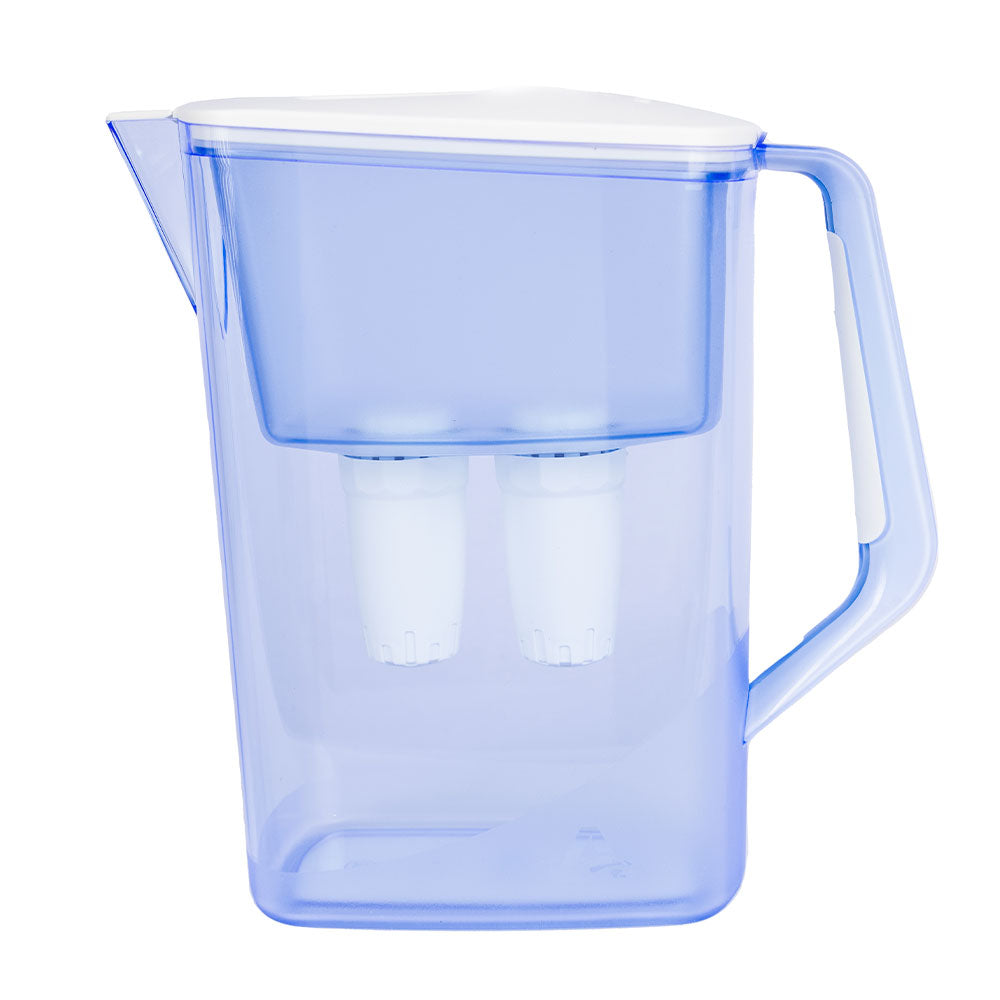
A gravity filter is about as simple as water treatment gets. You pour untreated water into an upper chamber, gravity pulls it down through one or more filter elements, and clean water collects in a lower chamber or container. No batteries, no pumping arm, no moving parts to wear out. Popular multi-gallon countertop gravity systems (the stacked-bucket style units many homesteaders keep on a kitchen counter) work this way, and so do simpler bag-and-hang camp systems.
The filter elements themselves are usually ceramic, carbon block, or hollow-fiber membrane cartridges, and they're doing the actual work of removing bacteria, protozoa (like Giardia and Cryptosporidium), sediment, and in many cases a meaningful amount of chemical contaminants if the cartridge includes activated carbon. The gravity part is just the delivery mechanism. It's slow and passive, but that's a feature, not a flaw, because it means the system runs unattended. You fill it before bed and wake up to gallons of filtered water.
The tradeoffs are real, though. Gravity filters are slow, typically producing water at a rate measured in quarts per hour rather than quarts per minute. They take up counter or shelf space. Most units don't remove viruses reliably because standard ceramic and hollow-fiber pore sizes (commonly around 0.1 to 0.2 microns) are sized to catch bacteria and protozoa but are too large to reliably block many waterborne viruses, which are far smaller. Viral risk varies by region and situation, and it is generally treated as higher in some parts of the world and after contamination events like flooding near sewage infrastructure. Most gravity filters also don't do anything meaningful for dissolved heavy metals, nitrates, or fluoride unless a specific cartridge is rated for it, and they don't touch dissolved salts at all.
How pump filters actually work
A pump filter forces water through the filter element using mechanical pressure, either from a hand pump, a small electric pump, or in some whole-house setups, household water pressure itself. The filter media can be similar to what's in a gravity unit (ceramic, hollow-fiber, carbon), but because you're pushing water through under pressure rather than letting gravity do the slow work, you get water fast, often within seconds of starting to pump.
Handheld pump filters designed for backpacking and field use are the classic example: you drop the intake hose into a stream or puddle, pump the handle, and clean water comes out the output side almost immediately. These are excellent for situations where you need water right now and don't want to wait, and they're compact enough to carry in a pack, which gravity systems generally are not.
The catch with pump filters is mechanical complexity. Anything with moving parts can jam, crack, or wear out, usually at the worst possible moment. Pump filters also require you to be present and actively working the pump the entire time, which is fine for filling a bottle but impractical if you need to process fifteen gallons for a household. The filter elements in pump units tend to clog faster in silty or turbid water because you're forcing particulate-laden water through a small, high-flow-rate cartridge rather than letting it settle and filter slowly. Many pump filter cartridges need regular backflushing, and in genuinely dirty water (glacial silt, muddy pond water, anything with a lot of suspended sediment) they can clog hard enough to become nearly unusable without a pre-filter step.
Where each one actually wins
Gravity filters win for stationary, high-volume, low-effort household use. If you're filtering rainwater collected off a roof, well water with occasional turbidity, or pond water for a homestead, a gravity system set up on a counter or shelf can process gallons a day with zero ongoing labor beyond refilling the top chamber and periodically cleaning or replacing the cartridge. This pairs naturally with a rainwater catchment setup; if you haven't already, it's worth reading through the guide on collecting and storing rainwater safely since pre-filtration and storage practices upstream make a real difference in how hard your gravity filter has to work and how long its cartridges last.
Pump filters win for mobility, speed, and situations where you need a small amount of water fast and can't wait. Think fieldwork away from the house, hiking to a spring, or a bug-out scenario where you're filling bottles at a creek and moving on. They're also genuinely useful as a backup when your primary household system is down, since a compact pump filter takes up almost no storage space and needs no setup.
Neither one is simply "better." They answer different questions. Gravity answers "how do I keep my household in clean water day after day with minimal fuss?" Pump answers "how do I get a liter of safe water right now, from whatever's in front of me?"
What neither one reliably handles
This is the part that trips people up, because it's easy to assume a filter is a filter and any of them will handle whatever's in your water. Neither gravity nor pump mechanical filters, on their own, reliably remove:
Dissolved salts (won't desalinate brackish or seawater)
Most dissolved heavy metals like lead or arsenic, unless the cartridge specifically states an additional treatment media (like activated alumina or ion exchange resin) rated for that contaminant
Nitrates from agricultural runoff, which is worth testing for if your well sits near farmland
Many industrial chemicals and PFAS compounds, which manufacturers generally say require specialized media
Viruses, in the case of most gravity systems and many pump filters, unless the unit is specifically rated as a "purifier" (a term that implies virus removal, versus "filter" which usually does not)
This last distinction matters and gets glossed over. In the water treatment world, "filter" and "purifier" are not interchangeable words, even though marketing sometimes blurs the line. A purifier has been tested and rated to remove viruses in addition to bacteria and protozoa, usually through a combination of very fine membrane filtration plus a secondary step like iodine resin or electropositive media. If your water source is potentially contaminated by human or animal waste upstream (a real risk near agricultural land, dense wildlife areas, or after flooding), a filter alone may not be protecting you against the viral end of the risk spectrum, even if it's excellent against bacteria and protozoa.
The case for layering, not choosing one
The most resilient off-grid water setups don't pick a single method and call it done. They layer:
Pre-filtration and sediment removal first, whether that's a settling tank, a simple sediment pre-filter, or letting rainwater sit before it hits your storage tank. This protects downstream filter cartridges from clogging fast, which is a common reason people get frustrated with either gravity or pump systems and stop using them correctly.
A primary filtration method suited to your daily volume needs, usually gravity for a stationary household setup, sometimes pump for smaller or mobile needs.
A disinfection step for viruses if your source water carries that risk, whether that's UV treatment, boiling as a backup, or choosing cartridges specifically rated as purifiers.
A backup method entirely separate from your primary, so a cracked cartridge or a broken pump handle doesn't leave you with zero options. A cheap, compact pump filter stored in a drawer is a reasonable insurance policy even if your daily driver is a gravity system, and vice versa.
Boiling remains the universal fallback that requires no special gear beyond a heat source and a pot, and it's worth having in your back pocket mentally even if it's not your daily method, since it reliably kills bacteria, viruses, and protozoa given a full rolling boil.
Practical maintenance nobody warns you about
Both filter types are only as good as their maintenance. Ceramic elements need periodic scrubbing of the outer surface as sediment builds up and restricts flow, and each cleaning removes material, so check your manufacturer's stated limit on cleanings. Hollow-fiber membrane cartridges usually can't be scrubbed the same way and instead need backflushing with clean water, and manufacturers typically rate their lifespan in gallons processed rather than calendar time. Carbon components inside combination cartridges have their own separate expiration, often shorter than the microbiological filtration component, because carbon's ability to adsorb chemicals and improve taste saturates well before the physical filtration media wears out.
Track cartridge life honestly. It's tempting to keep using a filter past its rated capacity because the water still looks fine, but looking fine was never the test that mattered. Set a reminder based on gallons processed if your household usage is fairly steady, or based on calendar months if you're being conservative, and treat that reminder the same way you'd treat a smoke detector battery, not optional, not "next month."
Matching the choice to your actual setup
If you're filtering water for a full household from a rain catchment system, well, or pond, and you want something that runs with minimal daily attention, a countertop gravity system with a reputable ceramic or hollow-fiber cartridge is usually the more practical daily driver, and pairing it with a sediment pre-filter upstream will noticeably extend cartridge life. If your household water setup ties into a broader off-grid power and water plan, it's worth browsing the categorized recommendations over at my gear guides to see how filtration fits alongside your storage, pumping, and other water infrastructure decisions, since these systems tend to work best when planned together rather than bolted on piecemeal.
If your needs are more mobile, more occasional, or you specifically want a compact backup that lives in a bag, a quality pump filter (or one of the newer straw-style and squeeze filters that use similar hollow-fiber membrane technology without a separate pump handle) makes more sense as your grab-and-go option.
Either way, read the actual rated pore size and the actual tested log-reduction claims on the packaging or spec sheet rather than relying on marketing language alone. A filter that claims "removes 99.9999% of bacteria" is telling you something specific and testable; a filter that just says "great for camping" is not. The honest, boring truth is that good water filtration is a matter of matching real specifications to your real water source and your real household volume, not finding one magic product that does everything.
For more on building out a resilient off-grid water and power setup piece by piece, the rest of the archive over on the blog covers related decisions in more depth, and if you've got a specific water source or setup you're trying to figure out, reaching out through the contact page is a reasonable way to get a second set of eyes on it before you commit to a system. You can also read more about the thinking behind this publication on the about page.
Clean water off the grid isn't about finding the one perfect gadget. It's about understanding what each tool actually does, being honest about what it doesn't do, and building enough redundancy that one cracked pump handle or one exhausted cartridge doesn't turn into a health emergency.
The rest of the shortlist
Recommended off-grid gear
Affiliate disclosure: Some links on this site are affiliate links, including Amazon links: as an Amazon Associate I earn from qualifying purchases. Buying through one costs you nothing extra, and it never changes what I recommend.
Products appear here only when they match this article's subject. Selection is based on documented specs and owner reports, never on compensation; pages with no relevant gear carry none.
The classic countertop gravity filter: no power, no plumbing, rated by the maker for bacteria, cysts, and many chemicals, with add-on elements for fluoride and arsenic. Read the current element availability note on the spares page before you buy.
Why it's here: Listed as the household-scale option that keeps working through the kind of outage it is meant to cover.
A tiny, inexpensive squeeze filter with no moving parts or batteries; the manufacturer specifies backflushing instead of cartridge replacement, which is why it is a common choice for packs and emergency kits.
Why it's here: Listed as the one that goes in a pack. A house filter and a carry filter are different jobs, and one will not cover both.
The Alexapure Pro gravity-fed countertop water filtration system, for households that want a non-electric filter for daily or emergency drinking water; check the current spec sheet.
Why it's here: Listed so gravity filtration is not a single brand's decision. Compare element life and replacement cost before choosing.
Claim audit: 12 consequential claims checked against the article's sources; unsupported wording revised where it could not be substantiated.
Claim-by-claim audit (12 checked)
“Most units don't remove viruses reliably because standard ceramic and hollow-fiber pore sizes (commonly around 0.1 to 0.2 microns) are sized to catch bacteria and protozoa but are …” (cited → wwwnc.cdc.gov)
“Viral risk varies by region and situation, and it is generally treated as higher in some parts of the world and after contamination events like flooding near sewage infrastructure.” (rewritten to what the article can stand behind)
“Most gravity filters also don't do anything meaningful for dissolved heavy metals, nitrates, or fluoride unless a specific cartridge is rated for it, and they don't touch dissolved…” (cited → wwwnc.cdc.gov)
“The filter elements in pump units tend to clog faster in silty or turbid water because you're forcing particulate-laden water through a small, high-flow-rate cartridge rather than …” (reasoning shown in the article)
“Nitrates from agricultural runoff, which is worth testing for if your well sits near farmland” (rewritten to what the article can stand behind)
“Many industrial chemicals and PFAS compounds, which manufacturers generally say require specialized media” (rewritten to what the article can stand behind)
“A purifier has been tested and rated to remove viruses in addition to bacteria and protozoa, usually through a combination of very fine membrane filtration plus a secondary step li…” (cited → wwwnc.cdc.gov)
“This protects downstream filter cartridges from clogging fast, which is a common reason people get frustrated with either gravity or pump systems and stop using them correctly.” (rewritten to what the article can stand behind)
“Boiling remains the universal fallback that requires no special gear beyond a heat source and a pot, and it's worth having in your back pocket mentally even if it's not your daily …” (cited → epa.gov)
“Ceramic elements need periodic scrubbing of the outer surface as sediment builds up and restricts flow, and each cleaning removes material, so check your manufacturer's stated limi…” (rewritten to what the article can stand behind)
“Hollow-fiber membrane cartridges usually can't be scrubbed the same way and instead need backflushing with clean water, and manufacturers typically rate their lifespan in gallons p…” (rewritten to what the article can stand behind)
“Carbon components inside combination cartridges have their own separate expiration, often shorter than the microbiological filtration component, because carbon's ability to adsorb …” (reasoning shown in the article)
Before you go
One useful off-grid email a week.
Practical gear rundowns, honest how-tos, and plain-English guides from someone doing the homework in the open.
I am building a place for off-grid people to swap real answers: a forum by topic, classifieds for gear and services, and real estate for off-grid land and homes. It is new, so the early members shape what it becomes. A free account lets you post in all three.
No ER ten minutes away means you have to be your own triage nurse. Here's how to tell a bad bee sting from the real emergency, and what to actually stock.
In many off-grid disasters, the fire or flood itself isn't the decisive factor, it's the hour you waited too long to leave. Here's how to set real, numeric triggers before you need them.
Tax sale and sheriff's auction land looks like a bargain, but redemption periods, hidden liens, and unseen parcels turn a lot of cheap acreage into an expensive lesson. Here's how to vet a listing before you bid.