Planning an off-grid move often means doing the math on the big-ticket items and stopping there. Land, a well, a solar array, maybe a cabin build. Then they move in and discover that the real cost of off-grid living isn't the upfront spend at all. It's the steady drip of annual expenses that never show up in the glossy budget spreadsheets, the propane refills, the battery replacements, the truck repairs from driving on rutted roads, the permit renewals nobody mentioned.
I've spent a lot of time pulling apart what off-grid living actually costs once the dust settles from the initial build-out, because that's the number that determines whether this lifestyle is sustainable for a given income, not the number on the land listing. This is an honest attempt to lay out both the upfront and the ongoing costs, with real ranges, so you can budget like it's a business decision, because in a lot of ways it is one.
The upfront costs everyone budgets for (and usually underbuds)
Land, water, power, and shelter are the four pillars, and each one has a wide price range depending on where you are and how finished you want things to be.
Land prices vary widely by region and improvement level, so check recent local listings rather than relying on a national figure, since access, soil, and water rights all raise the price. A mistake that comes up again and again among buyers isn't overpaying for the land, it's underestimating what it costs to make raw land usable: driveway grading, culverts, tree clearing, and soil testing can add thousands before you've built anything. Before you get attached to a parcel, it's worth reading through the fine print on access and easements, because a landlocked property or a shared easement dispute can turn a "cheap" purchase into a very expensive lesson.
Water is the next major line item. Whether you drill or drive a well depends heavily on your water table depth and geology, and a shallow driven well costs far less than a deep drilled well with casing, a pump, and a pressure system, so get local quotes before budgeting. I've written a full breakdown of what a well actually costs and takes if you haven't priced that out yet. Rainwater collection can supplement or in some climates replace a well, but it comes with its own filtration and storage costs that people tend to lowball.
Power is where budgets swing the most. A modest solar setup for basic lighting, a fridge, and small electronics costs far less than a whole-homestead system, so price the components you actually need. A system built to run a well pump, power tools, and a comfortable homestead costs considerably more once you factor in a proper battery bank, an inverter, charge controllers, and the wiring and breakers to do it safely. If you haven't sized your needs yet, start with how much solar you actually need, because oversizing wastes money and undersizing means you're back at the supplier within a year buying more panels at retail price with none of the bulk discount you could have negotiated the first time.
Shelter varies the most of all, from a few thousand dollars for a basic cabin shell you finish yourself to well over six figures for a fully custom, code-compliant home. Foundation choice alone (pier, slab, or skids) changes both the cost and the long-term maintenance burden, which is worth understanding before you pour anything.
The ongoing costs nobody puts in the spreadsheet
This is the part that actually determines whether off-grid living is affordable for your income, and it's the part many "how much does it cost to go off-grid" articles skip.
Battery replacement. Lead-acid battery life depends heavily on maintenance and depth of cycling, so check the manufacturer's cycle-life rating for the bank you are considering. Lithium banks are generally rated for more cycles but cost more upfront, so compare the rated cycle life on the datasheets. Either way, replacement is a recurring expense, and it's smart to set aside a small monthly amount specifically for it rather than treating it as a surprise. If you're still deciding on system voltage, it's worth reading about 12V vs 24V vs 48V systems before you commit, because the wrong voltage choice for your load can mean re-wiring the whole bank later.
Propane and fuel. Even fully solar-powered homesteads often rely on propane for cooking, backup heat, or refrigeration. Annual propane spending depends on climate and how much you lean on it versus wood heat, so track your first year's refills to get a real number. If you're weighing wood, rocket stove, and propane heating against each other, factor in not just the fuel cost but the labor cost of cutting and hauling wood, because your own time has value even if no cash changes hands for it.
Vehicle and equipment wear. Off-grid properties are often down long dirt or gravel roads, and that takes a toll on trucks, tires, and equipment that a suburban commute never would. Budget for more frequent tire replacement, suspension work, and fuel for hauling supplies. This is a cost category that's easy to forget because it doesn't feel like an "off-grid" expense, it just feels like normal vehicle maintenance, except it happens noticeably more often.
Permits, taxes, and insurance. Property taxes don't disappear because you're off-grid, and depending on your county, permit renewals for septic systems, wells, or structures may recur. Insurance for a rural or off-grid property may be pricier or harder to find than standard homeowners coverage, so ask carriers directly what they require, including documentation of wood stove installation and chimney and flue safety.
Food production costs. Growing and preserving your own food saves money over time, but it isn't free. Seeds, soil amendments, canning jars and lids, freezer space (which draws power), and livestock feed all cost money, especially in year one before a garden or flock becomes productive. A realistic year-round food plan accounts for the fact that self-sufficiency in food usually takes a couple of seasons to pay for itself, not months.
Repairs and replacement parts. Pumps fail. Inverters die. Fittings crack in a hard freeze. Because you're often far from a hardware store, off-grid living tends to reward keeping a modest cash reserve for parts and, ideally, keeping spares on hand for the failure points that would leave you without water or power. This is closely tied to having a well-stocked tool kit for day one, since half the "emergency repair" cost for many homesteaders is really just not having the right wrench or fitting on hand and having to make an expensive town trip to get one.
Building a realistic annual budget
A rough framework that holds up across a lot of different off-grid setups looks something like this:
Utilities-equivalent costs (propane, batteries amortized, fuel for generators): estimate from local fuel prices and your battery bank's replacement cost divided by its rated life
Vehicle and equipment wear tied to rural roads and hauling: expect some amount above typical driving costs, and track tires and suspension work your first year
Food production inputs before a garden or livestock matures: price out seeds, amendments, jars, and feed for your own plan, since early years cost more than later ones
Property taxes and insurance: highly variable by state and county, but rarely zero
Repairs and replacement parts reserve: setting aside even $100 to $200 a month gives a cushion for the inevitable pump or inverter failure
None of these numbers are meant to be exact for your situation, they're meant to show the shape of the spending so you can build your own version with real local prices. The honest takeaway is that off-grid living reduces certain costs dramatically (no utility bills, often lower property taxes on undeveloped land, less discretionary spending simply because there's less to spend on) while introducing a different set of costs that are lumpier and less predictable than a monthly electric bill.
Where the real savings actually show up
It's not all grim math. The savings off-grid living produces are real, they just show up differently than people expect. There's no monthly electric or water bill. Heating with wood may cost less in cash than running a propane furnace all winter, though the comparison depends on local propane prices and whether you cut your own wood. Growing and preserving food, once established, meaningfully cuts grocery bills, especially for a household that was buying a lot of fresh produce and meat at retail prices before. And the intangible savings, lower stress, less commuting cost, more control over big recurring expenses, are real even if they're harder to put a dollar figure on.
The households that do well financially off-grid tend to be the ones who treat the first year or two as a build-out phase with a real budget, not an open-ended project, and who go in with a cash reserve for the surprises rather than assuming the low cost of living will cover everything from day one. If you're still in the planning phase, it's worth browsing through the gear guides organized by category to get a realistic sense of what different systems actually cost before you commit to land, because the power and water systems you choose will shape your ongoing budget for years.
A few practical steps before you commit
Before signing on land or breaking ground, it's worth running a simple exercise: write down every recurring cost you can think of for a conventional home (utilities, insurance, maintenance, food) and then rewrite it for the off-grid version of that same category. Some categories shrink to nearly zero. Others, like repairs and fuel, often grow. Doing this exercise honestly, on paper, before you move is the single best way to avoid the common story of someone moving off-grid with a tight budget built entirely around the upfront costs, only to find the ongoing costs squeeze them within the first two years.
It's also worth talking to people who've already done it in your specific region, since costs for propane, well drilling, and even land itself vary enormously by state and even by county. If you have specific questions about your situation, I'm happy to hear from you through the contact page, and there's a growing library of cost breakdowns and planning guides over on the full blog if you want to keep digging before you commit. Off-grid living can absolutely be more affordable than conventional living over the long run, but only if you budget for the real annual costs rather than just the exciting upfront ones. You can read more about how this site approaches these topics on the about page.
The rest of the shortlist
Recommended off-grid gear
Affiliate disclosure: Some links on this site are affiliate links, including Amazon links: as an Amazon Associate I earn from qualifying purchases. Buying through one costs you nothing extra, and it never changes what I recommend.
Products appear here only when they match this article's subject. Selection is based on documented specs and owner reports, never on compensation; pages with no relevant gear carry none.
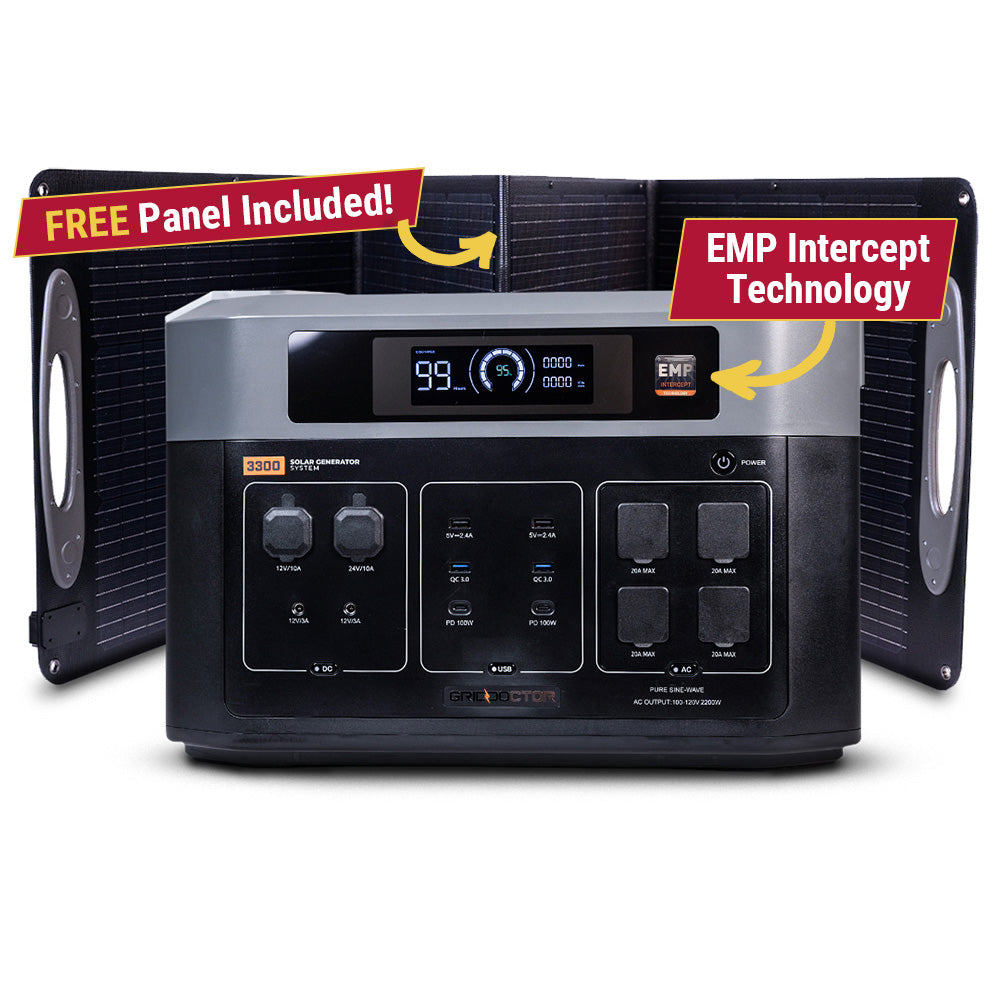
The Grid Doctor 3300 solar generator system sold with EMP shielding, a large portable power station for home backup and off-grid use; check the current spec sheet for details.
Why it's here: Listed with its EMP shielding as a stated feature, not a verified one. Judge it on the power specs first.
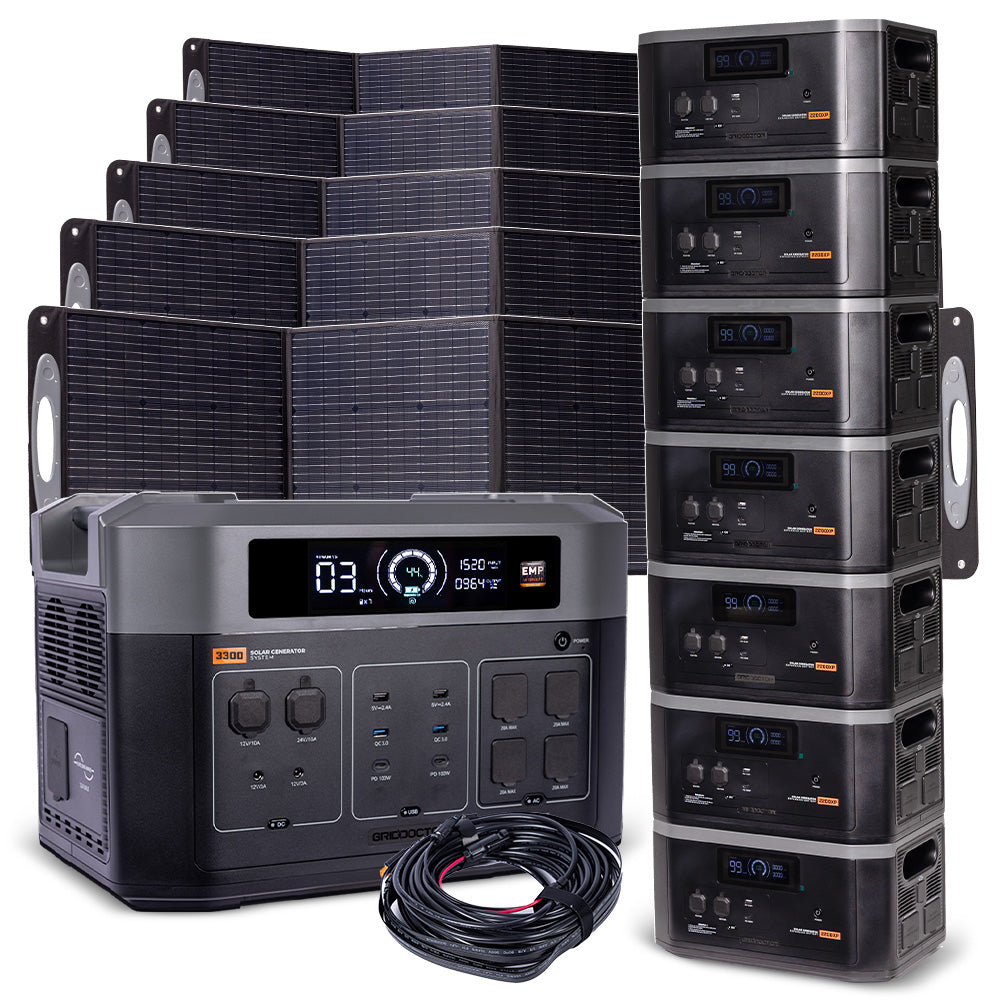
The Grid Doctor 3300 Power Tower, a large portable power station for home backup and off-grid systems; check the current spec sheet for capacity and output details.
Why it's here: Listed so form factor is part of the decision: this capacity class in a shape that stands rather than sits.
The Grid Doctor 3300-watt EMP-shielded solar generator sold through Emergency Essentials, a large power station for home backup and off-grid use; check the current spec sheet.
Why it's here: Listed through a second retailer so availability and pricing on this unit are not down to one storefront.
Claim audit: 14 consequential claims checked against the article's sources; unsupported wording revised where it could not be substantiated.
Claim-by-claim audit (14 checked)
“**Land** prices vary widely by region and improvement level, so check recent local listings rather than relying on a national figure, since access, soil, and water rights all raise…” (rewritten to what the article can stand behind)
“Whether you drill or drive a well depends heavily on your water table depth and geology, and a shallow driven well costs far less than a deep drilled well with casing, a pump, and …” (rewritten to what the article can stand behind)
“A modest solar setup for basic lighting, a fridge, and small electronics costs far less than a whole-homestead system, so price the components you actually need.” (rewritten to what the article can stand behind)
“A system built to run a well pump, power tools, and a comfortable homestead costs considerably more once you factor in a proper battery bank, an inverter, charge controllers, and t…” (rewritten to what the article can stand behind)
“Lead-acid battery life depends heavily on maintenance and depth of cycling, so check the manufacturer's cycle-life rating for the bank you are considering.” (rewritten to what the article can stand behind)
“Lithium banks are generally rated for more cycles but cost more upfront, so compare the rated cycle life on the datasheets.” (rewritten to what the article can stand behind)
“Either way, replacement is a recurring expense, and it's smart to set aside a small monthly amount specifically for it rather than treating it as a surprise.” (rewritten to what the article can stand behind)
“Annual propane spending depends on climate and how much you lean on it versus wood heat, so track your first year's refills to get a real number.” (rewritten to what the article can stand behind)
“Insurance for a rural or off-grid property may be pricier or harder to find than standard homeowners coverage, so ask carriers directly what they require, including documentation o…” (rewritten to what the article can stand behind)
“Utilities-equivalent costs (propane, batteries amortized, fuel for generators): estimate from local fuel prices and your battery bank's replacement cost divided by its rated life” (rewritten to what the article can stand behind)
“Vehicle and equipment wear tied to rural roads and hauling: expect some amount above typical driving costs, and track tires and suspension work your first year” (rewritten to what the article can stand behind)
“Food production inputs before a garden or livestock matures: price out seeds, amendments, jars, and feed for your own plan, since early years cost more than later ones” (rewritten to what the article can stand behind)
“Heating with wood may cost less in cash than running a propane furnace all winter, though the comparison depends on local propane prices and whether you cut your own wood.” (rewritten to what the article can stand behind)
“Growing and preserving food, once established, meaningfully cuts grocery bills, especially for a household that was buying a lot of fresh produce and meat at retail prices before.” (cited → fna.usda.gov)
Before you go
One useful off-grid email a week.
Practical gear rundowns, honest how-tos, and plain-English guides from someone doing the homework in the open.
I am building a place for off-grid people to swap real answers: a forum by topic, classifieds for gear and services, and real estate for off-grid land and homes. It is new, so the early members shape what it becomes. A free account lets you post in all three.
No ER ten minutes away means you have to be your own triage nurse. Here's how to tell a bad bee sting from the real emergency, and what to actually stock.
In many off-grid disasters, the fire or flood itself isn't the decisive factor, it's the hour you waited too long to leave. Here's how to set real, numeric triggers before you need them.
Tax sale and sheriff's auction land looks like a bargain, but redemption periods, hidden liens, and unseen parcels turn a lot of cheap acreage into an expensive lesson. Here's how to vet a listing before you bid.