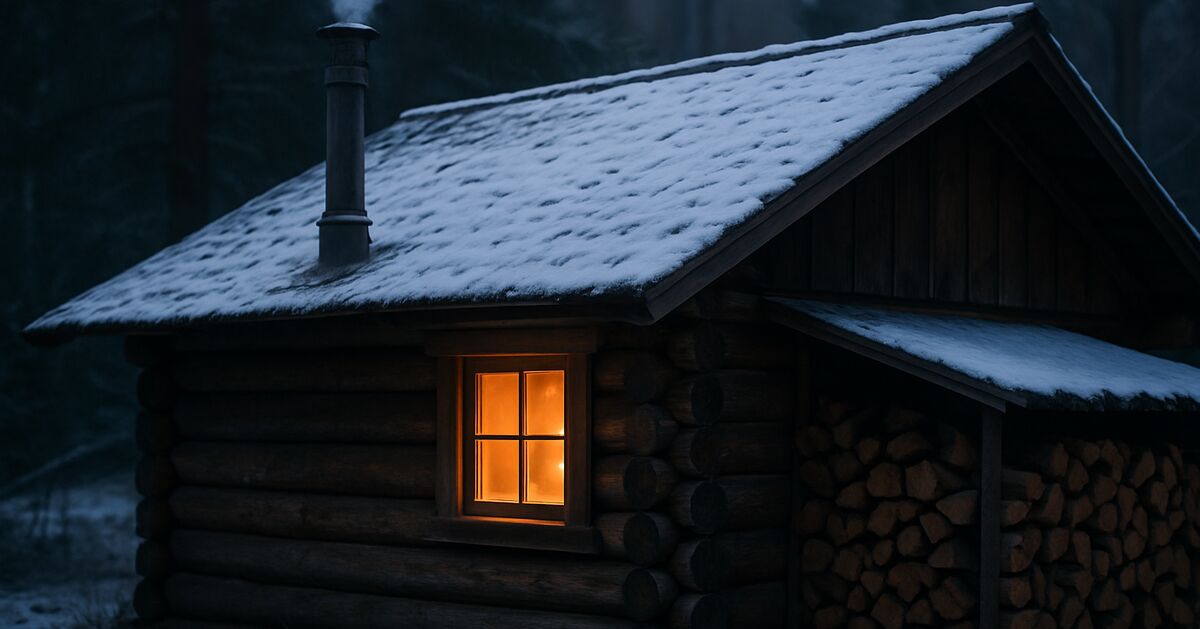
A chimney fire doesn't announce itself politely. It sounds like a freight train running through your roof, and by the time you hear it, the decision about whether your cabin survives the night has already been made, mostly by choices someone made months earlier when the stovepipe went in.
Wood heat is one of the best reasons to go off-grid. It's cheap, it doesn't care if the sun didn't shine, and it works when the batteries are dead and the propane truck can't get down your road. But a wood stove is only as safe as the chimney system attached to it, and I've read enough incident reports and insurance claims from rural fire departments to know that the failures that come up again and again are the same handful of mistakes. This is the piece I wish every new stove owner read before they cut a hole in their roof.
Why chimney fires happen in the first place
Wood smoke isn't just smoke. It's a mix of unburned gases, water vapor, and fine particles that condense on the inside of a cool flue as creosote. Creusote starts as a light brown flaky deposit, but if conditions stay right (cool flue temperatures, damp wood, a fire that's damped down for a slow overnight burn) it thickens into a hard, glazed, tar-like layer that can be a quarter inch or more.
That glaze is basically stored fuel sitting inside your chimney. Once it ignites, usually from a stray spark or a period of unusually hot burning, it burns at temperatures the pipe was never designed for. Stovepipe can glow red. Sections can warp or separate. And if the chimney passes anywhere near a wood-framed wall or roof with less clearance than it needs, that heat transfers into framing lumber, which is why listed clearances are set with long term heat exposure in mind.
That second part, the "pyrolyzed wood" problem, is why chimney clearance rules exist and why they matter more over time, not less. A clearance that was marginal for several winters is not proof it is safe, since repeated heating of nearby framing is a known concern behind clearance rules.
Class A pipe versus single-wall stovepipe
There are two very different products that people casually call "the chimney," and mixing them up is one of the most common and most dangerous installation errors.
Single-wall stovepipe is the black or blued steel pipe that connects the stove to the wall or ceiling. It's meant to run inside the heated space, where its job is actually to radiate a bit more heat into the room. It is not insulated, it gets very hot to the touch, and it needs generous clearance from anything combustible, often 18 inches or more unless it's shielded.
Class A chimney pipe is the insulated, double- or triple-wall pipe rated to pass through a ceiling, attic, and roof, and to run up outside the building. It's built with an air gap or solid insulation between an inner and outer wall specifically so the outer surface stays cool enough to sit close to framing safely, usually with only a couple inches of clearance, per the manufacturer's listing.
The mistake shows up when someone runs single-wall pipe through a ceiling or wall thimble to save money, or reuses class A sections that don't match the stove's listed pipe size. Manufacturers test and label these systems as a matched set for a reason. A stove rated for 6 inch class A pipe run through mismatched components falls outside the tested listing, may create problems with an insurance claim, and removes any guarantee that the clearances printed in the manual apply to what's on your roof.
If you are building this yourself, buy the stove and the full pipe system from the same line, follow the manufacturer's manual page by page, and do not substitute parts because they were cheaper or already in the shed.
Clearance to combustibles, and why "close enough" isn't
Every stove and every pipe has a listed clearance to combustible material, meaning anything made of wood, most insulation, and most interior finishes. These numbers come from real fire testing, not guesswork, and they assume normal operation, not a chimney fire.
A few numbers that come up constantly in stove manuals and code references, though you should always confirm against your specific stove's listing:
Unlisted, uninsulated stoves without any heat shield often need 36 inches of clearance to combustible walls
A listed stove with a proper rear heat shield can often be installed with 12 inches or less
Single-wall stovepipe typically needs 18 inches from combustibles unless a shield reduces that
Class A pipe is usually listed for 2 inches from framing, but check your specific brand
The number that trips people up is the wall pass-through, sometimes called a thimble. This is where the chimney exits the building, and it is one of the highest-risk points in the whole system because it's hidden inside a wall cavity where nobody sees a problem developing. A proper thimble is a manufactured, listed component with its own air space, not just a hole cut to fit with insulation stuffed around the gap. If your cabin has a chimney passing through a wall or ceiling that was cut by eye rather than installed with a listed thimble kit, that is worth fixing before it's tested by a hot fire.
Roof penetrations need their own listed flashing and firestop spacer, sized to the specific pipe diameter, with proper clearance maintained all the way through the roof structure, not just at the surface.
How high, and why height isn't just about code
Chimney height rules exist for both safety and performance. The common rule of thumb, sometimes called the 3-2-10 rule, says the chimney should extend at least 3 feet above the roof penetration and at least 2 feet above any part of the roof or obstruction within 10 feet horizontally. That's not an arbitrary bureaucratic number. Chimneys that are too short relative to the roofline sit in turbulent air, get poor draft, and are more prone to downdrafts that push smoke back into the cabin, which in turn encourages people to run smoky, damped-down fires that produce more creosote.
A too-short chimney also concentrates sparks and embers closer to the roof surface itself, which matters a great deal if you have anything other than a metal roof.
Cleaning schedule and how to actually check your flue
The honest answer to "how often should I clean my chimney" is: it depends entirely on how you burn, not on a calendar. A stove run hot and clean, burning seasoned hardwood with good air supply, might build creosote slowly. A stove that's damped down overnight, burning wet or unseasoned wood, can build a dangerous layer in a matter of weeks.
Practical signs it's time to inspect or clean:
You can smell a strong, tarry odor near the stove or chimney even when it's not burning
You see any dark, flaky, or dripping black substance around the pipe joints or cap
The stovepipe damper or thermometer readings have been trending down for the same wood and airflow
It's simply been a full heating season since the last cleaning, regardless of how it looks
A basic inspection with a flashlight from the cleanout and from the top, plus a scrape test with a poker to check thickness and hardness of any buildup, tells you most of what you need to know. Any noticeable buildup, and especially glazed, shiny, hard creosote, is a reason to clean with a proper brush sized to your flue, or to have a sweep confirm what you are looking at.
If you're not comfortable getting on the roof or don't have the right brush and rod length for your setup, a chimney sweep is a reasonable expense once a year, and cheaper than almost anything that happens after a chimney fire.
Wood moisture is the root cause you can actually control
Creosote problems are frequently traced back to wet wood. Freshly cut, "green" wood holds a large share of its weight as water. Burning it means a huge share of the fire's energy goes into boiling off water instead of producing heat, the flue temperature drops, and unburned compounds condense as creosote almost immediately.
Properly seasoned firewood, split and stacked off the ground with airflow and top cover for at least six months to a year depending on species and climate, should read somewhere around 15 to 20 percent moisture on a cheap moisture meter. Keeping moisture in that range is one of the most effective steps you can take against creosote buildup. If you're setting up your wood supply for the first time, plan your cutting and splitting a full season ahead of when you'll actually burn it. This dovetails directly with building out a full year-round supply plan the way you'd plan a food storage system, since wood, like food, needs lead time you can't skip.
Carbon monoxide and the cases that don't involve fire at all
Not every chimney failure ends in flames. A cracked or blocked flue, a bird's nest in an uncapped chimney, or a downdraft in a poorly sited stack can push carbon monoxide back into a cabin instead of sending it outside. This is a bigger risk in small, well-sealed off-grid cabins than in a drafty older farmhouse, because the same tight building envelope that keeps your heat in during winter also keeps a leak from venting on its own.
A wire mesh spark arrestor cap keeps birds and debris out of an uncapped flue, and it's cheap insurance against a blocked chimney nobody notices until the smoke has nowhere to go. Pair that with a battery powered carbon monoxide alarm whose listed operating temperature range covers an unheated cabin, since many alarms specify a minimum temperature in their manual. If your cabin doesn't have grid power for hardwired alarms, this is exactly the kind of small load worth planning into your electrical system, and it's a good example of why getting your wiring and breaker sizing right matters even for tiny, low-draw devices, not just the big appliances.
Putting it together before the first fire of the season
Before lighting the first fire each season, a simple checklist covers most of what actually causes chimney fires:
Confirm class A pipe and single-wall pipe are matched to the stove's listed system, not mixed and matched
Check every clearance to combustibles at the wall thimble, ceiling pass-through, and roof penetration against the manual, not memory
Look at chimney height relative to the roofline and confirm it clears the 3-2-10 guideline
Inspect for creosote thickness and glazing, and clean if it's been a season or the buildup looks hard or shiny
Confirm the spark arrestor cap is intact and unobstructed
Test carbon monoxide alarms and confirm they're rated for the space's temperature swings
Check your wood supply's actual moisture content, not just how long it's been sitting
None of this is complicated, but all of it gets skipped by people in a hurry to get heat going before the first cold snap. If you're still working out the rest of your heating setup, whether wood is even the right primary choice for your space, or how it stacks up against propane or a rocket mass heater, it's worth stepping back and comparing those options honestly before committing to a full chimney installation built around one choice. And if you're just getting your homestead's systems in order for the first time, the early months are exactly when these smaller safety details get missed in favor of bigger visible projects, so it's worth building a chimney and wood supply check into your own early routine rather than leaving it for whenever you remember.
A wood stove, installed and maintained the way its manufacturer actually intended, is one of the most reliable and satisfying heat sources you can have off-grid. The chimney is not the place to improvise.
Where this fits with the rest of the heating decision
Chimney safety is inseparable from how the stove is sized and how the building holds heat. An oversized stove in a small, well-insulated space gets run choked down and smoldering, which is the condition that builds creosote fastest, so the sizing decision and the safety decision are the same decision. The heat-loss calculator estimates what the building actually demands, and lesson seven of the free course covers the whole heating question in order.
Fuel quality is the other half. Wood that has not been seasoned properly produces less heat, more smoke, and far more creosote, and a moisture meter settles the argument for a few dollars. The firewood calculator works out how much you will burn from your climate and building, which is also how you know whether a year of drying time is achievable.
Finally, check what your jurisdiction requires and what your insurer expects, because both frequently ask whether an appliance is listed and professionally installed. The laws pages record what public sources say about building requirements county by county, and the answer is worth having in writing before the installation rather than after a claim.
Claim audit: 18 consequential claims checked against the article's sources; unsupported wording revised where it could not be substantiated.
Claim-by-claim audit (18 checked)
“That glaze is basically stored fuel sitting inside your chimney.” (cited → epa.gov)
“And if the chimney passes anywhere near a wood-framed wall or roof with less clearance than it needs, that heat transfers into framing lumber, which is why listed clearances are se…” (rewritten to what the article can stand behind)
“A clearance that was marginal for several winters is not proof it is safe, since repeated heating of nearby framing is a known concern behind clearance rules.” (rewritten to what the article can stand behind)
“It is not insulated, it gets very hot to the touch, and it needs generous clearance from anything combustible, often 18 inches or more unless it's shielded.” (cited → nfpa.org)
“A stove rated for 6 inch class A pipe run through mismatched components falls outside the tested listing, may create problems with an insurance claim, and removes any guarantee tha…” (rewritten to what the article can stand behind)
“Unlisted, uninsulated stoves without any heat shield often need 36 inches of clearance to combustible walls” (cited → nfpa.org)
“Class A pipe is usually listed for 2 inches from framing, but check your specific brand” (cited → nfpa.org)
“The common rule of thumb, sometimes called the 3-2-10 rule, says the chimney should extend at least 3 feet above the roof penetration and at least 2 feet above any part of the roof…” (cited → nfpa.org)
“Chimneys that are too short relative to the roofline sit in turbulent air, get poor draft, and are more prone to downdrafts that push smoke back into the cabin, which in turn encou…” (reasoning shown in the article)
“A stove that's damped down overnight, burning wet or unseasoned wood, can build a dangerous layer in a matter of weeks.” (cited → epa.gov)
“Any noticeable buildup, and especially glazed, shiny, hard creosote, is a reason to clean with a proper brush sized to your flue, or to have a sweep confirm what you are looking at…” (rewritten to what the article can stand behind)
“Freshly cut, "green" wood holds a large share of its weight as water.” (rewritten to what the article can stand behind)
“Burning it means a huge share of the fire's energy goes into boiling off water instead of producing heat, the flue temperature drops, and unburned compounds condense as creosote al…” (cited → epa.gov)
“Properly seasoned firewood, split and stacked off the ground with airflow and top cover for at least six months to a year depending on species and climate, should read somewhere ar…” (cited → epa.gov)
“Keeping moisture in that range is one of the most effective steps you can take against creosote buildup.” (rewritten to what the article can stand behind)
“A cracked or blocked flue, a bird's nest in an uncapped chimney, or a downdraft in a poorly sited stack can push carbon monoxide back into a cabin instead of sending it outside.” (cited → usfa.fema.gov)
“This is a bigger risk in small, well-sealed off-grid cabins than in a drafty older farmhouse, because the same tight building envelope that keeps your heat in during winter also ke…” (reasoning shown in the article)
“Pair that with a battery powered carbon monoxide alarm whose listed operating temperature range covers an unheated cabin, since many alarms specify a minimum temperature in their m…” (rewritten to what the article can stand behind)
Before you go
One useful off-grid email a week.
Practical gear rundowns, honest how-tos, and plain-English guides from someone doing the homework in the open.
I am building a place for off-grid people to swap real answers: a forum by topic, classifieds for gear and services, and real estate for off-grid land and homes. It is new, so the early members shape what it becomes. A free account lets you post in all three.
No ER ten minutes away means you have to be your own triage nurse. Here's how to tell a bad bee sting from the real emergency, and what to actually stock.
In many off-grid disasters, the fire or flood itself isn't the decisive factor, it's the hour you waited too long to leave. Here's how to set real, numeric triggers before you need them.
Tax sale and sheriff's auction land looks like a bargain, but redemption periods, hidden liens, and unseen parcels turn a lot of cheap acreage into an expensive lesson. Here's how to vet a listing before you bid.