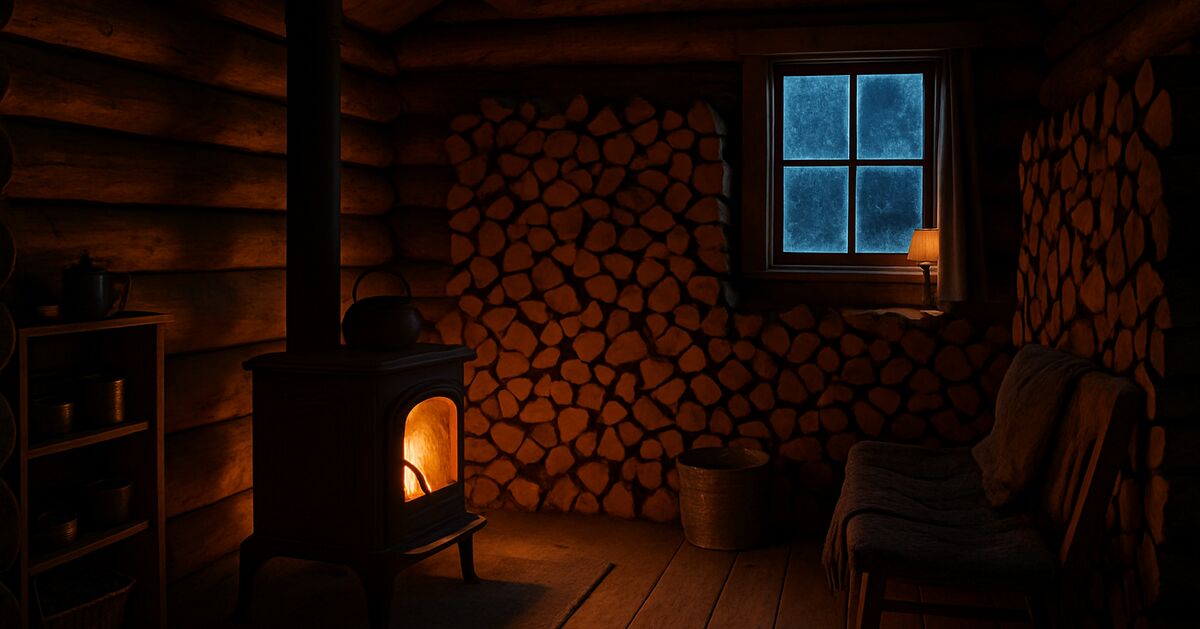
The first hard winter is when off-grid heating decisions get made for real, not on paper. You find out fast whether the stove you picked can hold a bed of coals through a 20-below night, whether propane bottles freeze up when you need them most, or whether that rocket mass heater everyone raves about online actually works in a 200 square foot cabin with a low ceiling and no experienced mason nearby.
There is no single right answer here. Wood, rocket mass heaters, and propane each solve the heating problem differently, and each one asks something different of you: money, labor, storage space, or ongoing fuel logistics. This guide walks through all three honestly, including the parts that don't show up in the glossy cabin photos.
Start with the actual heat load, not the stove
Before comparing fuels, it helps to know roughly how much heat your space needs. A small, well-insulated cabin (under 400 square feet, decent windows, insulated floor and roof) in a moderate cold climate often lands in the low tens of thousands of BTU/hr on the coldest nights, though a proper heat load calculation for your climate is the only way to know. A drafty single-wall cabin in a genuinely cold climate can need several times that, since uninsulated walls lose heat far faster than insulated ones. This matters because oversizing a wood stove leads to smoldering, creosote-heavy fires (you have to keep damping it down), while undersizing means you're never warm no matter what you burn.
If you haven't insulated well, no heater on this list will make you happy. Air sealing and insulation are the cheapest BTUs you'll ever buy, and they matter more than which stove badge is on the door. That said, once the envelope is reasonably tight, the fuel choice becomes the real fork in the road.
Wood stoves: the default for a reason
A cast iron or steel wood stove is a common heat source in off-grid cabins, and for good reason. Wood is often free or cheap if you have land or access to it, the technology is simple and field-repairable, and a good stove will run with zero electricity, which matters a lot if you're also managing a modest solar setup and don't want a fan-driven heater eating into your battery bank.
What it actually costs. At the time of writing, basic small cabin wood stoves I have seen listed generally fall in the several hundred to low four figure range, so check current prices yourself. Budget separately for stovepipe, a roof or wall thimble, and a spark arrestor cap if you're in a fire-prone area, since these can rival the stove's own cost. Budget for a hearth pad and wall shielding if you're working with tight clearances, that's another $100 to $400 depending on materials. All in, once you add pipe, hearth, and shielding, expect the installation to cost more than the stove alone, and more again if you hire someone for the roof penetration and flashing.
What it actually costs you in labor. This is the part people underestimate. A cabin that burns a few cords a year means someone is cutting, splitting, stacking, and hauling that wood, every single year, on a schedule that doesn't care about your other plans. Green wood needs six months to two years of seasoning depending on species, so you're not just gathering fuel for this winter, you're gathering it for next winter too. If you're buying wood instead of cutting your own, cord prices vary a lot by region and species, so price it locally before you plan around it.
The daily reality. Wood heat is not "set and forget." You're up in the night to feed a dying fire, you're managing chimney creosote buildup (a stovepipe brush and a chimney fire are both real possibilities if you skip maintenance), and you're living with ash cleanup and wood mess year-round. In exchange, you get heat that doesn't depend on any supply chain, fuel that's often free, and a stove that can also serve as a cooktop in a pinch, which matters a lot in a genuinely small off-grid footprint.
Look for stoves rated for the square footage you actually have, not the square footage you wish you had. A stove rated for 1,200 square feet in a 250 square foot cabin will run you out of the building on mild days and tempt you into damping it down so hard that you gum up the flue with creosote.
Rocket mass heaters: incredible efficiency, serious commitment
A rocket mass heater burns small pieces of dry wood at a very high temperature inside an insulated combustion chamber, then routes the exhaust through a long duct run embedded in a thermal mass, usually a cob or masonry bench. That mass soaks up heat and radiates it slowly for hours after the fire's gone out. Done well, builders report it uses noticeably less wood than a conventional stove for the same comfort, because more of the heat is captured in the mass instead of going up the flue.
Why people love them. The combustion is hot and fairly complete, so you get very little smoke and very little creosote once the system is dialed in. You're burning twigs and scrap wood rather than needing a full woodshed of split cordwood. And the heat you get is radiant and steady, a warm bench or wall, rather than the boom-and-bust cycle of a metal stove.
Why they're not for everyone. This is a build project, not a purchase. A rocket mass heater is typically owner-built or built with an experienced local builder, since manufactured commercial units are rare and often expensive relative to the DIY versions. Expect a real weekend-to-week-long build with masonry or cob work, a learning curve on the burn tunnel and riser dimensions (get the proportions wrong and it smokes into your cabin instead of drawing properly), and a permanent, heavy structure that's difficult to modify once built. The thermal mass is heavy, easily hundreds of pounds of cob or masonry, so the floor structure has to be able to carry it.
Material costs can be low, since barrels, pipe, firebrick, and masonry supplies are cheap relative to a manufactured stove if you're doing the labor yourself. But you're paying in sweat equity and a real risk of a failed first attempt. Rocket mass heaters also don't love being started and stopped repeatedly if you're gone for stretches, since the mass needs sustained burns to charge up properly. If your cabin is a weekend retreat rather than a full-time home, a rocket mass heater's slow-charging thermal mass may not have time to do its job before you leave again.
Building codes are a real consideration too. Check with your local building department first, since a heater without a clear permitting path can complicate insurance and resale even if the build itself is sound.
Propane heaters: the low-labor option with an ongoing bill
Propane heat trades labor for money and convenience. A propane heater, whether it's a wall-mounted catalytic unit, a small radiant heater, or a vented furnace, gives you instant, adjustable, thermostatically controlled heat with none of the daily fire-tending. For anyone splitting time between an off-grid place and a regular job, or anyone who simply doesn't want heating to be a second part-time occupation, that convenience is worth a lot.
What it actually costs. Small unvented catalytic propane heaters rated for indoor use with an oxygen depletion sensor are the cheapest option, but check current prices before budgeting. Vented propane wall furnaces cost substantially more than unvented units, and more again if you need a chimney or wall thimble added. Then there's the ongoing fuel cost: propane prices vary by region and by whether you're on a fill contract or buying exchange tanks, and seasonal use in a small cabin can run into hundreds of gallons depending on climate and insulation. That's a real annual bill that never goes away and is exposed to price swings you don't control, so price it out at local rates before committing.
The safety piece matters more here than with wood. Any unvented propane heater consumes oxygen and produces water vapor and combustion byproducts as it runs, so ventilation is not optional. A cracked window or air intake, paired with a working carbon monoxide detector, is genuinely non-negotiable in a small sealed cabin. Vented units solve the indoor air quality problem by exhausting outside, but cost more to install. Skipping ventilation to save heat is one of the more dangerous shortcuts a beginner can take with propane, and it's worth treating that rule as absolute rather than a suggestion.
Cold weather propane quirks. Propane systems can struggle in extreme cold: regulators can freeze, and propane's vapor pressure drops in very cold tanks, which can starve a heater of fuel right when you need it most. Keeping tanks properly sized and, where possible, sheltered from direct wind and extreme cold helps, but it's a real limitation worth knowing about before you're relying on propane as a sole heat source in a genuinely harsh climate.
Propane also depends entirely on a supply chain: you need a way to haul or have tanks delivered, which isn't always simple on a rough off-grid road in winter. For many people, propane ends up as a backup or secondary heat source rather than the only one, precisely because it's the option most exposed to logistics outside your control.
Putting them side by side
Wood stove: moderate upfront cost, ongoing labor instead of ongoing cash, works with zero electricity, doubles as a cooktop, requires wood storage and chimney maintenance.
Rocket mass heater: low material cost but a real build project, extremely fuel efficient, needs sustained use to work well, best suited to full-time occupancy and a lenient jurisdiction.
Propane: low labor, instant adjustable heat, ongoing fuel cost and supply chain dependence, non-negotiable ventilation and carbon monoxide safety requirements, can struggle in extreme cold.
Many off-grid households end up with two of these rather than one: a wood stove as the primary workhorse with a small propane heater as backup for mornings before the fire's built up, or for stretches when nobody's around to tend a fire. That redundancy is worth building into your plan from day one rather than discovering the hard way that your single heat source has a single point of failure.
Where heating fits into the bigger off-grid picture
Heating doesn't exist in isolation from the rest of your systems. A propane heater with a small fan or electronic ignition draws power, which ties back into whatever battery bank and inverter setup you've got, and that's a good reason to think through your battery bank voltage choice before you commit to a heating strategy that depends on electricity. If you're still deciding between a modest portable power setup and a full fixed solar system, that decision affects what kind of heater accessories (fans, thermostats, ignition modules) you can reliably run, and it's worth reading through the comparison of portable power stations versus a full solar system before locking in either choice.
Wood heat and cooking also often share the same stove in small cabins, which is worth factoring into which unit you buy, since a stove with a flat cooktop surface earns its keep twice over. For a broader rundown of gear worth trusting in a small off-grid setup, my start here gear guides cover stoves, ventilation accessories, and CO detectors I think are worth the money, organized by category so you're not guessing.
Common mistakes worth avoiding
Buying a wood stove sized for a much bigger space is a common mistake, since damping down an oversized stove leads to smoldering fires and creosote buildup. Skipping a carbon monoxide detector when running any combustion heater indoors, wood or propane, is another frequent and serious mistake, and a detector is cheap insurance. Underestimating the labor of a wood-heat life, especially for people moving from a city apartment, causes a lot of first-winter regret. And attempting a rocket mass heater build without first researching burn tunnel and riser proportions from people who've actually built working units leads to a lot of smoky, abandoned first attempts.
The honest bottom line
If you want the lowest ongoing cost and don't mind physical labor, wood wins. If you want maximum fuel efficiency and are willing to commit to a real build project in a permanent home, a rocket mass heater is remarkable technology worth serious consideration. If you want low labor and instant heat and are willing to pay an ongoing fuel bill and respect ventilation rules strictly, propane earns its place, especially as a backup.
None of these choices are permanent or exclusive. Plenty of off-grid households start with propane while they're still building out their wood supply chain, or add a small propane unit years into a wood-heat life once they get tired of cold mornings. Whichever you start with, plan for redundancy, respect the ventilation and detector requirements around combustion, and size your primary heater to the space you actually have rather than the space you hope to build someday.
If you're weighing this decision against other systems in your build, the rest of my blog covers water, power, and waste systems in the same plain-spoken way, and my about page has more on how I approach these guides. Questions about a specific setup are always welcome through my contact page.
The rest of the shortlist
Recommended off-grid gear
Affiliate disclosure: Some links on this site are affiliate links, including Amazon links: as an Amazon Associate I earn from qualifying purchases. Buying through one costs you nothing extra, and it never changes what I recommend.
Products appear here only when they match this article's subject. Selection is based on documented specs and owner reports, never on compensation; pages with no relevant gear carry none.
The InstaFire Vesta self-powered indoor heater and stove bundled with canned heat cooking fuel, for power-outage heating and cooking; check the current spec sheet.
Claim audit: 25 consequential claims checked against the article's sources; unsupported wording revised where it could not be substantiated.
Claim-by-claim audit (25 checked)
“A small, well-insulated cabin (under 400 square feet, decent windows, insulated floor and roof) in a moderate cold climate often lands in the low tens of thousands of BTU/hr on the…” (rewritten to what the article can stand behind)
“A drafty single-wall cabin in a genuinely cold climate can need several times that, since uninsulated walls lose heat far faster than insulated ones.” (rewritten to what the article can stand behind)
“This matters because oversizing a wood stove leads to smoldering, creosote-heavy fires (you have to keep damping it down), while undersizing means you're never warm no matter what …” (cited → epa.gov)
“A cast iron or steel wood stove is a common heat source in off-grid cabins, and for good reason.” (rewritten to what the article can stand behind)
“At the time of writing, basic small cabin wood stoves I have seen listed generally fall in the several hundred to low four figure range, so check current prices yourself.” (rewritten to what the article can stand behind)
“Budget separately for stovepipe, a roof or wall thimble, and a spark arrestor cap if you're in a fire-prone area, since these can rival the stove's own cost.” (rewritten to what the article can stand behind)
“All in, once you add pipe, hearth, and shielding, expect the installation to cost more than the stove alone, and more again if you hire someone for the roof penetration and flashin…” (rewritten to what the article can stand behind)
“A cabin that burns a few cords a year means someone is cutting, splitting, stacking, and hauling that wood, every single year, on a schedule that doesn't care about your other plan…” (rewritten to what the article can stand behind)
“Green wood needs six months to two years of seasoning depending on species, so you're not just gathering fuel for this winter, you're gathering it for next winter too.” (cited → epa.gov)
“If you're buying wood instead of cutting your own, cord prices vary a lot by region and species, so price it locally before you plan around it.” (rewritten to what the article can stand behind)
“You're up in the night to feed a dying fire, you're managing chimney creosote buildup (a stovepipe brush and a chimney fire are both real possibilities if you skip maintenance), an…” (cited → nfpa.org)
“Done well, builders report it uses noticeably less wood than a conventional stove for the same comfort, because more of the heat is captured in the mass instead of going up the flu…” (rewritten to what the article can stand behind)
“The combustion is hot and fairly complete, so you get very little smoke and very little creosote once the system is dialed in.” (reasoning shown in the article)
“The thermal mass is heavy, easily hundreds of pounds of cob or masonry, so the floor structure has to be able to carry it.” (rewritten to what the article can stand behind)
“Material costs can be low, since barrels, pipe, firebrick, and masonry supplies are cheap relative to a manufactured stove if you're doing the labor yourself.” (rewritten to what the article can stand behind)
“Check with your local building department first, since a heater without a clear permitting path can complicate insurance and resale even if the build itself is sound.” (rewritten to what the article can stand behind)
“Small unvented catalytic propane heaters rated for indoor use with an oxygen depletion sensor are the cheapest option, but check current prices before budgeting.” (rewritten to what the article can stand behind)
“Vented propane wall furnaces cost substantially more than unvented units, and more again if you need a chimney or wall thimble added.” (rewritten to what the article can stand behind)
“Then there's the ongoing fuel cost: propane prices vary by region and by whether you're on a fill contract or buying exchange tanks, and seasonal use in a small cabin can run into …” (rewritten to what the article can stand behind)
“That's a real annual bill that never goes away and is exposed to price swings you don't control, so price it out at local rates before committing.” (rewritten to what the article can stand behind)
“Any unvented propane heater consumes oxygen and produces water vapor and combustion byproducts as it runs, so ventilation is not optional.” (cited → usfa.fema.gov)
“A cracked window or air intake, paired with a working carbon monoxide detector, is genuinely non-negotiable in a small sealed cabin.” (cited → nfpa.org)
“Propane systems can struggle in extreme cold: regulators can freeze, and propane's vapor pressure drops in very cold tanks, which can starve a heater of fuel right when you need it…” (reasoning shown in the article)
“Buying a wood stove sized for a much bigger space is a common mistake, since damping down an oversized stove leads to smoldering fires and creosote buildup.” (rewritten to what the article can stand behind)
Before you go
One useful off-grid email a week.
Practical gear rundowns, honest how-tos, and plain-English guides from someone doing the homework in the open.
I am building a place for off-grid people to swap real answers: a forum by topic, classifieds for gear and services, and real estate for off-grid land and homes. It is new, so the early members shape what it becomes. A free account lets you post in all three.
No ER ten minutes away means you have to be your own triage nurse. Here's how to tell a bad bee sting from the real emergency, and what to actually stock.
In many off-grid disasters, the fire or flood itself isn't the decisive factor, it's the hour you waited too long to leave. Here's how to set real, numeric triggers before you need them.
Tax sale and sheriff's auction land looks like a bargain, but redemption periods, hidden liens, and unseen parcels turn a lot of cheap acreage into an expensive lesson. Here's how to vet a listing before you bid.