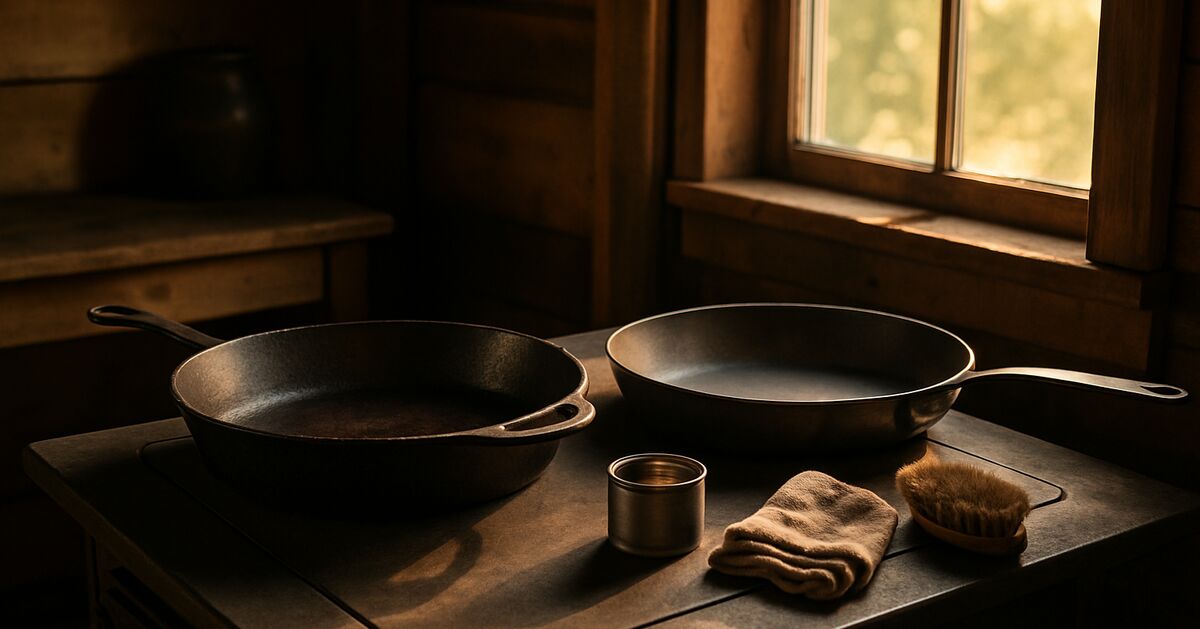
A rusted skillet isn't ruined. It's just waiting for someone who knows what they're doing to bring it back, and off-grid, that person needs to be you.
Cast iron and carbon steel get recommended for off-grid kitchens, and for good reason. They work on wood stoves, propane burners, open coals, and solar ovens alike. They don't have a nonstick coating at all, so there's no synthetic surface to worry about at high heat on a rocket stove. They can last a very long time if you don't let them rust through, and they can be repaired with things you probably already have on a homestead: oil, salt, a wire brush, and heat. But most of the advice out there assumes you've got a sink, running hot water, and a dishwasher you're choosing not to use. Off-grid, the rules change a little, and understanding why makes the difference between pans that last thirty years and pans you're scrubbing rust off every spring.
Why cast iron and carbon steel make sense off-grid
Both metals are basically bare steel with no synthetic coating standing between the metal and your food. That's the whole appeal. There's nothing to scratch off and no coating to worry about under a wood stove's dry, uneven heat, though any pan can be stressed by sudden temperature swings.
Cast iron holds heat well, which matters when your heat source is inconsistent, like a wood stove that runs hot for twenty minutes after you add a log and then cools. It evens things out. Carbon steel heats and cools faster, which some people prefer for anything that needs quick temperature changes, like a stir fry over a propane burner. Neither one cares if you're cooking over wood, rocket, or propane heat, which matters if your setup uses more than one heat source depending on the season.
The catch is that both metals are reactive. Bare steel rusts when it's wet, and it can pick up metallic or bitter flavors if the seasoning layer isn't built up properly. The seasoning, a thin polymerized layer of oil baked into the surface, is what makes the pan nonstick and rust resistant. Build it right and maintain it, and the pan basically takes care of itself. Skip that step, and you're fighting rust forever, especially somewhere humid or where a pan sits in a cool cabin overnight without a fire going.
Seasoning without a full kitchen
The classic advice is to scrub the pan, coat it thin with oil, and bake it upside down in a 450 to 500 degree oven for an hour, repeating a few times. That's doable if you've got a real off-grid oven going, but plenty of off-grid cooks don't have consistent oven heat on tap, especially early on.
The stovetop method is a workable alternative and uses less fuel:
Heat the clean, dry pan on your burner or stove top until it's hot enough that a drop of water sizzles off.
Wipe on a very thin layer of oil (flaxseed, grapeseed, or plain vegetable oil all work; you don't need anything exotic) with a rag or paper towel, then wipe most of it back off. Too much oil is a common mistake, and manufacturer instructions consistently call for a very thin coat. It should look almost dry.
Let it heat until it stops smoking and the surface darkens slightly.
Repeat two or three times.
This gets you a working seasoning layer in twenty minutes without needing an oven at all. It won't be as deep as a properly baked layer, but it builds fast after that with normal cooking, especially anything fried in a bit of fat.
The daily habits that actually matter
Most of what ruins cast iron and carbon steel off-grid isn't a single bad decision, it's small habits repeated for months.
Never let it air dry on its own. This is the single biggest difference from a normal kitchen. Bare iron rusts where water sits, so even a thin film left in a humid cabin can start rust. Off-grid, you often can't just leave a wet pan by the sink and forget it for a day. Dry it immediately with a rag, then put it back on a warm stove for a minute or two to drive off any remaining moisture, then wipe on a trace of oil.
Skip soap most of the time, but don't be religious about it. A little dish soap once in a while won't strip a well built seasoning layer, despite what you might have heard. What actually strips seasoning is prolonged soaking, harsh scrubbing with steel wool on a regular basis, or the dishwasher (which you're not using anyway). Off-grid, minimizing water use matters for its own reasons, so a quick wipe with hot water and a stiff brush, then dry and oil, is usually the whole routine. If you're managing greywater carefully, a wipe-and-oil routine can use less water than washing and rinsing other cookware.
Use the right tools for stuck food. A stiff brush, a pan scraper, or coarse salt with a bit of oil rubbed in a circular motion will get off stuck bits without damaging seasoning. Save steel wool for actual rust removal, not routine cleaning.
Store it dry, with airflow, and a thin oil coat. Nesting pans directly on top of each other traps moisture between them. A paper towel or cloth between pans, or hanging them if you have the wall space, keeps air moving and stops rust spots from forming where two pans touch.
Rust happens. Here's the actual fix
Off-grid living means humidity swings, cabins that go unheated for stretches, and sometimes a pan left out on a counter because you got busy with chores. Rust will show up eventually. It isn't a crisis.
For light surface rust (an orange haze, no pitting), scrub it off with a stiff brush or fine steel wool and a little oil or water, dry the pan completely, and re-season the affected area the way described above. You can usually be cooking in it again within the hour.
For heavier rust with flaking or pitting, strip the whole pan back to bare metal. This is where vinegar comes in: a soak of equal parts white vinegar and water, checked every 20 to 30 minutes, will dissolve rust without you scrubbing forever, but leaving a pan in vinegar too long will start eating the actual iron, not just the rust, so don't walk away and forget it. Once the pan is bare and rust free, dry it completely (heat it on the stove to be sure) and re-season from scratch with several coats.
This whole process uses vinegar, oil, a brush, and heat, all things a stocked homestead kitchen has without a special trip anywhere. It's part of why cast iron is such a good fit for off-grid life: repair doesn't depend on a specialty store or a part number, unlike a lot of the mechanical gear that keeps a property running, which is why a spare parts wall makes sense for tools and fittings but cast iron mostly just needs oil and elbow grease.
Matching pans to your actual heat source
Not every pan suits every heat source, and this is where a lot of off-grid cooks get frustrated without knowing why.
Thin carbon steel pans heat up fast and respond quickly to changes, which is great over a propane burner where you can dial the flame, but on a wood stove where heat is uneven and hard to control precisely, a thin pan can scorch food in the hot spots while barely warming elsewhere. A thicker cast iron pan spreads that heat out and forgives a wood stove's inconsistency far better.
On a rocket stove, where the flame is concentrated and intense right at the point of contact, cast iron's mass again works in your favor, buffering against scorching. Thin carbon steel woks are actually built for this kind of intense, uneven heat, but a flat carbon steel skillet on a rocket stove will need more attention and more moving of the pan than the same food in cast iron.
For solar ovens, both metals work, but the dark color of well seasoned cast iron actually helps it absorb heat a little more efficiently than shiny carbon steel, which matters when your heat source is already the weakest link.
The practical takeaway: if you're only buying one or two pans for a genuinely mixed off-grid setup that spans a wood stove in winter and a propane burner in summer, a mid-weight cast iron skillet is the safer, more forgiving choice. Carbon steel is worth adding once you know your setup and want something faster and lighter for specific jobs like eggs or stir fry.
What to actually buy, and what to skip
Vintage cast iron, the kind with a smoother finish, machined surface, and lighter weight than newer cast iron, is worth hunting for at estate sales and secondhand stores if you're patient. Many cooks prefer it to newer pans, which often have a rougher cast surface that takes more seasoning cycles to smooth out.
If buying new, a basic 10 or 12 inch skillet from a reputable maker will cover most everyday cooking. Skip the enameled cast iron for stovetop cooking unless you specifically want it for stews and braises; the enamel is a coating that can be damaged and it's heavier for what it does.
A single carbon steel wok or skillet is worth adding once your kitchen routine is established and you know what you're actually cooking most. Don't buy a full set of anything before you've lived with a couple of pans through a season and figured out your own habits, which is really the whole lesson of the first year on off-grid land: you learn what you actually need by using what you have, not by provisioning for a kitchen you imagine in advance.
A note on lids and versatility
A cast iron pan with a tight fitting lid does double duty as a small oven substitute, letting you bake biscuits or cornbread over coals or a wood stove without a full oven setup. This is worth knowing early, because it means you don't need to solve the "real oven" problem on day one to get bread-like results. A Dutch oven, similarly, covers baking, stewing, and frying in one piece of gear, which matters when storage space and stove-top real estate are both limited.
If you're still working out your whole cooking setup, from what stove to run to how you're keeping food cold, it's worth reading through the broader picture of running a kitchen without shore power before you commit to specific cookware, since the two decisions shape each other more than people expect.
Cast iron and carbon steel reward patience and punish neglect, but the neglect is easy to avoid once you know the few habits that matter: dry it fast, oil it lightly, don't let it soak, and don't panic at rust. Treated that way, a good skillet outlives the stove you're cooking it on, and probably outlives you too, which is about as close to a permanent fixture as anything gets in an off-grid kitchen. If you want more specifics on the stoves and heat sources these pans actually pair with, the rest of the Heating & Cooking coverage on the blog digs into wood, propane, and rocket stove setups in more depth, and the FAQ page covers some of the smaller recurring questions people ask about outfitting a first off-grid kitchen.
The rest of the shortlist
Recommended off-grid gear
Affiliate disclosure: Some links on this site are affiliate links, including Amazon links: as an Amazon Associate I earn from qualifying purchases. Buying through one costs you nothing extra, and it never changes what I recommend.
Products appear here only when they match this article's subject. Selection is based on documented specs and owner reports, never on compensation; pages with no relevant gear carry none.
The InstaFire Vesta self-powered indoor heater and stove bundled with 24 cans of canned heat fuel, for power-outage heating and cooking; check the current spec sheet.
The InstaFire Vesta self-powered indoor heater and stove bundled with canned heat cooking fuel, for power-outage heating and cooking; check the current spec sheet.
Claim audit: 15 consequential claims checked against the article's sources; unsupported wording revised where it could not be substantiated.
Claim-by-claim audit (15 checked)
“They don't have a nonstick coating at all, so there's no synthetic surface to worry about at high heat on a rocket stove.” (rewritten to what the article can stand behind)
“They can last a very long time if you don't let them rust through, and they can be repaired with things you probably already have on a homestead: oil, salt, a wire brush, and heat.” (rewritten to what the article can stand behind)
“There's nothing to scratch off and no coating to worry about under a wood stove's dry, uneven heat, though any pan can be stressed by sudden temperature swings.” (rewritten to what the article can stand behind)
“The seasoning, a thin polymerized layer of oil baked into the surface, is what makes the pan nonstick and rust resistant.” (cited → lodgecastiron.com)
“The stovetop method is a workable alternative and uses less fuel:” (rewritten to what the article can stand behind)
“Too much oil is a common mistake, and manufacturer instructions consistently call for a very thin coat.” (rewritten to what the article can stand behind)
“Bare iron rusts where water sits, so even a thin film left in a humid cabin can start rust.” (rewritten to what the article can stand behind)
“Dry it immediately with a rag, then put it back on a warm stove for a minute or two to drive off any remaining moisture, then wipe on a trace of oil.” (cited → extension.umaine.edu)
“A little dish soap once in a while won't strip a well built seasoning layer, despite what you might have heard.” (cited → lodgecastiron.com)
“If you're managing [greywater](/blog/greywater-basics-for-an-off-grid-cabin-or-homestead) carefully, a wipe-and-oil routine can use less water than washing and rinsing other cookwa…” (rewritten to what the article can stand behind)
“This is where vinegar comes in: a soak of equal parts white vinegar and water, checked every 20 to 30 minutes, will dissolve rust without you scrubbing forever, but leaving a pan i…” (cited → extension.msstate.edu)
“For solar ovens, both metals work, but the dark color of well seasoned cast iron actually helps it absorb heat a little more efficiently than shiny carbon steel, which matters when…” (reasoning shown in the article)
“Many cooks prefer it to newer pans, which often have a rougher cast surface that takes more seasoning cycles to smooth out.” (rewritten to what the article can stand behind)
“If buying new, a basic 10 or 12 inch skillet from a reputable maker will cover most everyday cooking.” (rewritten to what the article can stand behind)
“Skip the enameled cast iron for stovetop cooking unless you specifically want it for stews and braises; the enamel is a coating that can be damaged and it's heavier for what it doe…” (rewritten to what the article can stand behind)
Before you go
One useful off-grid email a week.
Practical gear rundowns, honest how-tos, and plain-English guides from someone doing the homework in the open.
I am building a place for off-grid people to swap real answers: a forum by topic, classifieds for gear and services, and real estate for off-grid land and homes. It is new, so the early members shape what it becomes. A free account lets you post in all three.
No ER ten minutes away means you have to be your own triage nurse. Here's how to tell a bad bee sting from the real emergency, and what to actually stock.
In many off-grid disasters, the fire or flood itself isn't the decisive factor, it's the hour you waited too long to leave. Here's how to set real, numeric triggers before you need them.
Tax sale and sheriff's auction land looks like a bargain, but redemption periods, hidden liens, and unseen parcels turn a lot of cheap acreage into an expensive lesson. Here's how to vet a listing before you bid.