Your water can pass every taste test, look perfectly clear, and still be quietly poisoning you over years. That's the uncomfortable truth about the contaminants nobody talks about at the well-drilling stage: nitrates, arsenic, fluoride, uranium, and heavy metals like lead, manganese, and iron. Boiling won't touch them. UV light won't touch them. Even a decent sediment filter will let most of them sail right through. If you've already sorted out disinfection for pathogens, this is the next layer, and it's the one that trips up a lot of otherwise careful off-grid households.
We've already covered the basics of killing microorganisms in off-grid water treatment methods compared, and how often to pull a sample in testing off-grid water quality. This post picks up where those leave off: what to do when the test results come back with something in them that biology-focused treatment can't fix.
Why "clear and odorless" tells you almost nothing
Pathogens make water taste, smell, or look off often enough that your senses can sometimes catch a problem before you get sick. Chemical contaminants are different. Arsenic is tasteless and colorless at the concentrations that matter for long-term health. Nitrates are the same. Fluoride, uranium, and most heavy metals give you no sensory warning at all. Iron and manganese are the exception: they'll stain fixtures and laundry and give water a metallic taste, so at least you get a clue, but by the time you notice, you've usually been drinking it for a while.
This is why a private well needs actual laboratory testing, not just a nose test and a bottle of bleach once a year. The EPA does not regulate private wells the way it regulates municipal water systems, so the responsibility for knowing what's in your water sits entirely with you. That's a real freedom if you're building an off-grid life, but it comes with real responsibility attached.
The short list of chemical contaminants worth testing for
You don't need to test for everything under the sun every year. A baseline panel for a new well, or a well you've inherited without records, should cover:
Nitrate and nitrite. Common near agricultural land, septic systems, and livestock areas. High nitrate is especially dangerous for infants (it causes methemoglobinemia, sometimes called "blue baby syndrome") and is a concern in pregnancy.
Arsenic. Naturally occurring in bedrock in some regions; ask your state geological survey or health department whether arsenic is common in your area. It's a known carcinogen at chronic low-level exposure, not just at acute poisoning doses.
Fluoride. Naturally elevated in some groundwater; too much causes dental and skeletal problems over time.
Lead and copper. Usually a plumbing problem rather than a source-water problem, leaching from old pipe, solder, or fittings, especially if your water is acidic (low pH).
Iron and manganese. Not usually a health hazard at typical levels but a major nuisance for staining, taste, and clogging fixtures. Manganese is mainly a nuisance issue, but ask your state health department about health guidance for high levels before dismissing it as cosmetic.
Uranium and radon. Relevant in specific geological areas, particularly granite country. Ask your local health department or state geological survey whether your area is a known hot spot before you decide whether this is worth the extra lab fee.
Hardness (calcium and magnesium). Not a health issue but drives a lot of the "why does everything have white crust on it" questions and affects how well soap and treatment systems work.
Your state's environmental or health department often maintains groundwater quality maps by county, and many state extension services or public health labs offer well-water test kits at a fraction of what a private commercial lab charges. That's usually your first call, not a big box hardware store test strip kit, which mainly checks pH and hardness and won't catch arsenic or nitrate reliably.
Reading a lab report without panicking or shrugging it off
Lab reports list a result next to a "maximum contaminant level" (MCL), which is the EPA's enforceable limit for public water systems. Private wells aren't legally bound by the MCL, but it's still the most reasonable benchmark to compare against, because it reflects decades of health-effects research.
A few things worth knowing when you're staring at a results page:
Being under the MCL doesn't mean zero. It means the number is below the threshold where the EPA has determined health risk becomes a serious concern over a lifetime of exposure. If you're close to the line, especially with a young family, it's reasonable to treat rather than just monitor.
Nitrate has a much lower threshold for infants than the general public. A level fine for adults can still be a real risk for a baby's formula water.
One test is a snapshot, not a verdict. Nitrate levels especially can shift seasonally with fertilizer application and rainfall. If your first test comes back borderline, retest in a different season before deciding it's a non-issue.
If several unrelated wells nearby have the same contaminant, it's probably geological. If it's just you, look hard at your well construction, casing depth, and proximity to septic or livestock areas.
Treatment methods that actually address chemical contaminants
This is where a lot of off-grid households go wrong: they've got a beautiful gravity filter setup or a UV sterilizer and assume they're covered. Neither does anything meaningful for dissolved chemical contaminants. If you're weighing filter types generally, our piece on gravity filters versus pump filters is a good primer on mechanical filtration, but chemical removal calls for different technology entirely.
Reverse osmosis (RO) is the most broadly effective option for nitrate, arsenic, fluoride, and most heavy metals. It pushes water through a semi-permeable membrane under pressure, rejecting dissolved solids. The tradeoffs off-grid: RO systems need meaningful water pressure to work well (tie this back into your planning if you've read our post on off-grid water pressure), they waste water in the reject stream, so check the manufacturer's stated recovery ratio, and they use some power if you're running a pump-assisted unit. Whole-house RO is expensive and usually overkill; a point-of-use RO unit at the kitchen tap, treating just your drinking and cooking water, is the more realistic off-grid setup.
Activated alumina is commonly marketed for fluoride and arsenic; check the unit's certified performance claims and compare maintenance and waste against RO. It doesn't touch nitrate.
Anion exchange resin (similar concept to a water softener, but tuned for nitrate rather than calcium) is one commonly offered option for nitrate; confirm certified nitrate reduction before buying. It needs periodic regeneration with brine, similar to a softener, so factor that into your off-grid water and salt logistics.
Distillation removes nearly everything, chemical and biological, but it's slow and power-hungry, better suited to producing small batches of drinking water than running a whole household.
Iron and manganese filters (often called "greensand" or oxidizing filters) handle the staining metals well but are a separate system from your drinking-water contaminant treatment. Address the nuisance metals first since they can clog or foul other equipment downstream, including your RO membranes.
There is no single filter that "does it all.Chemical contaminant treatment often involves a multi-stage setup: sediment pre-filter, then whatever targeted technology matches your specific contaminant, then possibly UV or another disinfection step if your source is also biologically vulnerable. Design it around your actual lab results, not around what a catalog calls a "complete" system.
Sizing treatment to how you actually use water
You don't necessarily need to treat every gallon that comes out of every tap for chemical contaminants. Nitrate, arsenic, and fluoride matter most in water you drink or cook with. If your household chemical contaminant levels are moderate, not extreme, a point-of-use system at the kitchen sink treating only drinking and cooking water is often a reasonable, budget-conscious middle ground compared to treating your whole storage tank or cistern.
This connects directly to how you've sized your storage in the first place. If your drinking water comes from a separate, smaller treated reserve rather than the same tank that feeds your garden hose and laundry, you can spend your treatment budget and maintenance effort on a much smaller volume.
Common mistakes worth naming directly
A mistake that comes up again and again in owner forums and extension service consultations is assuming a whole-house sediment or carbon filter is "handling" chemical contamination. Carbon filters are excellent for chlorine taste, some organic compounds, and improving flavor, but they do very little for nitrate, arsenic, or dissolved metals. Read the certification on any filter cartridge and confirm with the certifier which standard covers health-related contaminant reduction versus taste and odor, before assuming it covers what you need.
Another recurring problem: treating the symptom instead of the source. If lead is showing up, check your plumbing and fittings before assuming it's coming from the aquifer. Old solder joints, certain older well pump components, and even some cheap fittings can leach lead into water that was clean at the source.
And a quieter mistake: testing once at move-in and never again. Groundwater chemistry shifts. Agricultural activity upstream, a new septic system nearby, or even drought years concentrating minerals can all change your numbers. Annual nitrate testing and a broader panel every few years is a reasonable rhythm for most private wells, more frequently if you're in a known arsenic or nitrate hot spot or if anyone in the household is pregnant or has an infant.
When to bring in outside expertise
You can DIY a lot of off-grid water treatment, but interpreting a borderline lab result, especially with arsenic or uranium, is worth a call to your state health department or a certified water treatment professional rather than guessing off a forum post. Many state extension offices offer this consultation free or at low cost, and it's a far cheaper insurance policy than years of exposure to a contaminant you didn't realize was there.
If you're just getting your systems dialed in during your first year on the land, this kind of testing belongs on the same checklist as your electrical and structural shakedown items. Our FAQ page covers some of the most common early questions we hear, and if you want to dig through more building-block topics before you commit to a treatment setup, the blog index has the fuller water and power series. If something in this post doesn't match your specific well conditions or you want a second opinion on a lab report, our contact page is open, and you can always read more about how we approach this stuff on the about page.
Chemical water contamination is not a reason to panic about off-grid life. It's a reason to test, once you know what's actually in your water, treating it is a solved, well-understood problem. The people who get burned are the ones who never looked.
The rest of the shortlist
Recommended off-grid gear
Affiliate disclosure: Some links on this site are affiliate links, including Amazon links: as an Amazon Associate I earn from qualifying purchases. Buying through one costs you nothing extra, and it never changes what I recommend.
Products appear here only when they match this article's subject. Selection is based on documented specs and owner reports, never on compensation; pages with no relevant gear carry none.
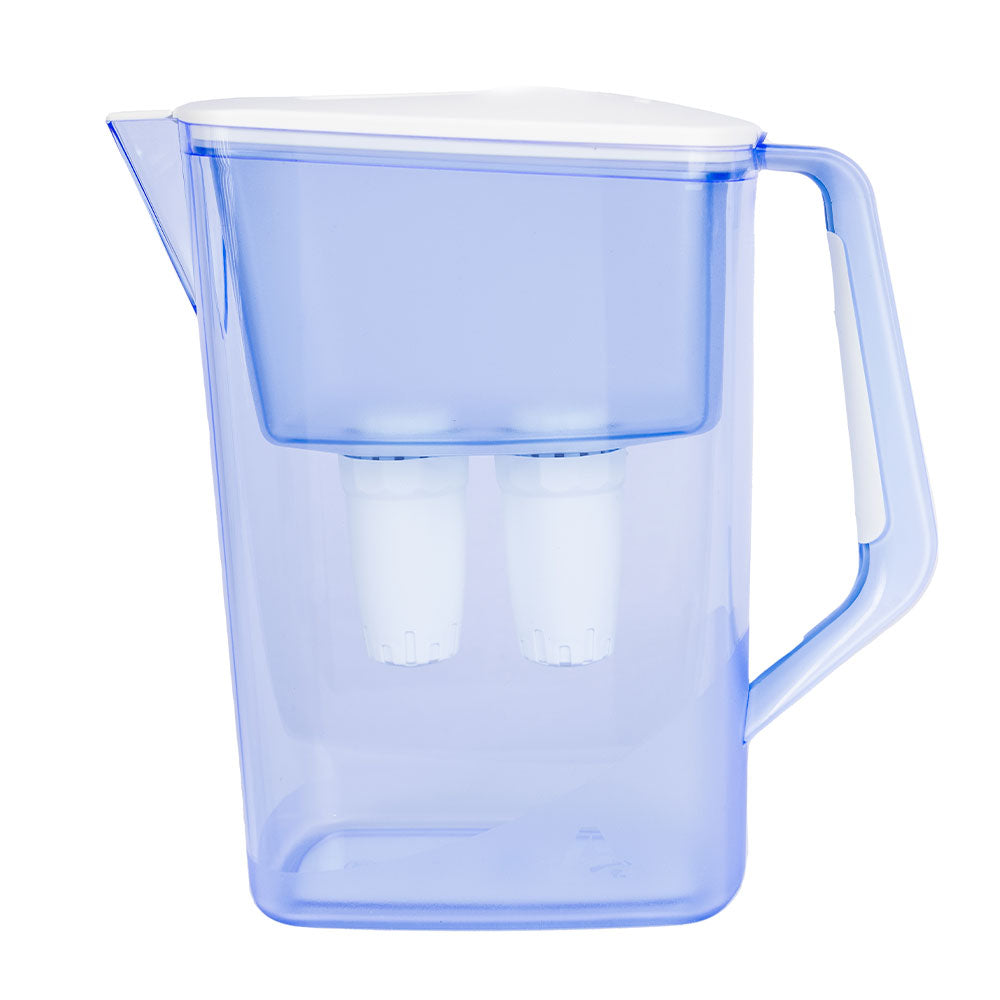
The classic countertop gravity filter: no power, no plumbing, rated by the maker for bacteria, cysts, and many chemicals, with add-on elements for fluoride and arsenic. Read the current element availability note on the spares page before you buy.
Why it's here: Listed as the household-scale option that keeps working through the kind of outage it is meant to cover.
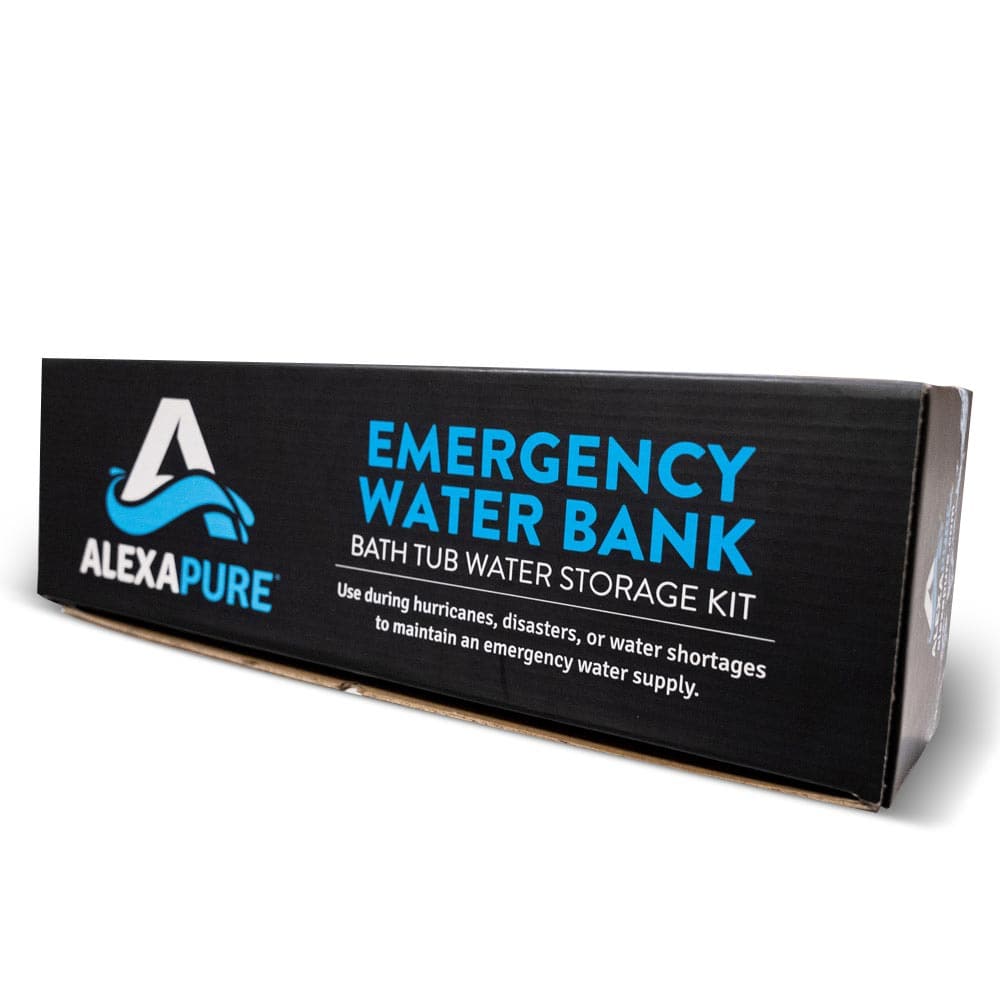
An emergency water bank with hand pump for storing a large volume of water before an outage or storm; check the current spec sheet for capacity details.
Why it's here: Listed because storage is the half of the water problem that filtration does not solve.
The Alexapure emergency water bank sold through Emergency Essentials, for storing a large volume of water before a storm or outage; check the current spec sheet.
“The EPA does not regulate private wells the way it regulates municipal water systems, so the responsibility for knowing what's in your water sits entirely with you.” (cited → epa.gov)
“High nitrate is especially dangerous for infants (it causes methemoglobinemia, sometimes called "blue baby syndrome") and is a concern in pregnancy.” (cited → epa.gov)
“Naturally occurring in bedrock in some regions; ask your state geological survey or health department whether arsenic is common in your area.” (rewritten to what the article can stand behind)
“It's a known carcinogen at chronic low-level exposure, not just at acute poisoning doses.” (cited → epa.gov)
“Manganese is mainly a nuisance issue, but ask your state health department about health guidance for high levels before dismissing it as cosmetic.” (rewritten to what the article can stand behind)
“Lab reports list a result next to a "maximum contaminant level" (MCL), which is the EPA's enforceable limit for public water systems.” (cited → epa.gov)
“**Reverse osmosis (RO)** is the most broadly effective option for nitrate, arsenic, fluoride, and most heavy metals.” (reasoning shown in the article)
“they waste water in the reject stream, so check the manufacturer's stated recovery ratio, and they use some power if you're running a pump-assisted unit.” (rewritten to what the article can stand behind)
“**Activated alumina** is commonly marketed for fluoride and arsenic; check the unit's certified performance claims and compare maintenance and waste against RO.” (rewritten to what the article can stand behind)
“**Anion exchange resin** (similar concept to a water softener, but tuned for nitrate rather than calcium) is one commonly offered option for nitrate; confirm certified nitrate redu…” (rewritten to what the article can stand behind)
“Read the certification on any filter cartridge and confirm with the certifier which standard covers health-related contaminant reduction versus taste and odor, before assuming it c…” (rewritten to what the article can stand behind)
Before you go
One useful off-grid email a week.
Practical gear rundowns, honest how-tos, and plain-English guides from someone doing the homework in the open.
I am building a place for off-grid people to swap real answers: a forum by topic, classifieds for gear and services, and real estate for off-grid land and homes. It is new, so the early members shape what it becomes. A free account lets you post in all three.
No ER ten minutes away means you have to be your own triage nurse. Here's how to tell a bad bee sting from the real emergency, and what to actually stock.
In many off-grid disasters, the fire or flood itself isn't the decisive factor, it's the hour you waited too long to leave. Here's how to set real, numeric triggers before you need them.
Tax sale and sheriff's auction land looks like a bargain, but redemption periods, hidden liens, and unseen parcels turn a lot of cheap acreage into an expensive lesson. Here's how to vet a listing before you bid.