The first time something breaks at 2 a.m. in a snowstorm, you find out very quickly whether you actually planned for off-grid life or just planned for the sunny days. Off-grid systems don't fail gracefully. They fail at the worst possible moment, usually because a ten-dollar part wasn't on a shelf somewhere in your shop.
Stockpiling fuel and spare parts isn't about building a bunker mentality or hoarding for some imagined collapse. It's about understanding that every mechanical and electrical system you depend on has known failure points, predictable wear items, and consumables that run out on a schedule. If you know the schedule, you can beat it.
Why this is different off-grid
On the grid, a broken well pump means a phone call and a same-day fix. Off-grid, it can mean a three-hour drive to town, a part that's backordered, and a week of hauling water in buckets while you wait. The stakes are higher because the safety net is thinner. There's no utility crew coming to bail you out, and often no next-day shipping to a rural route.
This changes the math on what "prepared" means. It's not paranoia, it's just accounting for lead time. If a part takes five days to arrive by mail and your system fails without it, you need either five days of buffer capacity or the part already in hand.
Start with what actually breaks
Before buying anything, make a list of every mechanical system on the property that you depend on daily or seasonally:
Generator (gas, propane, or diesel)
Water pump (well pump, pressure pump, or transfer pump)
Wood stove or cookstove (see the difference between cooking heat and space heat if you're running two stoves)
Chainsaw and other small engines
Tractor, ATV, or truck used for hauling and plowing
For each one, ask: what wears out on a schedule, what fails randomly, and what would leave me completely stuck if it broke. That's your starting inventory list. It's different for every property, which is exactly why a generic "prepper parts kit" from a catalog rarely fits your actual setup.
Fuel: the consumable everyone underestimates
Fuel stockpiling gets complicated because different fuels have different failure modes. Gasoline is generally treated as a short shelf life fuel, diesel is known to gel in cold weather and to support microbial growth in storage, and propane is usually described as stable long term while still needing tank and regulator maintenance.
Gasoline should be treated with a fuel stabilizer if you're storing more than a month's supply, and even then, rotate it. A simple system: keep two or three cans, always fill the newest can and burn from the oldest, so nothing sits for more than a season. Many small engine manufacturers recommend ethanol-free fuel for storage, so check your engine manual and use it if you can find it.
Diesel is more stable long-term but needs a biocide additive if stored for many months, especially in humid climates, because water condensation in the tank breeds microbial growth that clogs filters. Winter-blend diesel or an anti-gel additive is non-negotiable if you're in a cold climate and running a diesel generator or tractor.
Propane is the low-maintenance option. Tanks don't degrade the fuel, and a properly installed system can sit for years. The tradeoff is you need enough tank capacity to make it worthwhile, and propane appliances need their own dedicated spare parts (regulators, hoses, orifices) since they're not interchangeable with gas engine parts.
How much fuel to store depends on what you're running and how long you need to bridge outages. A generator that runs a well pump and a fridge for a few hours a day during a winter storm burns a lot less than one running a whole-house load. Calculate your realistic burn rate, then store enough for your worst realistic outage length, not the theoretical apocalypse. Many households land somewhere in the range of one to a few weeks of generator fuel, but the right number is whatever your own burn rate and outage history support.
The parts that actually matter
Not all spares are equal. Some parts fail often and are cheap. Others fail rarely but are catastrophic if you don't have them. Stock according to that matrix, not according to what looks impressive on a shelf.
High-frequency, low-cost items (always keep 2-3 on hand):
Oil and oil filters for every engine type you own
Air filters
Spark plugs
Fuel filters
Fan belts and drive belts (label which machine each one fits)
Chainsaw chains and bar oil
Water pump seals or gaskets if you know your pump's failure history
Lower-frequency, higher-stakes items (keep at least one spare, ideally sourced before you need it):
A spare pressure switch for your well pump
A spare check valve
Extra pull-cord assembly for small engines
A backup carburetor rebuild kit
Fuses and breakers matched to your solar and generator electrical panels
A spare voltage regulator if your generator or alternator has a known failure pattern
Rare but system-ending items (worth stocking if the part is expensive or slow to source):
A backup well pump if you're deep off-grid and a failure would mean weeks without water
A spare inverter or charge controller if your solar system is your only power source
Extra batteries matched to your bank's age and chemistry
The goal isn't to duplicate your entire mechanical inventory. It's to identify the parts that are cheap now and expensive (in time, money, or hardship) if you don't have them when you need them.
Building the actual repair kit, not just a parts box
A shelf of parts without tools to install them is only half a solution. Pair your parts inventory with a proper set of tools sized to your equipment. If you haven't already, the guide on building a small engine repair kit walks through exactly what belongs in a working toolkit for generators and pumps, from spark plug gap gauges to the right sockets for your specific engine bolts.
Keep manuals (paper copies, not just PDFs on a phone that might be dead when you need it) for every major piece of equipment. Documentation gives you the exact part numbers for your machine, which saves you from guessing at the hardware store.
Where this connects to your bigger systems
Fuel and parts don't exist in isolation. They're one layer in the overall resilience of your property, right alongside water storage, power generation, and building envelope. If you haven't worked out how many gallons of water storage you actually need, that number affects how much backup pump capacity and fuel you need to keep water moving during an outage. If your solar array is undersized for your loads, you'll lean harder on generator fuel, which means your fuel stockpile needs to be bigger than someone with a well-matched system. It's worth revisiting the payback math on solar to see whether adding capacity now might reduce how much you need to store and maintain down the line.
Even site selection plays a role. A property with poor solar exposure and steep slope will lean more heavily on generator backup, which means more fuel storage, more running hours, and more wear on small engines, which in turn means a deeper parts inventory. Everything on an off-grid property is connected, and your fuel and parts plan should reflect the specific system you actually built, not a generic checklist.
Storage practices that keep fuel and parts usable
Buying the right fuel and parts is only step one. Storing them wrong undoes all of that work.
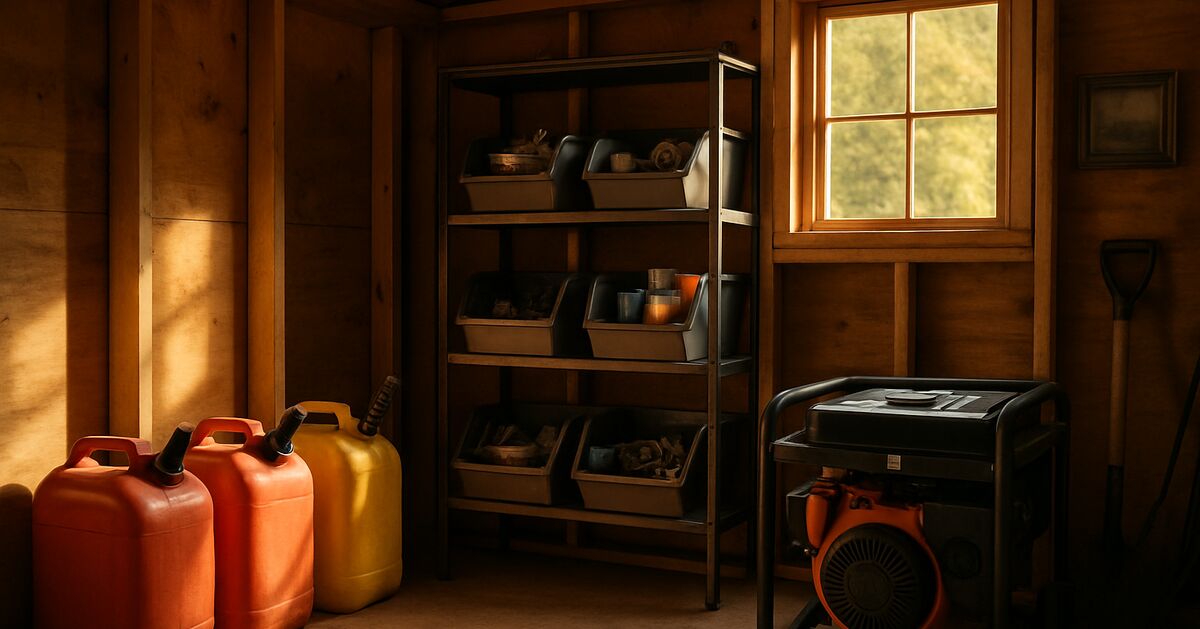
Keep fuel containers off concrete floors (moisture wicks through concrete and can corrode metal cans over time); use a shelf or pallet.
Store fuel away from any ignition source, and separate from your parts and tool storage if possible, both for safety and to keep vapors away from rubber seals and gaskets in your spare parts.
Rotate stock with a simple date label system. A grease pencil and a piece of tape is enough. Write the fill date on every fuel can and check it seasonally.
Keep spare gaskets, O-rings, and rubber parts away from direct sunlight and heat, since both are commonly cited as causes of rubber degradation.
Store small parts (filters, plugs, fuses) in labeled, clear bins so you can see what's low at a glance rather than discovering an empty box mid-repair.
Keep a written inventory list, even a simple one, so you know what you have without digging through boxes during an emergency.
Common mistakes worth avoiding
The most common mistake is buying parts for equipment you don't actually have a failure history with yet. Spend the first year or two on a piece of equipment learning what actually breaks before you build a deep spare parts stock for it. Otherwise you end up with shelves of parts for the wrong failure modes and nothing for the actual problem that shows up.
The second common mistake is treating fuel stockpiling as a one-time purchase instead of an ongoing rotation habit. Stale fuel is worse than no fuel, because it can gum up a carburetor and turn a simple "add fuel" fix into a full teardown.
The third mistake is skipping documentation. If you're not the only person on the property, or if someone else might need to do a repair while you're away, a labeled parts bin and a written manual reference save enormous time and frustration.
Building this out over time
You don't need to buy everything at once. Start with the consumables you already know you use (oil, filters, plugs) and build outward toward the rarer, more expensive parts as your budget allows and as you learn your equipment's specific quirks. Check your FAQ page for more specifics on getting started with off-grid systems, or browse the rest of the blog for deeper dives into individual systems like water, heat, and power.
If you're new to this way of thinking about self-reliance, it helps to read more about what this site is about and how these pieces fit together. And if you've got a specific setup you're trying to plan around, whether that's a generator you inherited with the property or a well pump you're not sure how to size backups for, feel free to get in touch with questions.
The goal of a fuel and parts inventory isn't to prepare for a disaster movie. It's to make sure that when the ordinary, boring, predictable failures happen (and they will happen), you're not standing in the cold wondering why nobody told you to keep a spare fuel filter on the shelf.
The rest of the shortlist
Recommended off-grid gear
Affiliate disclosure: Some links on this site are affiliate links, including Amazon links: as an Amazon Associate I earn from qualifying purchases. Buying through one costs you nothing extra, and it never changes what I recommend.
Products appear here only when they match this article's subject. Selection is based on documented specs and owner reports, never on compensation; pages with no relevant gear carry none.
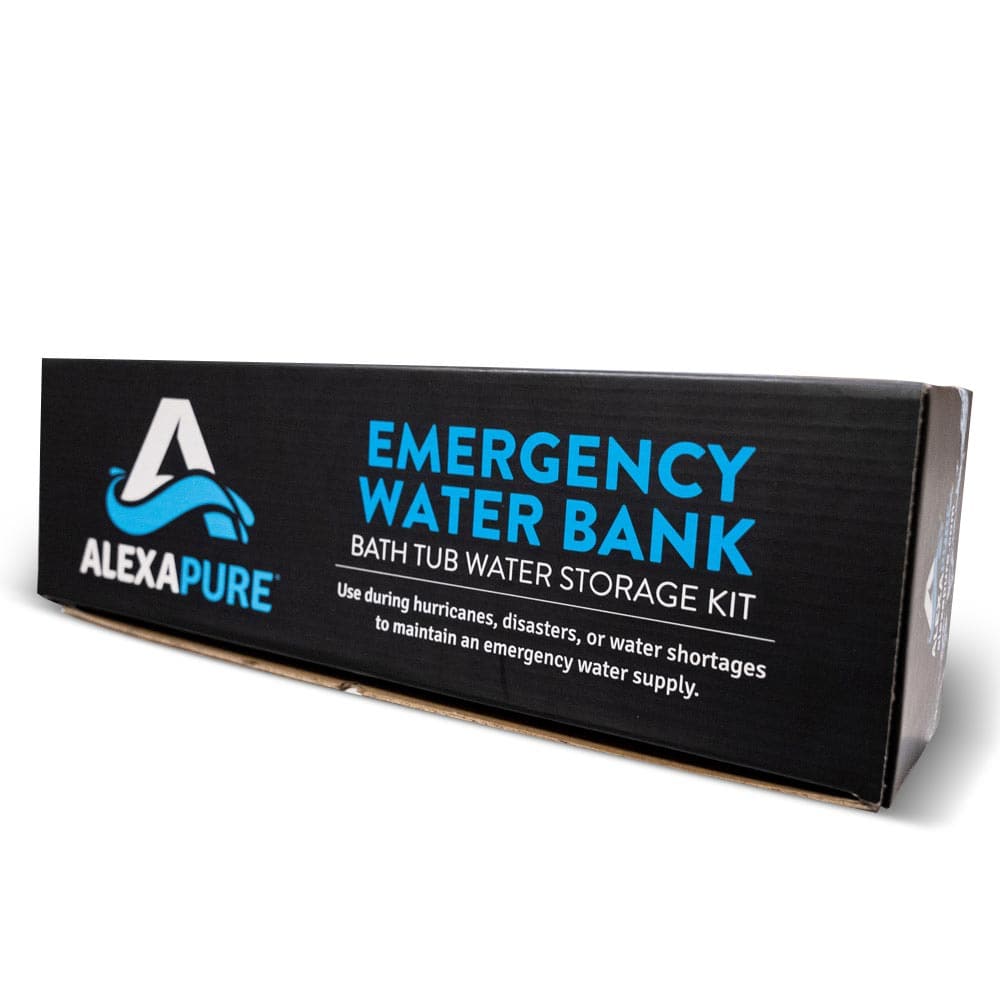
An emergency water bank with hand pump for storing a large volume of water before an outage or storm; check the current spec sheet for capacity details.
Why it's here: Listed because storage is the half of the water problem that filtration does not solve.
A multi-can kit of basic cooking staples from Emergency Essentials, for households rounding out a long-term storage pantry; check the current spec sheet for contents.
The Alexapure emergency water bank sold through Emergency Essentials, for storing a large volume of water before a storm or outage; check the current spec sheet.
Claim audit: 10 consequential claims checked against the article's sources; unsupported wording revised where it could not be substantiated.
Claim-by-claim audit (10 checked)
“Gasoline is generally treated as a short shelf life fuel, diesel is known to gel in cold weather and to support microbial growth in storage, and propane is usually described as sta…” (rewritten to what the article can stand behind)
“Many small engine manufacturers recommend ethanol-free fuel for storage, so check your engine manual and use it if you can find it.” (rewritten to what the article can stand behind)
“**Diesel** is more stable long-term but needs a biocide additive if stored for many months, especially in humid climates, because water condensation in the tank breeds microbial gr…” (reasoning shown in the article)
“Winter-blend diesel or an anti-gel additive is non-negotiable if you're in a cold climate and running a diesel generator or tractor.” (reasoning shown in the article)
“Many households land somewhere in the range of one to a few weeks of generator fuel, but the right number is whatever your own burn rate and outage history support.” (rewritten to what the article can stand behind)
“Keep fuel containers off concrete floors (moisture wicks through concrete and can corrode metal cans over time); use a shelf or pallet.” (reasoning shown in the article)
“Store fuel away from any ignition source, and separate from your parts and tool storage if possible, both for safety and to keep vapors away from rubber seals and gaskets in your s…” (cited → nfpa.org)
“Keep spare gaskets, O-rings, and rubber parts away from direct sunlight and heat, since both are commonly cited as causes of rubber degradation.” (rewritten to what the article can stand behind)
“Documentation gives you the exact part numbers for your machine, which saves you from guessing at the hardware store.” (rewritten to what the article can stand behind)
“Stale fuel is worse than no fuel, because it can gum up a carburetor and turn a simple "add fuel" fix into a full teardown.” (reasoning shown in the article)
Before you go
One useful off-grid email a week.
Practical gear rundowns, honest how-tos, and plain-English guides from someone doing the homework in the open.
I am building a place for off-grid people to swap real answers: a forum by topic, classifieds for gear and services, and real estate for off-grid land and homes. It is new, so the early members shape what it becomes. A free account lets you post in all three.
No ER ten minutes away means you have to be your own triage nurse. Here's how to tell a bad bee sting from the real emergency, and what to actually stock.
In many off-grid disasters, the fire or flood itself isn't the decisive factor, it's the hour you waited too long to leave. Here's how to set real, numeric triggers before you need them.
Tax sale and sheriff's auction land looks like a bargain, but redemption periods, hidden liens, and unseen parcels turn a lot of cheap acreage into an expensive lesson. Here's how to vet a listing before you bid.