A parcel can have the prettiest view in the county and still be a terrible place to try to keep batteries charged in January. Sun exposure is one of those things buyers assume they can eyeball on a Saturday afternoon walkthrough, and misjudging it can lead to trenching power lines, cutting down trees you love, or running a generator far more than you planned. Land shopping trips tend to be scheduled when the weather is nice and the sun is high. That is exactly the wrong time to judge whether a piece of land will actually make solar work.
This is not a small detail you patch later. Aspect, slope, tree cover, and terrain shadowing determine how many usable sun hours you get, and that number drives everything else: how many panels you need, how big your battery bank has to be, and whether you are comfortable through a real winter or fighting your system every week from November to February. If you have not read how much solar you actually need to live off-grid, start there for the math side. This post is about the land side, the part that happens before you ever buy a panel.
Why this gets missed during a normal land tour
Buyers often tour land in spring or summer, midday, on a clear day. The sun is high overhead, it is warm, everything looks bright and open. That is the best-case lighting scenario of the entire year, and it tells you almost nothing about December.
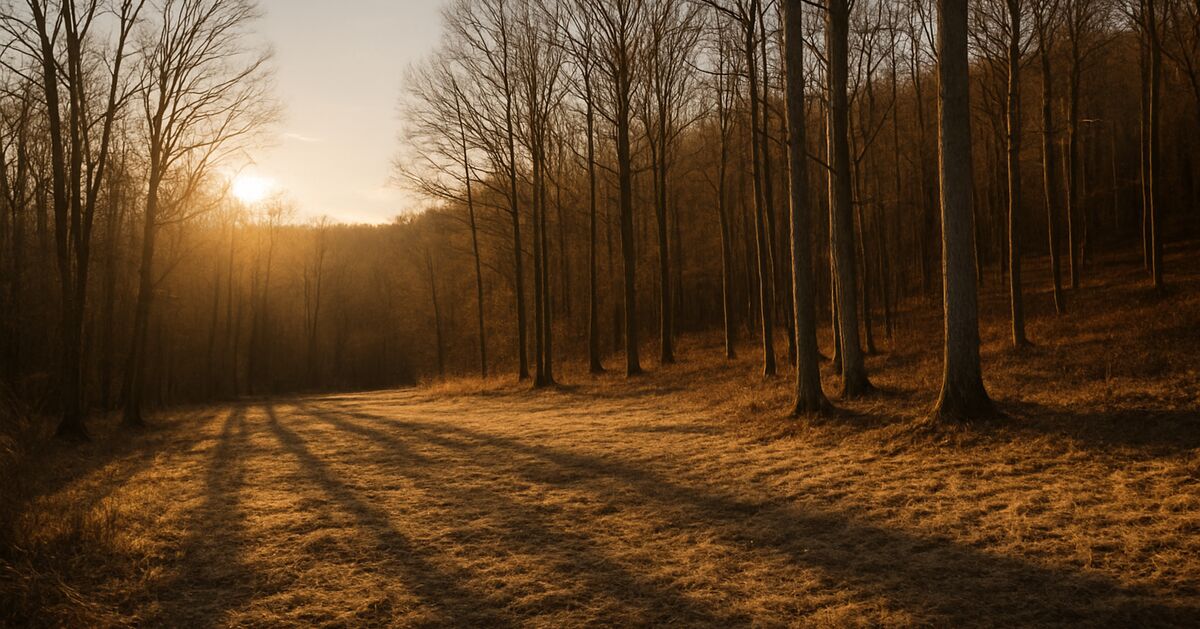
The sun's arc changes dramatically by season. In summer it rises in the northeast, tracks high across the southern sky, and sets in the northwest, staying up long and high. In winter it rises in the southeast, arcs low and short across the south, and sets in the southwest. A slope or treeline that does nothing to your summer sun can completely block your winter sun, and winter is exactly when you need every watt you can get, because days are short and battery capacity matters most.
So a property that looked "sunny enough" in June can sit in partial or full shade for much of the short December and January daylight. That is the gap that catches people off guard.
Aspect: which way the land faces matters more than acreage
In the northern hemisphere, south-facing slopes and clearings get dramatically more usable winter sun than north-facing ones. A south-facing hillside generally gets more direct winter light than a north-facing slope, where the hill itself can block the low winter sun for much of the day; site-specific tools like PVWatts and elevation data can show how much.
When you are walking a parcel, note:
Which way the land generally slopes or faces
Whether there's a ridge, hill, or treeline to the south that would block low winter sun
Whether the building envelope (the flattest, most buildable spot) happens to be on the shaded side
A parcel that is 20 acres of gorgeous north-facing forest with one small south-facing clearing near the road might actually be a great buy, if that clearing is where you plan to put the cabin and array. The acreage doesn't matter nearly as much as where the sun actually lands.
Trees are the single biggest variable, and the one people underestimate
Everyone accounts for hills. Almost nobody accounts for how much a treeline changes over a decade. A stand of hardwoods that is 40 feet tall now might be 60 feet tall in fifteen years, and the shadow it casts stretches accordingly. Softwoods grow even faster in some regions.
Rules of thumb worth knowing:
A tree's shadow at low winter sun angles can stretch several times its own height. A 60-foot tree to your south can shade ground hundreds of feet away in December.
Deciduous trees drop leaves in winter, which helps, but branches still scatter and reduce light meaningfully, they don't restore it to open-sky levels.
Evergreens block year-round, so a stand of pine or fir to your south is a permanent obstacle, not a seasonal one.
If a parcel is heavily wooded, the real question isn't "is there a clearing," it's "how much of that clearing's southern exposure is already compromised by trees that will only get taller." Selective clearing is often possible on land you own, but it costs time and money, and county rules or conservation easements tied to the deed may restrict it, so check before assuming. This is one more reason to actually read the fine print in easements and access agreements before you assume you can clear whatever you want.
Slope and terrain shadowing
Beyond individual trees, the shape of the land itself creates shadows. A parcel tucked into a valley or the north side of a ridge can lose direct sun for hours even on a cloudless day, because the terrain itself is blocking the sky, not vegetation. This is sometimes called terrain shading or horizon shading, and it matters most in mountain and canyon country, where high surrounding terrain can cut direct winter sun on a valley floor regardless of tree cover.
Walk or drive the parcel at different times of day if you can. If you're serious about a piece of land, try to see it in more than one season, or at minimum, ask a local who has lived nearby through a winter what the light is actually like in December and January. People who already live there will know exactly which slopes stay shadowed all day.
How to actually check this before you buy
You do not need to hire an engineer to get a reasonable read on solar potential. A few practical steps:
Use a sun path tool. Free apps and websites let you enter GPS coordinates and see the sun's path across the sky for any date, including the winter solstice, which is your worst-case day. Stand where you'd put panels, use the app's augmented reality view if it has one, and see whether trees or terrain intersect the sun's projected path in December.
Check satellite and topo maps. Look at the parcel and everything to its south (and southeast and southwest) on a topographic map. Ridgelines, hills, and dense tree cover to the south are red flags. This costs nothing and takes twenty minutes before you ever drive out.
Visit in winter if at all possible. Even a single visit near the solstice tells you more than five summer visits. If a cross-country trip isn't realistic, ask the seller or a local real estate agent for photos taken in winter, or check public satellite imagery from different times of year.
Talk to neighbors. Someone who has lived on an adjacent parcel through a winter can tell you in five minutes what a sun path app takes longer to model, including things like fog patterns, valley cold pooling, or which specific slopes clear first after a snow.
Think about your actual build site, not the whole parcel. A 40-acre property can have wildly different solar potential from one corner to another. Don't judge the land as a whole, judge the specific spot where the cabin, and more importantly the array, would go.
What to do if the exposure is marginal
Not every good piece of land has perfect solar exposure, and that's fine, as long as you go in with eyes open and a plan.
Options if you're working with compromised sun:
Ground-mount arrays away from the cabin. If the best building spot is shaded but there's a clearing elsewhere on the parcel with good southern exposure, you can run wire to it. This adds cost and requires wiring the system safely with the right fuses, breakers, and wire gauge for the distance, but it's a legitimate fix.
Selective clearing. Removing specific trees that shade your winter array position can open up meaningful hours of sun, though you're trading years of tree growth for the space. Check what's allowed under any easements or conservation restrictions first.
Oversize the system. If you know you'll be getting fewer sun hours than ideal, you can partially compensate with more panels and more battery capacity, though this raises cost and doesn't fully solve a bad site, especially for surviving winter on a battery bank.
Accept a bigger role for backup power. Some people knowingly choose gorgeous, heavily wooded land and lean harder on a generator and a robust small engine repair kit to get through the darkest months. That's a valid trade-off if you go in informed.
What you want to avoid is discovering the shading problem after the panels are mounted, the trenching is done, and the budget is spent. At that point your options shrink to expensive ones.
Weighing solar exposure against everything else
Solar access is one factor among several when buying off-grid land, not the only one. A parcel with so-so sun but great water rights, solid road access, and a favorable zoning situation might still be the better buy than a sun-drenched parcel with a boggy well site and an access easement full of landmines. The goal isn't to find perfect land, since it rarely exists, it's to know the trade-offs you're accepting so you can plan around them rather than get surprised by them.
If you're still early in the search, it's worth reading through the rest of the Land & Real Estate coverage on the blog alongside this one, since exposure, access, water rights, and zoning all interact. A property that nails one of these and ignores the others usually creates the kind of first-year surprise that drains a budget fast, the same way hidden costs do in general off-grid living.
A short pre-purchase checklist
Before you make an offer on land you intend to power with solar, try to answer these:
What direction does the likely build site face, and what's directly south of it for at least 100 to 200 feet?
Are there hills, ridges, or dense evergreen stands blocking the low winter sun path to the south?
How old and how tall are the trees near the clearing, and how much taller will they get in 10 to 15 years?
Can you visit, or find imagery, from near the winter solstice?
Does the deed or any easement restrict clearing trees if you later need to open up the site?
Is there a viable alternate spot on the parcel for a ground-mount array if the main building site turns out shaded?
None of this requires expensive tools or expert consultants to get a workable answer. It requires patience, a willingness to visit land in the season you'd rather not be traveling, and a habit of asking "what does this look like in December" instead of just enjoying the July sunshine. Land that photographs beautifully in summer earns its keep in winter, and that's the season your solar system, and your patience, will actually be tested.
If you're weighing a specific parcel and want a sense of how these factors typically play out, our FAQ page covers some of the most common land and system-sizing questions, and the about page explains more of how this site approaches off-grid planning generally. And if there's a specific land question you're stuck on, the contact page is there for exactly that kind of thing.
The rest of the shortlist
Recommended off-grid gear
Affiliate disclosure: Some links on this site are affiliate links, including Amazon links: as an Amazon Associate I earn from qualifying purchases. Buying through one costs you nothing extra, and it never changes what I recommend.
Products appear here only when they match this article's subject. Selection is based on documented specs and owner reports, never on compensation; pages with no relevant gear carry none.
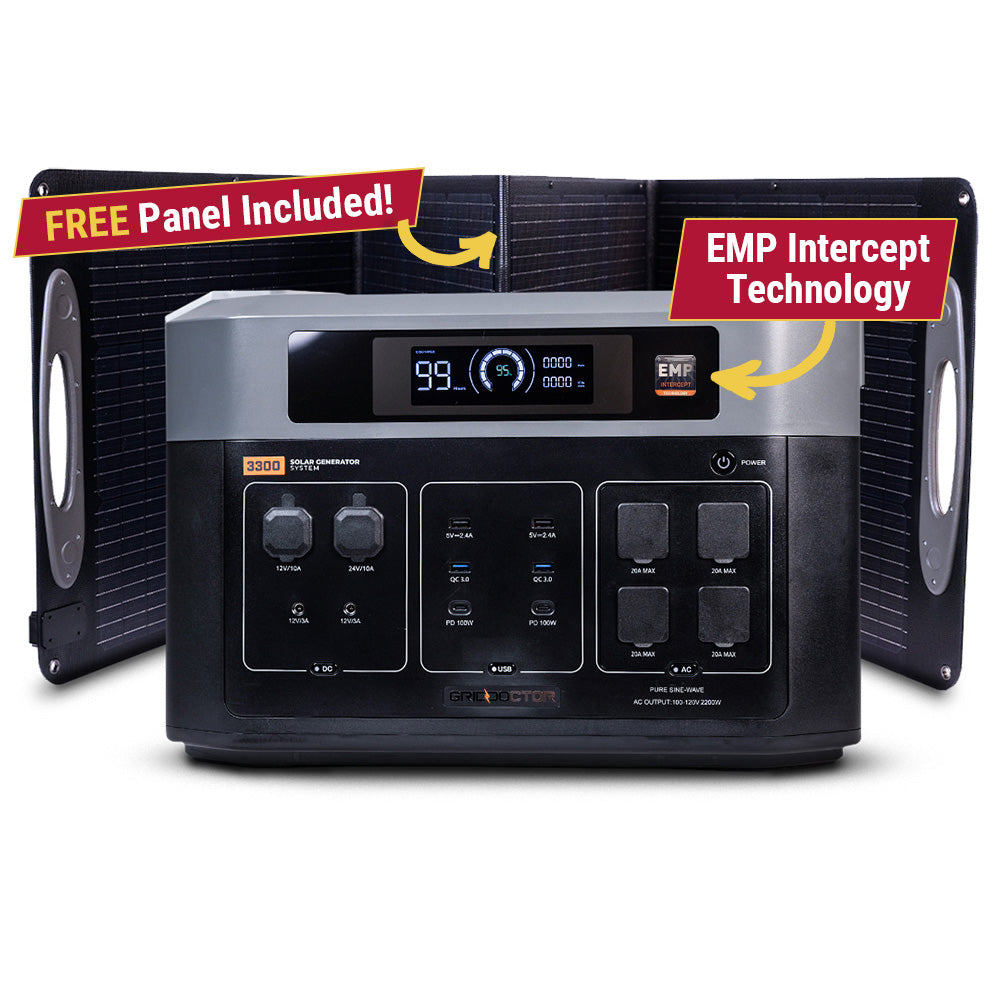
The Grid Doctor 3300 solar generator system sold with EMP shielding, a large portable power station for home backup and off-grid use; check the current spec sheet for details.
Why it's here: Listed with its EMP shielding as a stated feature, not a verified one. Judge it on the power specs first.
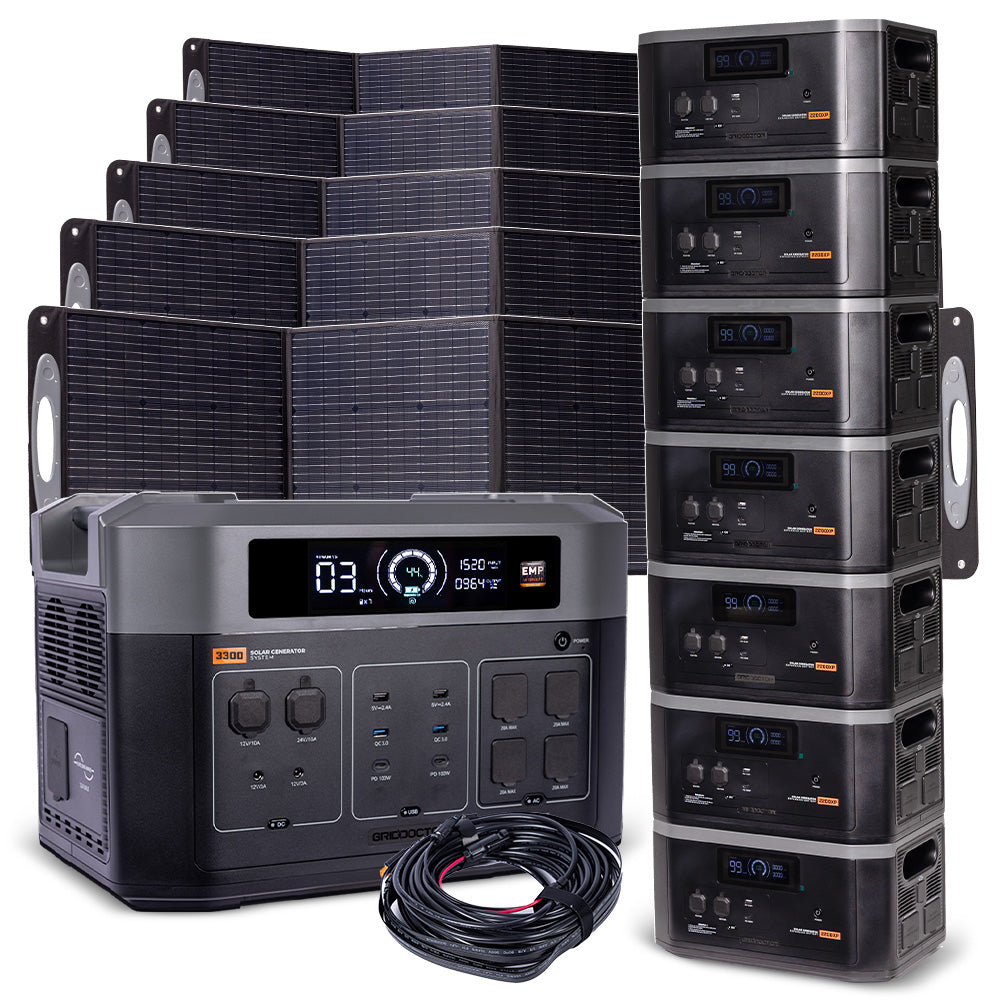
The Grid Doctor 3300 Power Tower, a large portable power station for home backup and off-grid systems; check the current spec sheet for capacity and output details.
Why it's here: Listed so form factor is part of the decision: this capacity class in a shape that stands rather than sits.
The Grid Doctor 3300-watt EMP-shielded solar generator sold through Emergency Essentials, a large power station for home backup and off-grid use; check the current spec sheet.
Why it's here: Listed through a second retailer so availability and pricing on this unit are not down to one storefront.
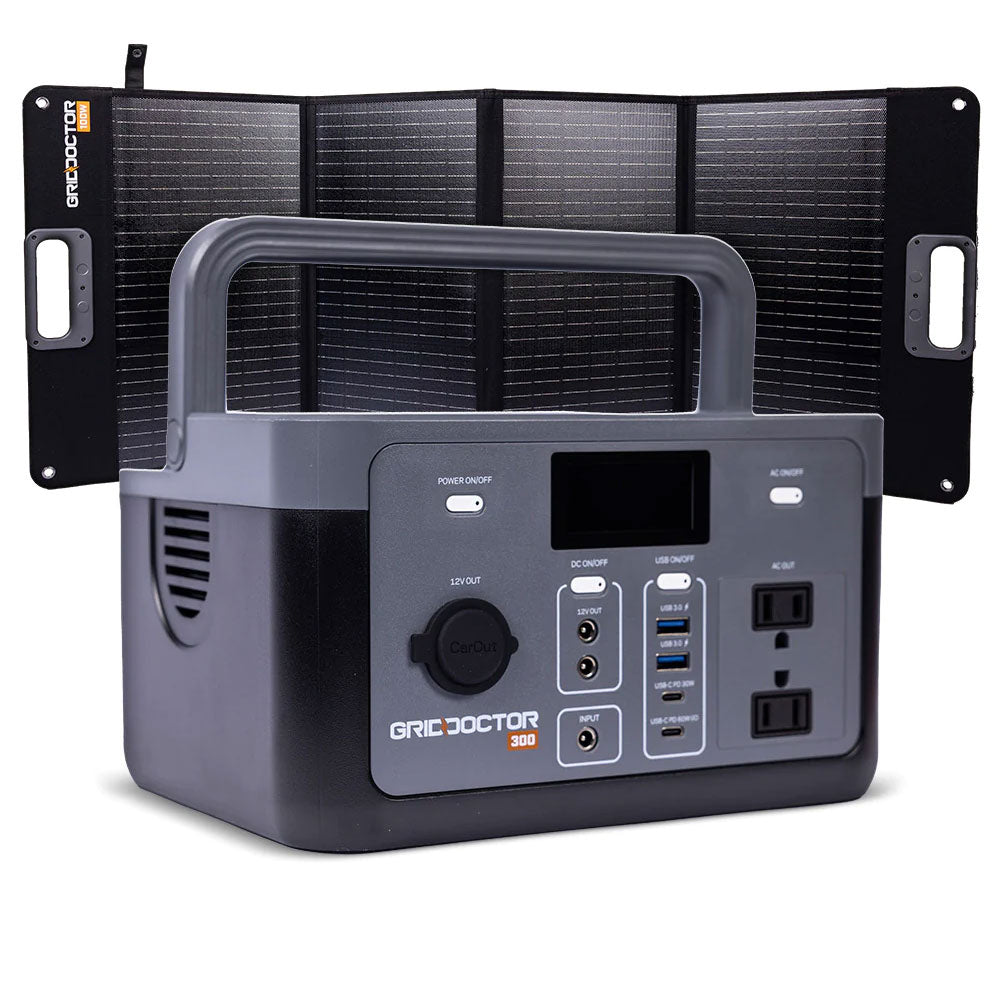
The Grid Doctor 300 solar generator bundled with a 100-watt solar panel, a compact power station for charging small devices; check the current spec sheet for details.
Why it's here: Listed as the small end: phones, lights and a radio, not a fridge. Sizing disappointment usually starts here.
Claim audit: 12 consequential claims checked against the article's sources; unsupported wording revised where it could not be substantiated.
Claim-by-claim audit (12 checked)
“Sun exposure is one of those things buyers assume they can eyeball on a Saturday afternoon walkthrough, and misjudging it can lead to trenching power lines, cutting down trees you …” (rewritten to what the article can stand behind)
“In summer it rises in the northeast, tracks high across the southern sky, and sets in the northwest, staying up long and high.” (cited → energy.gov)
“In winter it rises in the southeast, arcs low and short across the south, and sets in the southwest.” (cited → energy.gov)
“So a property that looked "sunny enough" in June can sit in partial or full shade for much of the short December and January daylight.” (rewritten to what the article can stand behind)
“In the northern hemisphere, south-facing slopes and clearings get dramatically more usable winter sun than north-facing ones.” (cited → energy.gov)
“A south-facing hillside generally gets more direct winter light than a north-facing slope, where the hill itself can block the low winter sun for much of the day; site-specific too…” (rewritten to what the article can stand behind)
“A tree's shadow at low winter sun angles can stretch several times its own height. A 60-foot tree to your south can shade ground hundreds of feet away in December.” (reasoning shown in the article)
“Deciduous trees drop leaves in winter, which helps, but branches still scatter and reduce light meaningfully, they don't restore it to open-sky levels.” (reasoning shown in the article)
“This is sometimes called terrain shading or horizon shading, and it matters most in mountain and canyon country, where high surrounding terrain can cut direct winter sun on a valle…” (rewritten to what the article can stand behind)
“Selective clearing is often possible on land you own, but it costs time and money, and county rules or conservation easements tied to the deed may restrict it, so check before assu…” (rewritten to what the article can stand behind)
“Even a single visit near the solstice tells you more than five summer visits.” (reasoning shown in the article)
“A 40-acre property can have wildly different solar potential from one corner to another.” (cited → usgs.gov)
Before you go
One useful off-grid email a week.
Practical gear rundowns, honest how-tos, and plain-English guides from someone doing the homework in the open.
I am building a place for off-grid people to swap real answers: a forum by topic, classifieds for gear and services, and real estate for off-grid land and homes. It is new, so the early members shape what it becomes. A free account lets you post in all three.
No ER ten minutes away means you have to be your own triage nurse. Here's how to tell a bad bee sting from the real emergency, and what to actually stock.
In many off-grid disasters, the fire or flood itself isn't the decisive factor, it's the hour you waited too long to leave. Here's how to set real, numeric triggers before you need them.
Tax sale and sheriff's auction land looks like a bargain, but redemption periods, hidden liens, and unseen parcels turn a lot of cheap acreage into an expensive lesson. Here's how to vet a listing before you bid.