A tool that rusts shut in the drawer is worse than no tool at all, because you spent money on it and it still failed you the day you needed it.
Off-grid, you don't get the luxury most hardware store tools were designed around: a climate-controlled garage that sits at 40 to 50 percent humidity year round. You've got a shed that swings from freezing to sweltering, a cabin with no HVAC, maybe a barn with dirt floors and blowing dust. Storage becomes part of the tool budget, not an afterthought. Get it wrong and you'll be replacing hand planes, sockets, and power tool batteries every couple of years instead of every couple of decades.
This isn't about the day-one tool kit or sharpening what's already dull. It's about what happens to tools between uses, in the months they sit on a shelf while you're busy with everything else homesteading demands.
Why off-grid storage is a different problem
In a typical suburban garage, humidity is annoying but rarely extreme, and swings happen slowly. On raw land, you're often dealing with:
Uninsulated outbuildings that condense moisture on cold metal every morning
Root cellars and basements that stay damp by design
Dust from gravel roads, hay, or dry ground that works into every mechanism
Wide day-night temperature swings that pump moist air in and out of a shed like a bellows
No mains power for a dehumidifier, and limited battery capacity to spare on one
The core enemy is condensation, not rain. Water doesn't have to fall on a tool to ruin it. When warm, humid air meets a cold steel surface (a wrench that sat outside overnight, a saw blade near an uninsulated wall), the moisture in that air condenses directly onto the metal. This is the same physics that fogs a cold glass of water in summer. A tool can look bone dry in a "dry" shed and still be getting rusted from the inside of a toolbox by its own trapped humidity.
Rust is chemistry you can interrupt
Rust (iron oxide) forms when iron, oxygen, and water combine. Take away any one of the three and it stops. You can't remove oxygen from a shed, and you're not going to vacuum-seal every wrench, so realistic strategies attack water and create a barrier:
Control the air, not just the tool. A cheap desiccant dehumidifier (the rechargeable silica gel kind, no electricity needed) works in a sealed tool chest or ammo can. For a whole shed, a small compressor dehumidifier draws real power, so if you're running one, size it against your solar generator pairing math before you assume it'll just run all summer. Passive options matter more off-grid: vent the space so it doesn't trap humid air, keep tools off dirt floors, and avoid storing them against an exterior wall that sweats.
Oil is still the cheapest rust prevention that exists. A light coat of machine oil, camellia oil, or even plain mineral oil on bare steel keeps water from reaching the metal at all. Renaissance Wax (a microcrystalline wax used by museums) works even better for tools that sit for months, because it doesn't evaporate or attract dust the way oil can. Cast iron tables on table saws, planer beds, hand plane soles, all benefit from a wax coat before storage.
Silica gel packets are worth hoarding, not throwing away. Every boot box and electronics package that comes onto your property has one. Collect them in a jar and toss a handful into every closed toolbox or drawer. They're free desiccant.
VCI paper and VCI-impregnated foam (vapor corrosion inhibitor) are worth the modest cost for tools you use rarely: a socket set for the truck, a spare chainsaw chain, a backup carburetor kit. The paper releases a vapor that plates a microscopic protective layer onto bare metal even inside a closed box, which regular paper or bubble wrap can't do.
Wood, leather, and rubber age differently than steel
Metal gets the attention, but off-grid conditions are just as hard on the organic parts of your tools.
Wooden handles (axes, hammers, hand planes) shrink and swell with humidity. In a damp root cellar they swell and can crack a handle eye; in a hot dry attic space above a wood stove they shrink and the head goes loose. A yearly wipe with boiled linseed oil (not raw, which cures much more slowly) is a common practice aimed at slowing moisture exchange in the wood. Never store a wood-handled tool head-down against a concrete floor; wick action pulls moisture straight up the grain.
Leather tool belts, sheaths, and washers dry out and crack in low humidity, especially near a wood stove in winter. A light coat of leather conditioner twice a year keeps them from stiffening.
Rubber and plastic (grips, cordless tool housings, hose gaskets) can degrade from sun exposure as well as moisture. If your shed has a window or a gap where sun hits stored tools for part of the day, that repeated exposure can shorten the life of rubber grips. Keep them out of direct light, and rotate stock so older tools with sun-damaged grips get used up rather than the newest ones.
Battery-powered tools need a storage plan of their own
Cordless tools have become the backbone of most homesteads, but lithium battery packs are pickier about storage than the tools they power.
Store batteries at roughly 40 to 60 percent charge if they'll sit for more than a few weeks, not fully charged and not dead. Manufacturers including DeWalt and Milwaukee note in their user manuals that storing packs fully charged for long periods accelerates capacity loss.
Cold hurts lithium batteries less than heat does, but charging a genuinely cold battery (below about 32°F / 0°C) can damage cells. If your shed freezes, bring batteries inside to warm up before charging, not after.
Battery corrosion at the contacts is a real problem in damp sheds. Keep spare packs in a sealed container with a silica packet, same as your steel tools.
If you're running a mixed fleet of cordless tool brands to hedge your bets, that's a separate can of worms (chargers, proprietary batteries, sourcing repair parts) that overlaps with how you plan fuel and spare parts inventory generally: standardize where you can, and keep manuals and part numbers in one binder so you're not guessing at 9pm in a dead shed.
Building a storage setup that actually fits off-grid life
You don't need a heated workshop to protect tools well; you need a few deliberate habits and containers.
Tiered storage by use frequency. Daily-use tools live on an open pegboard or bench where airflow keeps condensation from settling and where oil films get refreshed just by handling. Occasional-use tools go into sealed metal or plastic totes with desiccant. Rarely-used or backup tools (spare chains, a backup hand drill, extra fencing pliers) get the full treatment: oiled or waxed, wrapped in VCI paper, sealed.
Off the floor, off the wall. Concrete and dirt floors wick moisture upward. Even a couple of inches of clearance with a pallet or simple shelf helps keep tools away from wicking moisture. Keep storage a few inches off exterior walls too, especially uninsulated ones, since those surfaces are often the coldest, dampest point in a structure.
A dedicated "damp box" habit. Anything that gets rained on or comes in from frozen ground (a shovel, a chainsaw, your boots) should get wiped down before it goes back into closed storage, not tossed in wet. Five minutes with a rag prevents the trapped-moisture problem entirely. In our experience, this single habit does more than anything else to keep a toolbox from rusting solid.
Label and rotate. If you keep backups of anything (spare axe handles, a second set of fencing pliers), rotate stock so nothing sits sealed and forgotten for five years. Check sealed boxes twice a year, ideally at the change of seasons, to refresh desiccant and catch problems early.
What this actually costs and saves
Desiccant packets are effectively free if you save the ones that come in shipped goods, or a few dollars for a bag of reusable silica gel. VCI paper runs modestly for a roll that will wrap dozens of tools. A tub of paste wax lasts years. None of this is expensive compared to the tools themselves, and it's far cheaper than replacing a rusted-solid socket set or a warped hand plane sole.
The bigger cost is attention. Off-grid life already asks you to think about water, power, and food in ways town living never required. Tool storage is one more system that runs better with a little routine than with a lot of money. If you're still working out your overall approach to self-reliance and where tools fit into the bigger picture, the getting started off-grid overview and our FAQ are good places to see how this piece connects to water, power, and shelter decisions you're making at the same time.
A shed full of rusted tools is a slow, quiet failure. Nobody notices until the moment they reach for a wrench that won't turn, or a saw that binds mid-cut. Building storage habits now, while you have time to think it through, is cheaper and calmer than fixing it during an emergency repair. If you want to talk through what's actually worked on your particular piece of land, or compare notes with others doing the same thing, the contact page and our wider blog are there, and so is the rest of the site if you're still mapping out what an off-grid life actually requires before you commit.
The rest of the shortlist
Recommended off-grid gear
Affiliate disclosure: Some links on this site are affiliate links, including Amazon links: as an Amazon Associate I earn from qualifying purchases. Buying through one costs you nothing extra, and it never changes what I recommend.
Products appear here only when they match this article's subject. Selection is based on documented specs and owner reports, never on compensation; pages with no relevant gear carry none.
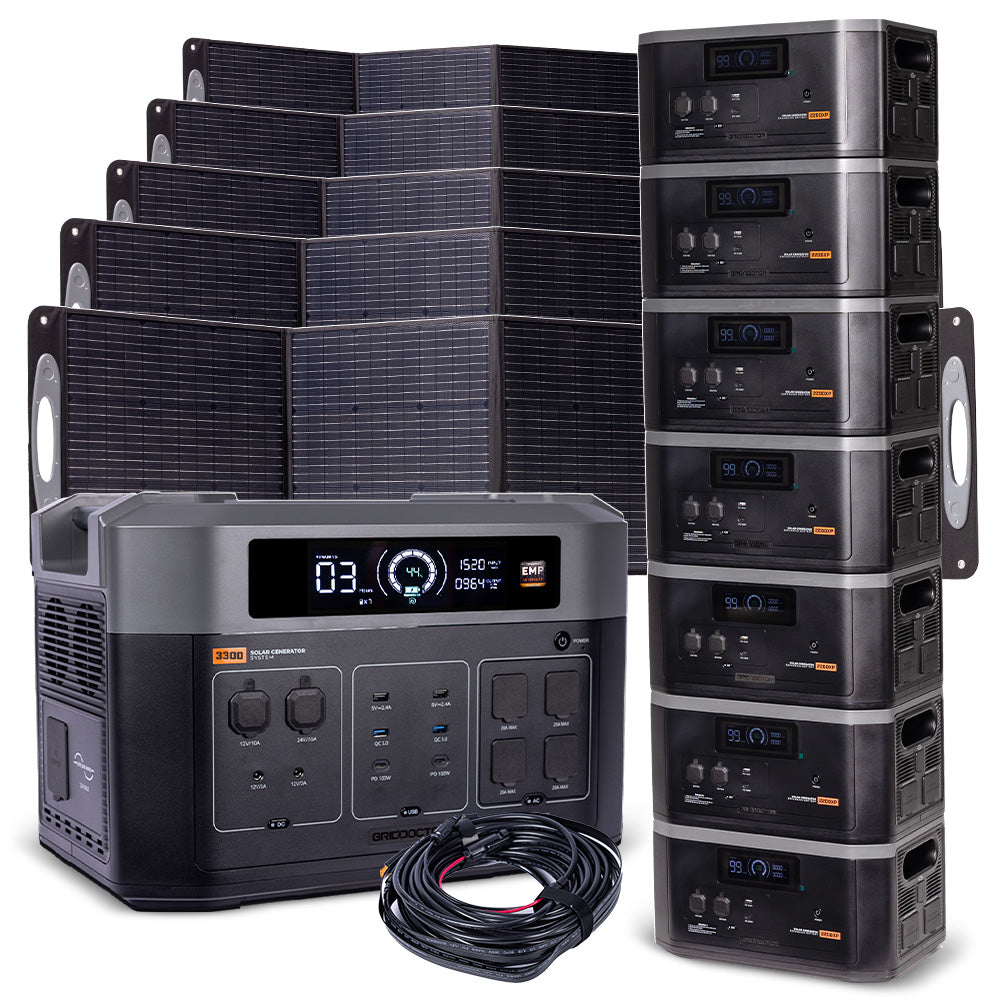
The Grid Doctor 3300 solar generator system sold with EMP shielding, a large portable power station for home backup and off-grid use; check the current spec sheet for details.
Why it's here: Listed with its EMP shielding as a stated feature, not a verified one. Judge it on the power specs first.
The Grid Doctor 3300 Power Tower, a large portable power station for home backup and off-grid systems; check the current spec sheet for capacity and output details.
Why it's here: Listed so form factor is part of the decision: this capacity class in a shape that stands rather than sits.
“Rust (iron oxide) forms when iron, oxygen, and water combine.” (cited → nist.gov)
“When warm, humid air meets a cold steel surface (a wrench that sat outside overnight, a saw blade near an uninsulated wall), the moisture in that air condenses directly onto the me…” (reasoning shown in the article)
“The paper releases a vapor that plates a microscopic protective layer onto bare metal even inside a closed box, which regular paper or bubble wrap can't do.” (cited → nist.gov)
“Wooden handles (axes, hammers, hand planes) shrink and swell with humidity.” (cited → fpl.fs.usda.gov)
“A yearly wipe with boiled linseed oil (not raw, which cures much more slowly) is a common practice aimed at slowing moisture exchange in the wood.” (rewritten to what the article can stand behind)
“Rubber and plastic (grips, cordless tool housings, hose gaskets) can degrade from sun exposure as well as moisture.” (rewritten to what the article can stand behind)
“If your shed has a window or a gap where sun hits stored tools for part of the day, that repeated exposure can shorten the life of rubber grips.” (rewritten to what the article can stand behind)
“Manufacturers including DeWalt and Milwaukee note in their user manuals that storing packs fully charged for long periods accelerates capacity loss.” (cited → dewalt.com)
“Cold hurts lithium batteries less than heat does, but charging a genuinely cold battery (below about 32°F / 0°C) can damage cells.” (cited → energy.gov)
“Even a couple of inches of clearance with a pallet or simple shelf helps keep tools away from wicking moisture.” (rewritten to what the article can stand behind)
“In our experience, this single habit does more than anything else to keep a toolbox from rusting solid.” (rewritten to what the article can stand behind)
Before you go
One useful off-grid email a week.
Practical gear rundowns, honest how-tos, and plain-English guides from someone doing the homework in the open.
I am building a place for off-grid people to swap real answers: a forum by topic, classifieds for gear and services, and real estate for off-grid land and homes. It is new, so the early members shape what it becomes. A free account lets you post in all three.
No ER ten minutes away means you have to be your own triage nurse. Here's how to tell a bad bee sting from the real emergency, and what to actually stock.
In many off-grid disasters, the fire or flood itself isn't the decisive factor, it's the hour you waited too long to leave. Here's how to set real, numeric triggers before you need them.
Tax sale and sheriff's auction land looks like a bargain, but redemption periods, hidden liens, and unseen parcels turn a lot of cheap acreage into an expensive lesson. Here's how to vet a listing before you bid.