The scariest part of an emergency off-grid usually isn't the emergency itself. It's the thirty seconds after it happens, when you realize there's no one to call and no fast way to reach anyone who could help.
Most security planning for remote property focuses on keeping bad things out, locks, lighting, dogs, sightlines, the layered approach I've written about in securing a remote property before you ever need a gun. That's the right foundation. But security isn't only about intruders. It's also about what happens when a chainsaw kicks back, a horse spooks and kicks someone, a wildfire changes direction, or a vehicle slides off an icy grade a mile from the house. In those moments, your ability to communicate fast and reliably is just as much a self-defense tool as a locked gate or a motion light.
This is the piece of off-grid planning people tend to skip, because it's less visible than solar panels or a well. You don't see the gap until you're standing in it. So let's build a real communications plan, layer by layer, the same way you'd layer physical security.
Why "I have a cell phone" is not a plan
A lot of people moving off-grid assume cell service will be spotty but workable, and then discover their actual coverage is zero bars, or one bar that drops the second clouds roll in. Carrier coverage maps often show more service than you actually get, so treat them as estimates rather than fact. The carrier's map shows a strong signal; your canyon, treeline, or ridge blocks it completely.
Even where coverage exists, it fails in the exact moments you need it most. Wildfires knock out cell towers or the power feeding them. Ice storms snap the lines. A heavy snow event can isolate a property for weeks, which is its own planning problem I've covered separately when it comes to being snowed in, but the communications angle deserves its own hard look because a phone that shows bars in July may show nothing in a January storm when you actually have an emergency.
The honest starting point is: assume your cell phone will fail you at some point, and build backups before that day, not after.
Layer one: know your actual coverage, not the map
Before buying any gear, figure out what you're really working with. Walk or drive your property with your phone at different points, different times of day, different weather. Note where you get a usable signal and where you don't. If you're still shopping for land, this is worth doing during the site visit, because a property with no cell signal and a long dirt access road is a materially different security situation than one fifteen minutes from town with decent coverage. It's the same category of hidden cost as the access and easement issues that can wreck an off-grid land purchase, invisible until you need it.
If your coverage is weak but not zero, a cellular signal booster with an external antenna can be a real fix. I've gone into the details of choosing and placing one in the piece on boosting a weak cell signal off-grid, and it's worth reading before you spend money, because placement matters more than the booster model, and a bad install can leave you no better off.
Layer two: a satellite option that doesn't depend on cell towers at all
Once you accept that cellular coverage may not be there when it counts, the next layer is a communications method that doesn't route through a cell tower at all.
Satellite messengers (Garmin inReach, Zoleo, and similar devices) send short text messages and SOS alerts via satellite, working almost anywhere with a clear view of the sky. Device and subscription pricing varies by model and plan, so check current prices from the manufacturer before budgeting. These devices advertise an SOS button that routes to a monitoring service, so confirm with the manufacturer how that dispatch works in your area before relying on it.
Satellite phones (Iridium, Inmarsat) let you make voice calls from most places with sky view, but hardware and airtime generally cost more than a messenger, so price current plans yourself. For a lot of off-grid households, a satellite messenger is the better dollar-for-dollar choice because emergencies are usually better served by "send help to these GPS coordinates" than by a phone conversation, and the ongoing cost is much lower.
Starlink and similar satellite internet solves everyday connectivity but is a different tool. It needs power, needs the dish to have sky view, and goes down in a power outage unless you've built battery backup into your system, something worth thinking through alongside the tradeoffs in Starlink for off-grid internet. It's excellent for daily life and even for calling out during many emergencies, but it shouldn't be your only emergency layer, because it has more failure points (power, weather, dish alignment) than a dedicated satellite messenger.
The practical answer for an off-grid household is to have both: Starlink or a booster for daily connectivity, and a satellite messenger as the dedicated emergency layer that works even when the power is out and the dish is buried in snow.
Layer three: radios for the property and the region
Satellite devices handle the "get help from far away" problem. Radios handle the "talk to the person on the other side of the property, or the neighbor two miles down the road" problem, and that's a gap that catches people off guard.
FRS/GMRS radios are the practical middle ground for most homesteads. FRS radios are sold as license-free and are generally short range, so test the real distance across your own terrain. GMRS radios require an FCC license, so check the FCC site for the current fee, exam requirements, and family coverage rules before buying. If your property is large enough that you can't holler across it, or if you have family members working in different areas (garden, barn, treeline) during the day, GMRS handhelds are a cheap, reliable way to reach each other without depending on cell signal at all.
Ham radio is the deeper layer. It requires passing a licensing exam (the entry-level Technician license is genuinely approachable, and can be studied for in a weekend or two), but it opens up much longer range, access to repeater networks that can relay a call for help across a whole region, and emergency communication nets that many rural areas maintain specifically for situations like storms or wildfires. For someone serious about off-grid self-reliance, a base station ham radio plus a couple of handhelds is one of the most resilient communication setups available, one that keeps working when cell towers, internet, and even the power grid are all down, provided you've got the radio on battery or solar power.
The wiring for any of this, whether it's a repeater, a base station, or a battery bank feeding your radio gear, needs to be done safely. If you're adding a dedicated radio setup to your solar system, the same fuse, breaker, and wire gauge principles I cover in wiring an off-grid solar system safely apply directly, undersized wire or a missing fuse on a radio circuit is just as much a fire risk as anywhere else in the system.
Layer four: the low-tech backups that still matter
Technology fails. Batteries die, satellites lose their fix under heavy tree canopy, radios get left behind. A resilient plan has analog backups underneath the electronics.
A physical map of your property and the surrounding area, with the nearest hospital, fire station, and sheriff's substation marked, kept somewhere everyone in the household knows.
A written list of emergency contacts and medical information for each family member, kept in a waterproof pouch, not just in a phone.
A simple signal plan with neighbors: an agreed flag, light pattern, or horn signal that means "come here" or "call for help," useful if your nearest neighbor is close enough to see or hear but not reachable by phone or radio.
A charged spare battery or hand-crank charger for phones and radios, stored with your first-aid kit, because emergencies have an unpleasant habit of coinciding with a low battery.
This overlaps with the broader first-aid planning I've written about in building an off-grid first-aid kit for when help is hours away, because communications and medical response are really the same problem: what do you do in the gap between something going wrong and help arriving.
Building the actual plan
Gear alone isn't a plan. Sit down and work through these questions honestly:
Where on my property does each communication method actually work? Test it, don't assume it.
Who do I need to reach in different scenarios, medical emergency, fire, intruder, and what's the fastest working method for each?
Does every adult and older kid in the household know how to use every device, not just the one they personally prefer?
What's the power plan for these devices during an extended outage? A satellite messenger with a dead battery is a paperweight.
Have I told at least one person off-property (family, neighbor, friend in town) what my communication plan is, so they know what to expect and what to do if they don't hear from me on schedule?
That last point matters more than people think. A regular check-in schedule with someone off-property, even a simple daily or weekly text, means someone notices quickly if you go quiet, rather than days later.
Where this fits with everything else
Communications planning sits right alongside the physical security layers and the fire planning already covered on this site, because all three are really the same discipline: thinking through what can go wrong before it does, and building in enough redundancy that one failure doesn't cascade into a crisis. A locked gate doesn't help if you can't call for backup. A fire evacuation plan doesn't help if you can't warn your neighbors or reach emergency services once you're on the road.
If you're still in the early planning stages of a move off-grid, this is worth building into your budget and your site selection criteria from the start, not bolting on later. I keep an updated set of gear recommendations, including the radios and satellite devices mentioned here, over on my start here page, organized by category so you're not hunting through years of posts to find what's current. And if you've got a specific coverage problem or a setup question particular to your property, feel free to reach out through the contact page, I read every message and I'm glad to think through it with you.
Communications isn't the exciting part of going off-grid. Nobody dreams about the radio setup the way they dream about the garden or the cabin. But it's the layer that turns a bad day into a manageable one, and that's worth taking seriously before you actually need it.
The rest of the shortlist
Recommended off-grid gear
Affiliate disclosure: Some links on this site are affiliate links, including Amazon links: as an Amazon Associate I earn from qualifying purchases. Buying through one costs you nothing extra, and it never changes what I recommend.
Products appear here only when they match this article's subject. Selection is based on documented specs and owner reports, never on compensation; pages with no relevant gear carry none.
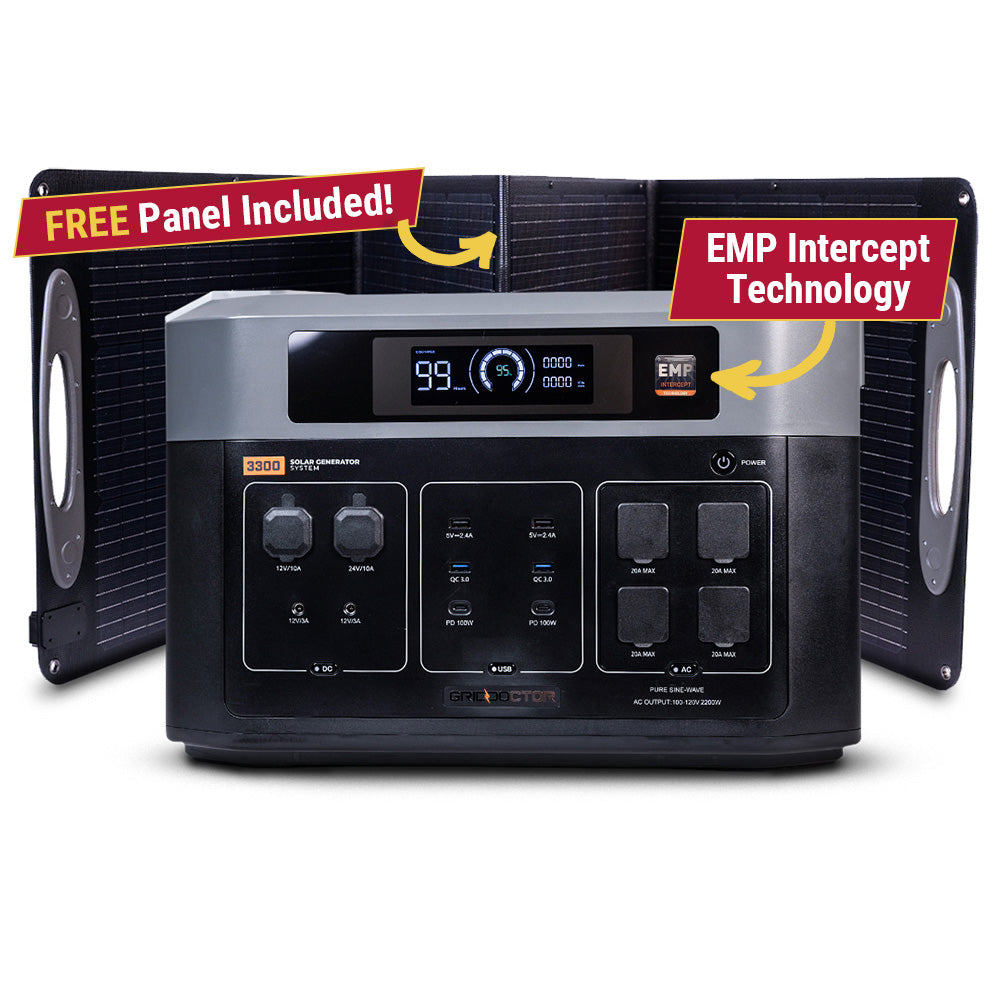
The Grid Doctor 3300 solar generator system sold with EMP shielding, a large portable power station for home backup and off-grid use; check the current spec sheet for details.
Why it's here: Listed with its EMP shielding as a stated feature, not a verified one. Judge it on the power specs first.
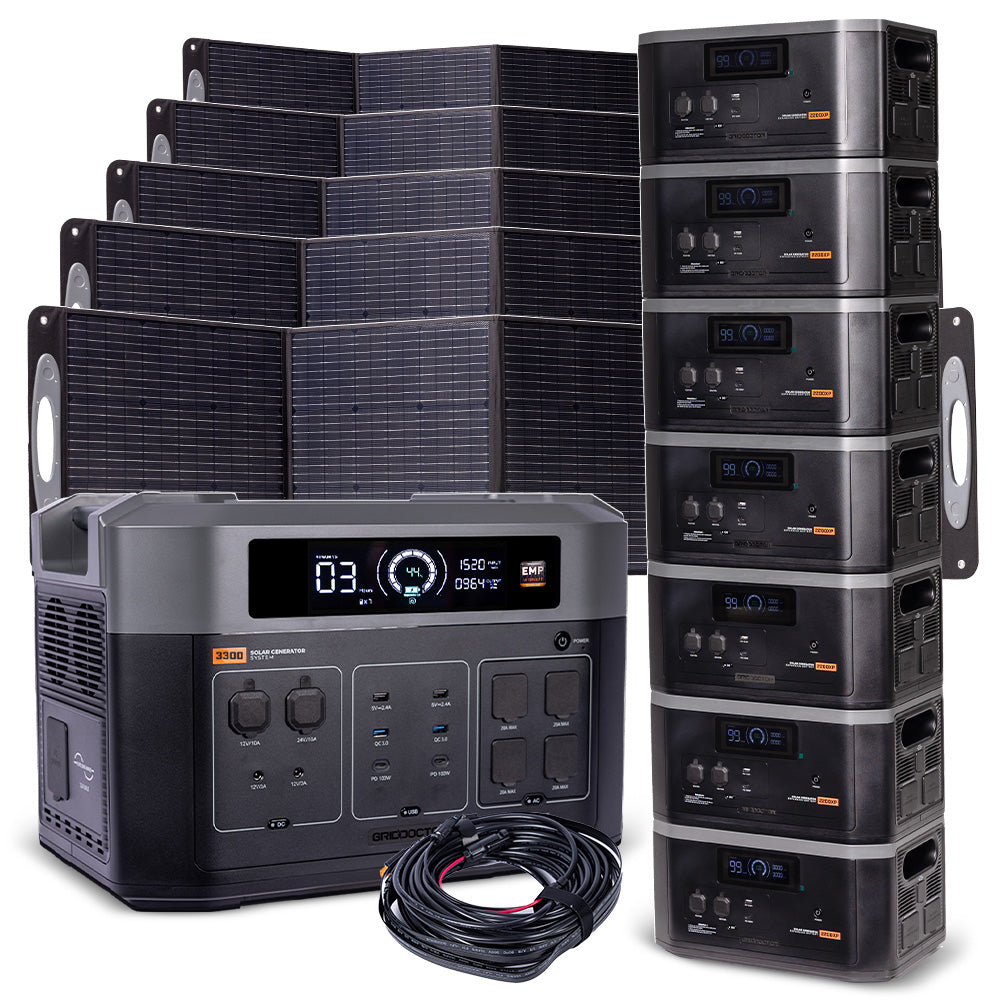
The Grid Doctor 3300 Power Tower, a large portable power station for home backup and off-grid systems; check the current spec sheet for capacity and output details.
Why it's here: Listed so form factor is part of the decision: this capacity class in a shape that stands rather than sits.
The Grid Doctor 3300-watt EMP-shielded solar generator sold through Emergency Essentials, a large power station for home backup and off-grid use; check the current spec sheet.
Why it's here: Listed through a second retailer so availability and pricing on this unit are not down to one storefront.
A waterproof backpack built as a faraday bag to shield phones, laptops and radios from EMP and signals, for preppers protecting electronics; check the current spec sheet.
Claim audit: 10 consequential claims checked against the article's sources; unsupported wording revised where it could not be substantiated.
Claim-by-claim audit (10 checked)
“Carrier coverage maps often show more service than you actually get, so treat them as estimates rather than fact.” (rewritten to what the article can stand behind)
“Wildfires knock out cell towers or the power feeding them.” (reasoning shown in the article)
“Device and subscription pricing varies by model and plan, so check current prices from the manufacturer before budgeting.” (rewritten to what the article can stand behind)
“These devices advertise an SOS button that routes to a monitoring service, so confirm with the manufacturer how that dispatch works in your area before relying on it.” (rewritten to what the article can stand behind)
“**Satellite phones** (Iridium, Inmarsat) let you make voice calls from most places with sky view, but hardware and airtime generally cost more than a messenger, so price current pl…” (rewritten to what the article can stand behind)
“FRS radios are sold as license-free and are generally short range, so test the real distance across your own terrain.” (rewritten to what the article can stand behind)
“GMRS radios require an FCC license, so check the FCC site for the current fee, exam requirements, and family coverage rules before buying.” (rewritten to what the article can stand behind)
“For someone serious about off-grid self-reliance, a base station ham radio plus a couple of handhelds is one of the most resilient communication setups available, one that keeps wo…” (reasoning shown in the article)
“It requires passing a licensing exam (the entry-level Technician license is genuinely approachable, and can be studied for in a weekend or two), but it opens up much longer range, …” (cited → arrl.org)
“It needs power, needs the dish to have sky view, and goes down in a power outage unless you've built battery backup into your system, something worth thinking through alongside the…” (reasoning shown in the article)
Before you go
One useful off-grid email a week.
Practical gear rundowns, honest how-tos, and plain-English guides from someone doing the homework in the open.
I am building a place for off-grid people to swap real answers: a forum by topic, classifieds for gear and services, and real estate for off-grid land and homes. It is new, so the early members shape what it becomes. A free account lets you post in all three.
No ER ten minutes away means you have to be your own triage nurse. Here's how to tell a bad bee sting from the real emergency, and what to actually stock.
In many off-grid disasters, the fire or flood itself isn't the decisive factor, it's the hour you waited too long to leave. Here's how to set real, numeric triggers before you need them.
Tax sale and sheriff's auction land looks like a bargain, but redemption periods, hidden liens, and unseen parcels turn a lot of cheap acreage into an expensive lesson. Here's how to vet a listing before you bid.