The scenario that should shape your first-aid kit is not a paper cut in the kitchen. It's a chainsaw kickback with the nearest ER forty-five minutes away, a bad fall off a ladder when the truck won't start, or a kid who steps on a rusty nail on a day the road is washed out. Off-grid living changes the math on medical emergencies, and your kit needs to change with it.
Many store-bought first-aid kits seem built around the assumption that professional help is close by and a phone call is all it takes to get it. Off-grid, that assumption often doesn't hold. You might be an hour from a clinic, longer in bad weather, and completely without cell signal to call anyone at all. That gap between "something went wrong" and "someone with real training is here" is exactly what your kit exists to fill.
This isn't about fear-mongering or building a kit for a doomsday scenario that will never happen. It's about the ordinary risks of rural, physical, tool-heavy living: cuts, burns, sprains, splinters, allergic reactions, and the occasional broken bone. Building the right kit means being honest about what those risks actually look like and stocking accordingly.
Start with your actual risk profile, not a generic checklist
Before buying anything, think through what you're really exposed to. A kit for a couple gardening on five acres with power lines and a graded road looks different from a kit for a family clearing timber, running a chainsaw daily, and living twenty miles up a logging road.
Ask yourself:
What tools do you use regularly, and what's the worst injury each one could realistically cause? Chainsaws and axes call for serious wound and bleeding control. Livestock calls for kits ready for kicks, bites, and crush injuries.
How far are you from definitive care, and how long would it realistically take to get there in your worst-case weather or road conditions?
Does anyone in the household have a known allergy, a chronic condition, or take medication that needs backup or refrigeration?
Who's home most days, and what's their comfort level with hands-on care? A kit is only as good as the person using it.
This risk-based approach matters more than any prepackaged list, because it tells you where to spend your money and your training time. If you're running power tools daily, trauma and bleeding control deserve more of your kit and your practice time than, say, a snakebite kit you'll almost certainly never open.
The core categories that actually matter
A genuinely useful off-grid kit breaks down into a handful of categories. Skipping any one of them leaves a real gap.
Bleeding control. I treat this as the top priority category for anyone living and working with tools far from a hospital, and it's the one I find generic kits skimp on. You want more than a box of adhesive bandages. Include several sterile gauze pads in multiple sizes, a couple of rolls of gauze wrap, at least one hemostatic gauze product (designed to help control significant bleeding), a real tourniquet (a purpose-built one, not a shoelace improvised in a panic), and some compression/pressure bandages. If you take one lesson from this article, let it be this: severe bleeding can become life threatening within minutes, so being able to control it is worth prioritizing.
Wound care and infection prevention. Off-grid life often involves more scrapes, punctures, and soil contact, and usually more distance from a doctor who could prescribe antibiotics quickly. Stock antiseptic wipes or solution, antibiotic ointment, non-stick dressings, medical tape, butterfly closures or steri-strips for wounds that don't need stitches but need to stay closed, and a good pair of tweezers for splinters and ticks.
Burns. Many off-grid households cook over open flame, run wood stoves, and handle hot equipment, so it makes sense to plan for burns. Burn gel or burn dressings, plus plenty of sterile non-stick gauze, belong in the kit. If you're cooking without shore power using a rocket stove or open flame setup, as covered in my guide to off-grid cooking without shore power, burn supplies deserve extra attention.
Sprains, strains, and fractures. Rural, physical work means twisted ankles and the occasional broken bone. An elastic wrap, a SAM splint (a lightweight, moldable splint that packs flat and works for wrists, ankles, and lower legs), and some triangular bandages for slings cover most of what you'll face until you can get to real care.
Medications. Pain relievers (both an NSAID like ibuprofen and acetaminophen), antihistamines for allergic reactions, anti-diarrheal medication, antacids, and if anyone in the household has a diagnosed severe allergy, an epinephrine auto-injector kept current and easy to find in an emergency. If anyone takes prescription medication regularly, talk to their doctor about keeping a small backup supply, since a missed refill trip is a real risk when the road out is unreliable.
Tools. Trauma shears (strong enough to cut through clothing or a boot in an emergency), a good digital thermometer, disposable gloves (several pairs, because one contaminated pair means you need more), a CPR mask or barrier device, and a headlamp or flashlight, since plenty of real accidents happen after dark when the power's off.
Eye and dental. An eyewash solution and a small eye cup or irrigation kit matter more than people expect when you're working with wood chips, dust, and debris daily. A basic dental kit (temporary filling material, oil of cloves for pain, floss) can turn a miserable multi-day toothache into something manageable until you can get to a dentist.
What generic kits get wrong
In my experience, commercial first-aid kits, even ones marketed as "deluxe" or "family," tend to be stocked heavy on adhesive bandages and light on serious injury supplies. They'll have forty small bandages and zero tourniquets. That's fine for a household near a hospital, but it's backwards for off-grid life, where the injuries you're least prepared for are the ones most likely to require a long trip for help.
Another common gap: quantity. A kit built for one incident runs out fast if you're actually living somewhere day to day. Buy gauze and wound dressings in bulk, not the two-pack that comes in a starter kit. You'll go through supplies faster than you expect, especially with kids, animals, or ongoing projects like fencing and firewood.
Expiration dates are the third blind spot. Antiseptics, ointments, and medications degrade. A kit assembled five years ago and never checked is not much better than no kit at all if the antibiotic ointment has turned and the aspirin has gone chalky. Off-grid life rewards the kind of routine maintenance that easy access to a pharmacy lets other people skip.
Building versus buying
There's a real debate here, and it's worth being honest about the tradeoffs instead of pretending one side is obviously right.
Buying a pre-assembled trauma or wilderness first-aid kit gets you a reasonable baseline fast, and a well-reviewed kit from a company that specializes in wilderness or tactical medical supplies will usually include the bleeding control items generic kits skip. The downside is cost and the fact that pre-built kits still won't perfectly match your household's specific risks, medications, or allergies.
Building your own from individual components can cost less depending on what you buy, lets you tailor quantities to your actual situation, and forces you to learn what's in the kit and why, which pays off the day you need to find something fast under stress. The downside is the upfront research and the temptation to either overbuy trauma gear you'll never use or underbuy the boring stuff (bandages, tape, gauze) that you'll go through fastest.
A reasonable middle path: buy a well-stocked trauma kit as your bleeding-control foundation, then build out the wound care, medication, and comfort categories yourself based on your household's real needs. Check my start here gear guides for kit recommendations organized by category if you want a curated starting point rather than researching every component from scratch.
Training matters more than the kit itself
A perfectly stocked kit in the hands of someone who's never opened it is worse than a modest kit in the hands of someone who's practiced. This is the part people skip, and it's the part that actually determines the outcome.
At minimum, take a basic first aid and CPR course. Many rural fire departments, county extension offices, and Red Cross chapters offer these regularly and affordably. Beyond that, a wilderness first aid course is worth looking into for anyone living far from emergency services, since these courses generally cover extended care, improvisation, and decision-making when help is not minutes away.
Practice with your actual kit, not just a training mannequin. Open it. Find things with your eyes closed. Know which pocket the tourniquet lives in before you're the one bleeding, or before it's your spouse or your kid. Rehearsal under calm conditions is what makes a kit useful under panic.
Where to keep it, and keeping more than one
One kit in a closet does you no good if the emergency happens at the far end of the property or on the road. A practical setup includes a main, well-stocked kit at the cabin or house, a smaller trauma-focused kit in each vehicle, and a compact version that goes with you when you're working tools, fencing, or clearing land away from the house.
Keep the kit somewhere dry, out of direct heat (a hot truck cab in summer will degrade ointments and medications faster than you'd think), and where everyone in the household knows exactly where it is. Label it clearly. In an actual emergency, seconds spent hunting for the kit are seconds you don't get back.
If your property has any dead zones for communication, which is common for off-grid land tucked into valleys or dense timber, pair your first-aid planning with a real look at how you'd actually call for help. My guide on staying reachable off-grid when there's no cell signal at all covers satellite messengers and other options worth having alongside your medical kit, because the fastest response time in the world doesn't help if nobody knows to come.
Restocking and maintenance
Set a schedule, twice a year is reasonable, to go through the kit fully. Check expiration dates on medications and ointments, replace anything used and not restocked, and confirm batteries in any powered tools (headlamps, digital thermometers) still work. Off-grid households already tend to run seasonal maintenance checks on solar systems, water storage, and heating setups. Add the first-aid kit to that same rhythm rather than treating it as a one-time purchase.
It's also worth revisiting your kit whenever your household changes. A new baby means different medication dosages and sizes. An aging family member might need different supplies. A new dog or livestock changes your bite and injury risk. The kit should evolve with the life it's protecting, not sit static in the corner of a shed.
The bottom line
An off-grid first-aid kit isn't about buying the most expensive trauma bag on the market. It's about being honest about your actual distance from help, stocking heavier on bleeding control and wound care than any generic kit does, keeping supplies fresh and in enough quantity to matter, and actually learning to use what you've bought. Pair that kit with the broader self-reliance skills covered across my blog, including the off-grid tool kit basics that keep you from needing the first-aid kit in the first place, and you've covered one of the most overlooked pieces of a safe, sustainable off-grid life.
If you're just getting started and want more on how I think about gear and honesty in recommendations, my about page explains my approach, and you're always welcome to reach out with questions specific to your situation. Nobody's setup is identical, and the right kit for a family in the desert Southwest looks different from the right kit for a homestead in the Northeast woods. What stays constant is the principle: build for the help you actually have, not the help you wish you had.
The rest of the shortlist
Recommended off-grid gear
Affiliate disclosure: Some links on this site are affiliate links, including Amazon links: as an Amazon Associate I earn from qualifying purchases. Buying through one costs you nothing extra, and it never changes what I recommend.
Products appear here only when they match this article's subject. Selection is based on documented specs and owner reports, never on compensation; pages with no relevant gear carry none.
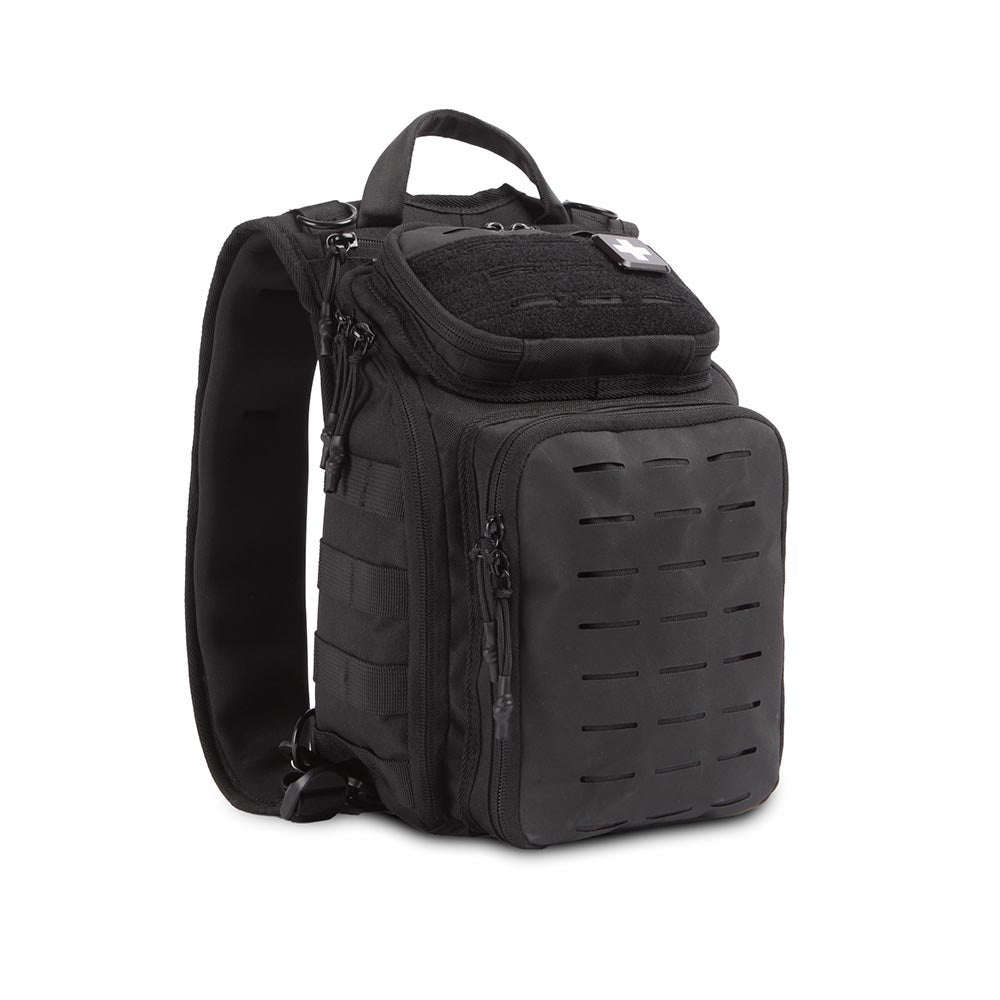
A 204-piece My Medic Recon first aid kit, for households, vehicles and bug-out bags that need a comprehensive medical kit; check the current spec sheet for contents.
Why it's here: Listed as the larger option for when one kit has to cover the house, the truck and a bag by the door.
A multi-can kit of basic cooking staples from Emergency Essentials, for households rounding out a long-term storage pantry; check the current spec sheet for contents.
Claim audit: 11 consequential claims checked against the article's sources; unsupported wording revised where it could not be substantiated.
Claim-by-claim audit (11 checked)
“Many store-bought first-aid kits seem built around the assumption that professional help is close by and a phone call is all it takes to get it.” (rewritten to what the article can stand behind)
“I treat this as the top priority category for anyone living and working with tools far from a hospital, and it's the one I find generic kits skimp on.” (rewritten to what the article can stand behind)
“If you take one lesson from this article, let it be this: severe bleeding can become life threatening within minutes, so being able to control it is worth prioritizing.” (rewritten to what the article can stand behind)
“Off-grid life often involves more scrapes, punctures, and soil contact, and usually more distance from a doctor who could prescribe antibiotics quickly.” (rewritten to what the article can stand behind)
“Many off-grid households cook over open flame, run wood stoves, and handle hot equipment, so it makes sense to plan for burns.” (rewritten to what the article can stand behind)
“In my experience, commercial first-aid kits, even ones marketed as "deluxe" or "family," tend to be stocked heavy on adhesive bandages and light on serious injury supplies.” (rewritten to what the article can stand behind)
“Antiseptics, ointments, and medications degrade.” (cited → medlineplus.gov)
“Building your own from individual components can cost less depending on what you buy, lets you tailor quantities to your actual situation, and forces you to learn what's in the kit…” (rewritten to what the article can stand behind)
“Many rural fire departments, county extension offices, and Red Cross chapters offer these regularly and affordably.” (cited → redcross.org)
“Beyond that, a wilderness first aid course is worth looking into for anyone living far from emergency services, since these courses generally cover extended care, improvisation, an…” (rewritten to what the article can stand behind)
“Keep the kit somewhere dry, out of direct heat (a hot truck cab in summer will degrade ointments and medications faster than you'd think), and where everyone in the household knows…” (reasoning shown in the article)
Before you go
One useful off-grid email a week.
Practical gear rundowns, honest how-tos, and plain-English guides from someone doing the homework in the open.
I am building a place for off-grid people to swap real answers: a forum by topic, classifieds for gear and services, and real estate for off-grid land and homes. It is new, so the early members shape what it becomes. A free account lets you post in all three.
No ER ten minutes away means you have to be your own triage nurse. Here's how to tell a bad bee sting from the real emergency, and what to actually stock.
In many off-grid disasters, the fire or flood itself isn't the decisive factor, it's the hour you waited too long to leave. Here's how to set real, numeric triggers before you need them.
Tax sale and sheriff's auction land looks like a bargain, but redemption periods, hidden liens, and unseen parcels turn a lot of cheap acreage into an expensive lesson. Here's how to vet a listing before you bid.