Every homesteading forum tells you to start with chickens. That advice is fine as far as it goes, but it skips the actual decision-making that determines whether your first animals become a steady source of food and income or a source of stress, vet bills, and burnout.
The real question isn't "what animal should I get first." It's "what animal matches the water I have, the fencing I can build, the predators I'm dealing with, and the time I actually have free each day." Get that match wrong and it doesn't matter how cute the animal is on day one. By month four you'll be resenting the chore list.
I've spent a lot of time reading through homesteaders' actual experiences (the good ones and the disaster stories) rather than just the idealized version you see in magazines, and a few patterns show up again and again. This is an attempt to lay out the honest tradeoffs so you can pick livestock that fits the property you actually have, not the property you wish you had.
Start with water, not with cuteness
Before you think about breeds or fencing, work out your water budget. This is the single most underestimated factor in choosing livestock, and it's directly tied to whatever water source you're running.
A laying hen drinks roughly half a liter to a full liter a day depending on heat and diet. A dairy goat in milk can drink 3 to 5 gallons a day, more in summer. A single dairy cow can go through many times what a goat drinks, so check current dairy cattle water figures before planning for one. Rabbits are cheap on water compared with grazing stock, though you should confirm daily amounts for your climate and hutch setup.
If you're hauling water by hand or running off a shallow well with a modest pump, a cow is simply not realistic yet. If you're still working out your water situation, it's worth reading through the realistic breakdown on drilling or driving a well off-grid before you commit to an animal that needs 20 gallons a day pumped, hauled, or gravity-fed to a trough. Water is also seasonal. A source that's generous in April can be a trickle in August, and livestock don't forgive a dry trough the way a garden bed forgives a missed watering.
Chickens: the easy default, with real caveats
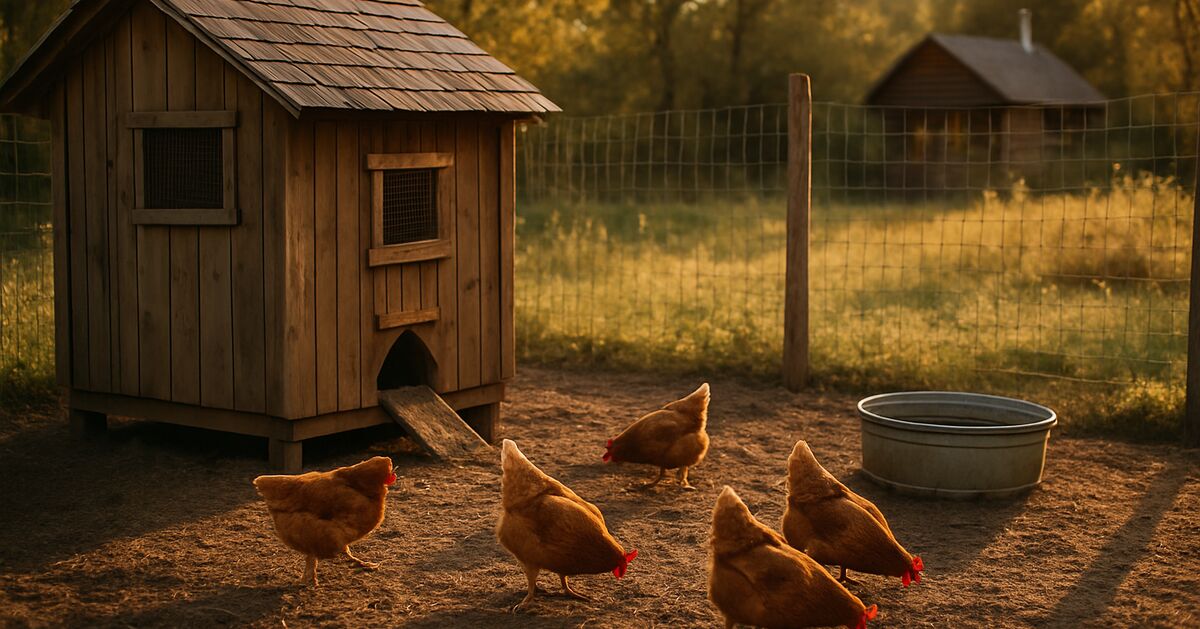
Chickens earn their reputation because they're forgiving. They eat kitchen scraps and garden waste, they don't need acres, and a small coop can house six to eight layers comfortably. For a lot of new homesteads, six hens supply more eggs than a small household can eat.
The catch nobody mentions enough is predator pressure. Off-grid properties tend to sit closer to wild land than suburban homesteads, which means raccoons, foxes, weasels, hawks, and in some regions bears or mountain lions are a real and ongoing threat, not a hypothetical one. A flimsy coop that would survive fine in a subdivision gets tested hard out past the tree line. Hardware cloth (not standard chicken wire, which predators can tear or reach through) buried a foot down around the coop perimeter, a secure run, and a habit of locking birds in every single night without exception are not optional extras. They're the baseline.
Chickens also draw predators toward your whole property, which matters if you're also running other animals or if your cabin sits close to the coop.
Rabbits: underrated for small, water-tight setups
Rabbits don't get talked about much outside dedicated homesteading circles, but they deserve more attention for an off-grid start. They're quiet, they take up very little space, they breed fast enough to provide meat within a predictable cycle, and their water and feed needs are modest compared to almost anything else you'd raise.
The tradeoff is that rabbits need real protection from heat. Rabbits are far more vulnerable to heat than cold, so sustained hot weather without airflow or shade is a serious risk worth checking rabbit care guidance on. They're also entirely dependent on you, there's no "free ranging" a rabbit safely the way you might with chickens.
For someone with limited fencing infrastructure and a tight water budget, rabbits are worth serious consideration even though they don't show up in the beginner conversation as often as chickens do.
Goats: flexible, but fencing is the whole ballgame
Goats get sold as the low-maintenance browsing animal that clears brush and gives milk. Both of those things are true. What doesn't get said enough is that goats are escape artists, and a fence that holds a goat is a different, more serious project than a fence that holds a chicken run.
Standard woven wire fencing at a real height (four feet minimum, five is safer), checked regularly for gaps, is the realistic baseline. Electric fencing works well for goats once they're trained to respect it, but training takes patience and a couple of shocks they actually feel, which means your fence charger and grounding need to be done properly from day one, not as an afterthought.
Goats are also social animals that do poorly alone, so plan on at least two from the start, which doubles your water and feed math immediately.
If you want milk, you're committing to twice-daily milking on a schedule that doesn't care about weather, illness, or how tired you are that day. That's a bigger lifestyle commitment than it looks like from the outside, and it's worth being honest with yourself about before you bring home a doe in milk.
Ducks: an underused option for wet or difficult ground
If your property has a pond, seasonal wet area, or just ground that stays muddy, ducks are worth a real look instead of fighting that ground to make it work for chickens. Duck keepers often report that ducks cope better with cold and wet ground than chickens and need a less strict dry bedding routine, though predator protection is still required.
They're messier around water sources though, and if you're hauling every drop of their water, that mess adds real workload. Ducks are often described as less reliable about using a nest box, so plan on hunting for eggs wherever they laid that day.
Bees: livestock that need almost no water, but real knowledge
Honeybees are worth including in this conversation because they upend the whole water and fencing calculation. Beekeeping guides generally describe hives as needing no fencing and little water beyond a shallow dish or nearby source, with inspections rather than daily chores. What they need instead is real knowledge before you start (mite management, hive placement, seasonal feeding when nectar flow is low) and a tolerance for stings and for losing colonies, which local beekeeping groups can tell you more about.
Bees are a good complementary choice alongside a garden, since you'll get pollination benefits that feed back into the food plan you're already building. If you haven't worked out the rest of your growing and storage strategy yet, it's worth reading through the year-round food plan for off-grid living since livestock and garden decisions really do influence each other.
Larger livestock: why to wait
Pigs, cattle, and sheep come up often in questions from people just starting out, and my honest answer is usually to wait a full year or more. These animals need infrastructure (real fencing, shelter, a plan for hay or feed through winter, and often a vehicle or trailer for hauling supplies or getting animals to processing) that a first-year homestead usually hasn't built yet.
Pigs are heavy and strong, so fencing that holds goats may not hold them, and their feed needs are substantial and often expensive in small quantities. Cattle need pasture management knowledge (rotational grazing, understanding stocking rates for your specific land) that takes a season or two of close observation to get right, and getting it wrong means either starving pasture or starving animals.
None of this means never. It means these can be second-year or third-year animals on an off-grid start, once water, fencing, feed sourcing, and your own daily rhythm are proven out with smaller livestock first.
Predators and fencing: the part that determines everything
Whatever animal you choose, the predator situation on your specific property is going to shape your fencing budget and your daily routine more than any other factor. This is genuinely regional. A property in the Southeast deals with different threats than one in the Mountain West or the upper Midwest, and talking to actual neighbors (not just online forums) about what's actually killed livestock in your specific area is worth more than any general guide, including this one.
Electric fencing, whether solar-powered or wired into your existing system, is worth pricing out as a predator deterrent, since materials per foot are usually lower than heavy woven wire. If you're already working out your power setup, it's worth thinking through how a fence charger fits into your load calculations alongside everything covered in how much solar do you actually need to live off-grid, since a fence charger running continuously is a small but constant draw you don't want to discover you forgot about.
Matching the animal to your actual daily schedule
This is the part that gets skipped in the "which animal should I get" articles I've read, and it might be the most important part. Livestock don't care about your work schedule, your other projects, or how tired you are. Eggs need collecting, milk needs milking on a strict clock, and water troughs need checking daily regardless of weather.
Before choosing an animal, be honest about your actual daily availability. If you're still building your cabin, digging your well, or working a remote job on top of homestead work, adding a milking animal on a twice-daily schedule can break your routine fast. Chickens and rabbits tolerate a slightly less rigid schedule. Dairy animals do not.
A reasonable first-year sequence
For someone starting from close to zero, a sequence that tends to work well in practice looks something like this: start with a small flock of six to eight chickens or a rabbit setup in year one while you're still dialing in water, fencing, and your own daily rhythm. Add bees if you're interested, since they run parallel to everything else without adding daily chore burden. Hold off on goats until you've built real fencing and proven your water supply through at least one full summer. Wait on cattle, pigs, and sheep until your second year at the earliest, once you understand your land's actual carrying capacity through direct observation across seasons.
This isn't the only path, and plenty of people successfully skip steps in it. But it reflects the order that tends to produce the fewest expensive mistakes and the least burnout, based on watching how these decisions actually play out for people starting from scratch.
Final thoughts on starting small
The animals that succeed on an off-grid homestead are the ones that match the infrastructure you've actually built, not the ones that look best in a homesteading photo spread. Water, fencing, predator pressure, and your own daily schedule matter more than which breed has the prettiest feathers or the friendliest reputation.
If you're still early in planning your whole setup, it's worth browsing through the broader gear and planning guides over on my start here page, since livestock decisions tend to connect back to water, power, and shelter choices you're making anyway. And if you've got a specific situation, a strange predator problem, a weird water source, a climate that doesn't fit the general advice, feel free to reach out through the contact page. I read through the site's other planning guides over on the blog regularly to keep filling in gaps like this one, and reader questions are usually what point me toward the next topic worth covering.
Livestock is one of the most rewarding parts of homesteading, but it's also one of the easiest places to overcommit early. Match the animal to the land you actually have, not the homestead you're picturing for five years from now, and you'll set yourself up for a much steadier start.
The rest of the shortlist
Recommended off-grid gear
Affiliate disclosure: Some links on this site are affiliate links, including Amazon links: as an Amazon Associate I earn from qualifying purchases. Buying through one costs you nothing extra, and it never changes what I recommend.
Products appear here only when they match this article's subject. Selection is based on documented specs and owner reports, never on compensation; pages with no relevant gear carry none.
Assertion lint: 1 prevalence/consensus statement(s) softened to attributed or mechanism-based wording.
Claim audit: 16 consequential claims checked against the article's sources; unsupported wording revised where it could not be substantiated.
Claim-by-claim audit (16 checked)
“A laying hen drinks roughly half a liter to a full liter a day depending on heat and diet.” (cited → extension.psu.edu)
“A dairy goat in milk can drink 3 to 5 gallons a day, more in summer.” (cited → extension.psu.edu)
“A single dairy cow can go through many times what a goat drinks, so check current dairy cattle water figures before planning for one.” (rewritten to what the article can stand behind)
“Rabbits are cheap on water compared with grazing stock, though you should confirm daily amounts for your climate and hutch setup.” (rewritten to what the article can stand behind)
“They eat kitchen scraps and garden waste, they don't need acres, and a small coop can house six to eight layers comfortably.” (cited → extension.psu.edu)
“Hardware cloth (not standard chicken wire, which predators can tear or reach through) buried a foot down around the coop perimeter, a secure run, and a habit of locking birds in ev…” (cited → extension.psu.edu)
“Chickens also draw predators toward your whole property, which matters if you're also running other animals or if your cabin sits close to the coop.” (reasoning shown in the article)
“Rabbits are far more vulnerable to heat than cold, so sustained hot weather without airflow or shade is a serious risk worth checking rabbit care guidance on.” (rewritten to what the article can stand behind)
“Standard woven wire fencing at a real height (four feet minimum, five is safer), checked regularly for gaps, is the realistic baseline.” (cited → extension.psu.edu)
“Goats are also social animals that do poorly alone, so plan on at least two from the start, which doubles your water and feed math immediately.” (cited → extension.psu.edu)
“Duck keepers often report that ducks cope better with cold and wet ground than chickens and need a less strict dry bedding routine, though predator protection is still required.” (rewritten to what the article can stand behind)
“Ducks are often described as less reliable about using a nest box, so plan on hunting for eggs wherever they laid that day.” (rewritten to what the article can stand behind)
“Beekeeping guides generally describe hives as needing no fencing and little water beyond a shallow dish or nearby source, with inspections rather than daily chores.” (rewritten to what the article can stand behind)
“What they need instead is real knowledge before you start (mite management, hive placement, seasonal feeding when nectar flow is low) and a tolerance for stings and for losing colo…” (rewritten to what the article can stand behind)
“Pigs are heavy and strong, so fencing that holds goats may not hold them, and their feed needs are substantial and often expensive in small quantities.” (rewritten to what the article can stand behind)
“Electric fencing, whether solar-powered or wired into your existing system, is worth pricing out as a predator deterrent, since materials per foot are usually lower than heavy wove…” (rewritten to what the article can stand behind)
Before you go
One useful off-grid email a week.
Practical gear rundowns, honest how-tos, and plain-English guides from someone doing the homework in the open.
I am building a place for off-grid people to swap real answers: a forum by topic, classifieds for gear and services, and real estate for off-grid land and homes. It is new, so the early members shape what it becomes. A free account lets you post in all three.
No ER ten minutes away means you have to be your own triage nurse. Here's how to tell a bad bee sting from the real emergency, and what to actually stock.
In many off-grid disasters, the fire or flood itself isn't the decisive factor, it's the hour you waited too long to leave. Here's how to set real, numeric triggers before you need them.
Tax sale and sheriff's auction land looks like a bargain, but redemption periods, hidden liens, and unseen parcels turn a lot of cheap acreage into an expensive lesson. Here's how to vet a listing before you bid.