A chest freezer full of vegetables looks like security until the sun disappears for four cloudy days in a row and you're staring at a battery monitor doing math you don't want to do. A freezer runs a compressor around the clock, so it tends to be one of the steadier loads in an off-grid house and often the first thing people reconsider when power gets tight. The good news is that humans preserved food for thousands of years without electricity, and most of those methods still work better than people expect once you understand the actual chemistry behind them.
This isn't an argument against ever owning a freezer off-grid. Plenty of people run one successfully on a well-sized system, and I've covered the load math elsewhere in how much solar do you actually need to live off-grid. But if you're growing or raising more food than your freezer can hold, or you want a preservation plan that survives a bad week of weather without spoiling everything inside, you need methods that don't depend on a compressor running around the clock.
Why non-electric preservation is worth learning even if you have a freezer
Redundancy is the whole point of self-reliance, and food storage is no different. A freezer failure, whether from an inverter fault, a dead battery bank, or just a long dark stretch in December, can put a season's worth of meat or produce at risk once the contents thaw. Canned, dried, and fermented food doesn't care if the power goes out. It sits on a shelf and waits.
There's also a volume argument. Jars stack efficiently in a pantry or a cold room, while a chest freezer eats a fixed footprint and a fixed wattage no matter how full it is. If you're trying to put up a whole garden's worth of tomatoes, beans, and squash, shelf-stable methods often stretch your storage capacity further than frozen space ever could.
Water bath canning: the entry point, with real limits
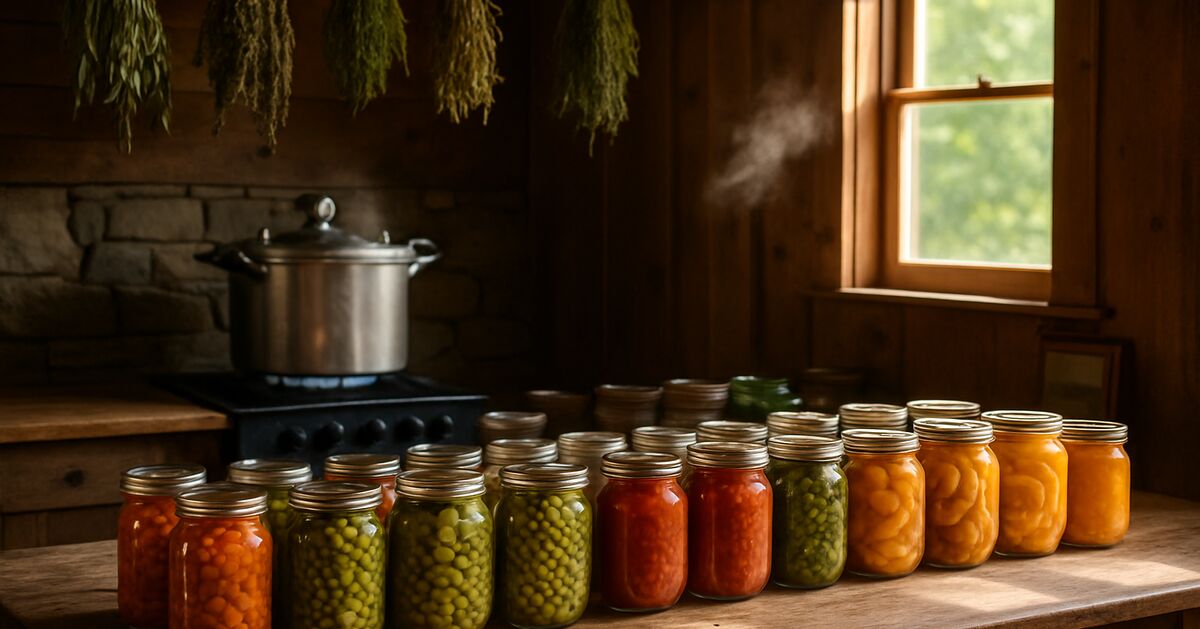
Water bath canning uses boiling water, a canning pot, and jars to preserve high-acid foods: most fruits, jams, pickles, salsas with enough vinegar, and tomatoes with added acid. The boiling water (212°F at sea level) is hot enough to destroy the yeasts, molds, and most bacteria that spoil high-acid food, and the acidity itself prevents the one organism you really need to worry about, Clostridium botulinum, from growing.
This is a common starting method because the equipment is cheap: a large stockpot, a rack to keep jars off the direct heat, and standard canning jars with new lids each time. It works fine on a propane camp stove or a wood cookstove, which matters if your kitchen setup isn't leaning on grid power anyway.
The limit is important to understand clearly: water bath canning is not safe for low-acid foods. Plain vegetables, meat, poultry, and most beans do not have enough natural acidity to stop botulism spores from surviving and later producing toxin in a sealed jar. This isn't a minor technicality, it's the difference between a shelf-stable jar of pickles and a jar that can make someone seriously ill or worse. Recipes need to come from a tested source (your local extension office publishes tested recipes, and the USDA Complete Guide to Home Canning is the standard reference), not a blog post or a grandmother's memory of "however much vinegar looked right."
Pressure canning: the method for meat, beans, and most vegetables
To safely can low-acid foods, you need a pressure canner, which reaches higher temperatures than boiling water alone (typically 240°F at 10-15 psi depending on altitude and canner type). That extra heat is what kills botulism spores reliably.
A pressure canner is a bigger investment than a water bath setup, both in dollars and in the learning curve. You're managing pressure, venting steam properly before sealing the vent, and tracking processing times that vary by food, jar size, and your altitude. Get this wrong and you either under-process (a real safety risk) or over-process (mushy, wasted food). It's worth practicing on a small batch before you commit a whole harvest to it, and it's worth reading the manual for your specific canner rather than assuming all pressure canners behave the same.
Once you're comfortable with it, pressure canning opens up meat, poultry, fish, beans, corn, and full vegetable soups and stews, foods that water bath canning simply can't handle safely. For a homestead raising its own meat or growing dry beans, this is often the single most useful preservation skill to learn, more useful even than canning fruit, because it replaces the freezer space that meat would otherwise demand.
Fuel matters here too. A full canner load can run 75 to 90 minutes at pressure, plus heat-up and cool-down time, which is a real propane or wood commitment. Factor that into your planning the same way you'd factor in heating a small off-grid space: canning day is a fuel-consuming day, not a background task.
Dehydrating: low power, high payoff
Drying food removes the moisture organisms need to grow, and it's one of the gentlest methods on your power budget if you use the sun or a wood stove instead of an electric dehydrator. A screened drying rack in full sun and low humidity can dry herbs, sliced fruit, and even thinly sliced vegetables over a few days. In more humid climates or during unpredictable weather, a small electric dehydrator run for a few hours during peak solar production can be a manageable draw, though you should check the wattage on the nameplate of the model you own.
Dried food is also remarkably compact and light, which matters if you're stocking a pantry with limited shelf space or thinking about what you'd grab in an evacuation. Dried tomatoes, apple rings, jerky, herbs, and dried beans all store for months to well over a year in airtight jars kept out of light and heat.
Jerky deserves its own mention because it's one of the best non-electric ways to preserve meat without canning or freezing. Thin strips, a simple cure (salt is doing real preservation work here, not just flavor), and low, steady heat, whether from a dehydrator, a low oven, or a smoker, produce meat that keeps far longer than fresh, though you should follow a tested recipe for storage times. The main risks are undercuring or drying at too low a temperature, which can leave enough moisture for bacteria to survive; a food thermometer and a tested recipe matter here just as much as they do for canning.
Fermenting: preservation that also changes the food, not just its shelf life
Fermentation is the odd one out on this list because it doesn't just preserve food, it transforms it. Lactic acid fermentation, the process behind sauerkraut, kimchi, and true fermented pickles, uses salt to suppress spoilage organisms while beneficial bacteria already present on the vegetable convert sugars into lactic acid. That acid is what preserves the food and gives fermented vegetables their characteristic sour flavor.
The equipment needs are minimal: a crock or food-grade bucket, salt, weights to keep vegetables submerged under brine, and a cool, stable spot to let it sit for one to several weeks. No heat, no power, no specialized canner. This makes fermentation an off-grid-friendly preservation method.
It's not a universal substitute for canning or drying, though. Fermented foods generally still need cool storage once they're finished (a root cellar, cool basement, or the kind of cold storage covered in root cellars without a basement works well), and they're best suited to vegetables rather than meat, with a few traditional exceptions like fermented sausages that require more specialized technique and equipment to do safely.
Building a preservation plan that matches your harvest and your power
The real skill isn't mastering one method, it's matching the method to the food and to what your setup can support. A rough way to think about it:
High-acid fruits, jams, salsas with enough vinegar: water bath canning
Herbs, fruit, jerky, anything you want compact and shelf-stable: dehydrating
Cabbage, cucumbers, most garden vegetables in bulk, minimal equipment: fermenting
Anything with limited shelf life even preserved, or foods that don't preserve well any other way: cold storage as a supplement, not a replacement
In practice it usually makes sense to use three or four of these methods side by side rather than just one. A pressure canner handles the deer or the extra roosters, a dehydrator handles the herb harvest and surplus fruit, a crock in the corner handles the cabbage glut, and whatever's left goes into cold storage for short-term use. That variety is also just good risk management: if one method's equipment fails (a cracked canner gasket, a dehydrator with a dead fan), you're not left with no way to preserve anything at all.
Common mistakes worth avoiding
The single biggest mistake is treating water bath canning recipes as flexible. Reducing the vinegar in a salsa recipe, adding extra low-acid vegetables to a canned tomato recipe, or skipping the lemon juice a tested recipe calls for changes the acidity balance in ways that can make a jar unsafe, even if it looks and tastes fine. Tested recipes exist because someone measured the actual pH, don't improvise on this specific point.
The second is skipping altitude adjustments. Both water bath and pressure canning times and pressures change with elevation, since water boils at a lower temperature the higher up you are. A recipe written for sea level can under-process food at 5,000 feet unless you adjust for it.
The third is storing jars in a spot that gets too warm. Canned food kept near a wood stove, in direct sun, or in an attic space that swings into the 90s will lose quality fast and, in warm enough conditions over long enough time, can compromise seals. A cool, dark, stable pantry space does more for shelf life than people expect.
If you're just getting your growing and preserving systems established, it's worth reading through my broader start-here gear guides for canner and dehydrator recommendations that hold up to repeated seasonal use, since cheap equipment tends to fail exactly when you're mid-harvest and have no slack in the schedule. And if you've got questions about matching a preservation setup to your specific power system or climate, my contact page is always open, I answer these one at a time and it helps me know what to write about next on the blog.
Preserving your own harvest without leaning on a freezer takes more hands-on time than tossing bags in a chest freezer, but it buys you something a freezer can't: food that stays safe through a power outage, a hard winter, or just an ordinary cloudy week. That kind of resilience is exactly what moving off-grid is supposed to be about.
The rest of the shortlist
Recommended off-grid gear
Affiliate disclosure: Some links on this site are affiliate links, including Amazon links: as an Amazon Associate I earn from qualifying purchases. Buying through one costs you nothing extra, and it never changes what I recommend.
Products appear here only when they match this article's subject. Selection is based on documented specs and owner reports, never on compensation; pages with no relevant gear carry none.
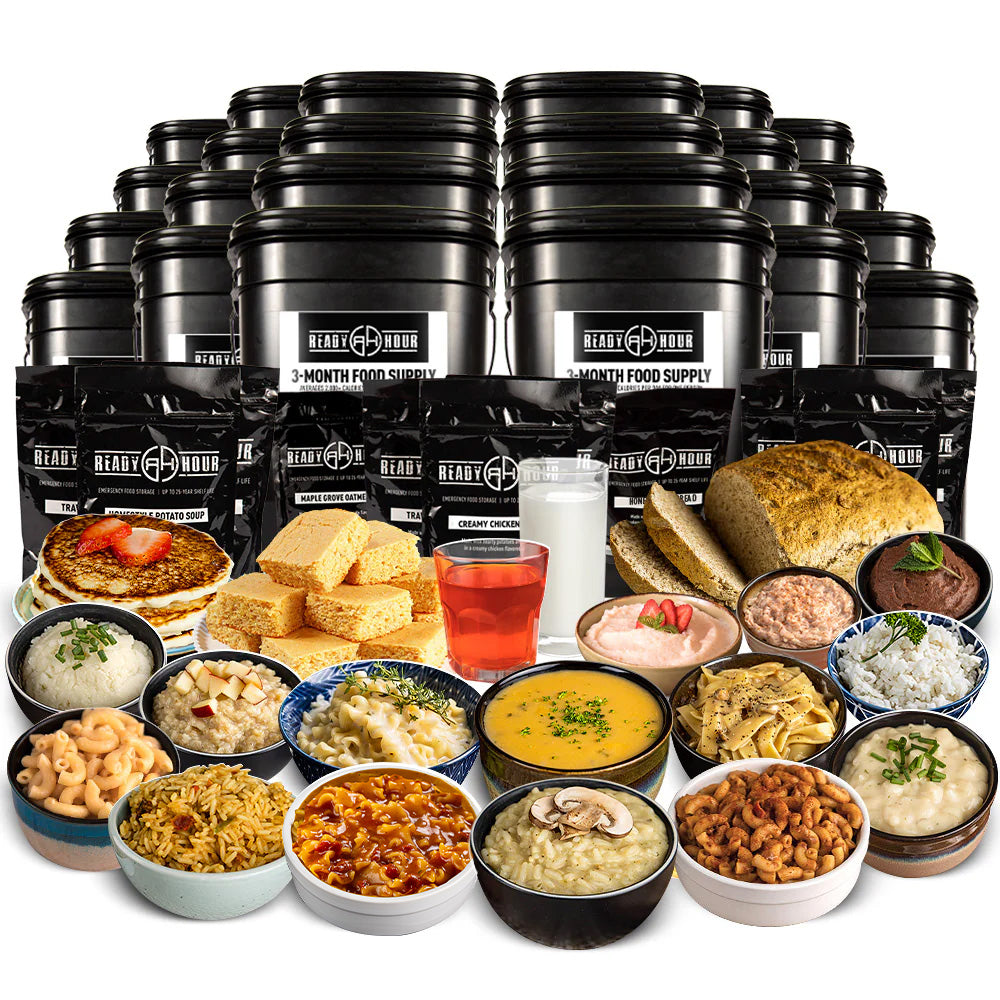
The Emergency Essentials one-year emergency food kit, a large long-term food supply for households planning a full year of reserve; check the current spec sheet.
Why it's here: Listed so the one-year tier is not one vendor's decision. Compare servings and calories per day, not headline duration.
Claim audit: 17 consequential claims checked against the article's sources; unsupported wording revised where it could not be substantiated.
Claim-by-claim audit (17 checked)
“A freezer runs a compressor around the clock, so it tends to be one of the steadier loads in an off-grid house and often the first thing people reconsider when power gets tight.” (rewritten to what the article can stand behind)
“A freezer failure, whether from an inverter fault, a dead battery bank, or just a long dark stretch in December, can put a season's worth of meat or produce at risk once the conten…” (rewritten to what the article can stand behind)
“The boiling water (212°F at sea level) is hot enough to destroy the yeasts, molds, and most bacteria that spoil high-acid food, and the acidity itself prevents the one organism you…” (cited → nchfp.uga.edu)
“The limit is important to understand clearly: water bath canning is not safe for low-acid foods.” (cited → nchfp.uga.edu)
“Plain vegetables, meat, poultry, and most beans do not have enough natural acidity to stop botulism spores from surviving and later producing toxin in a sealed jar.” (cited → nchfp.uga.edu)
“To safely can low-acid foods, you need a pressure canner, which reaches higher temperatures than boiling water alone (typically 240°F at 10-15 psi depending on altitude and canner …” (cited → nchfp.uga.edu)
“A full canner load can run 75 to 90 minutes at pressure, plus heat-up and cool-down time, which is a real propane or wood commitment.” (cited → nchfp.uga.edu)
“In more humid climates or during unpredictable weather, a small electric dehydrator run for a few hours during peak solar production can be a manageable draw, though you should che…” (rewritten to what the article can stand behind)
“Dried tomatoes, apple rings, jerky, herbs, and dried beans all store for months to well over a year in airtight jars kept out of light and heat.” (cited → extension.umn.edu)
“Thin strips, a simple cure (salt is doing real preservation work here, not just flavor), and low, steady heat, whether from a dehydrator, a low oven, or a smoker, produce meat that…” (rewritten to what the article can stand behind)
“## Fermenting: preservation that also changes the food, not just its shelf life” (rewritten to what the article can stand behind)
“Lactic acid fermentation, the process behind sauerkraut, kimchi, and true fermented pickles, uses salt to suppress spoilage organisms while beneficial bacteria already present on t…” (cited → extension.umn.edu)
“Fermented foods generally still need cool storage once they're finished (a root cellar, cool basement, or the kind of cold storage covered in [root cellars without a basement](/blo…” (cited → extension.umn.edu)
“In practice it usually makes sense to use three or four of these methods side by side rather than just one.” (rewritten to what the article can stand behind)
“Reducing the vinegar in a salsa recipe, adding extra low-acid vegetables to a canned tomato recipe, or skipping the lemon juice a tested recipe calls for changes the acidity balanc…” (cited → nchfp.uga.edu)
“Both water bath and pressure canning times and pressures change with elevation, since water boils at a lower temperature the higher up you are.” (cited → nchfp.uga.edu)
“Canned food kept near a wood stove, in direct sun, or in an attic space that swings into the 90s will lose quality fast and, in warm enough conditions over long enough time, can co…” (cited → extension.psu.edu)
Before you go
One useful off-grid email a week.
Practical gear rundowns, honest how-tos, and plain-English guides from someone doing the homework in the open.
I am building a place for off-grid people to swap real answers: a forum by topic, classifieds for gear and services, and real estate for off-grid land and homes. It is new, so the early members shape what it becomes. A free account lets you post in all three.
No ER ten minutes away means you have to be your own triage nurse. Here's how to tell a bad bee sting from the real emergency, and what to actually stock.
In many off-grid disasters, the fire or flood itself isn't the decisive factor, it's the hour you waited too long to leave. Here's how to set real, numeric triggers before you need them.
Tax sale and sheriff's auction land looks like a bargain, but redemption periods, hidden liens, and unseen parcels turn a lot of cheap acreage into an expensive lesson. Here's how to vet a listing before you bid.