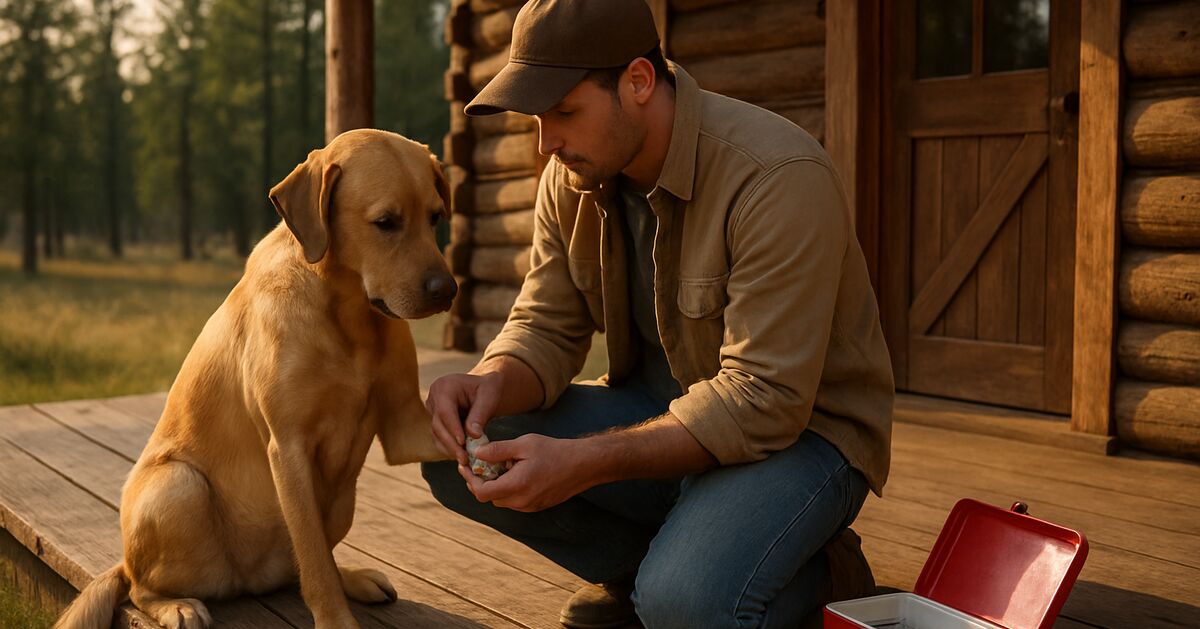
The nearest vet clinic being an hour or more away changes how you have to think about owning a dog or cat off-grid. It's not just an inconvenience, it's a real shift in responsibility. On-grid, a weird limp or a few days of vomiting means a same-day appointment. Off-grid, that same problem might mean a half-day round trip, a closed clinic, or a judgment call you have to make alone with no one to ask. None of that means you shouldn't have pets off-grid. It means you need to build a health plan before you need one, not after.
This isn't a substitute for veterinary training, and nothing here should talk you out of getting an animal to a real vet when one is genuinely needed. What it is, is a practical framework for prevention, home assessment, and knowing which problems can wait for the drive and which can't.
Start with distance, not desire
Before getting attached to a breed or a specific animal, work out the actual logistics of veterinary access from your property. Not the nearest clinic on a map, the nearest clinic that's actually open, actually takes your species, and actually has an emergency line.
A few things worth mapping out ahead of time:
The closest general practice vet, and their normal hours
The closest place that handles emergencies, which is often a different clinic entirely, sometimes a specialty hospital an hour past the first one
Whether any local vet does farm calls or house calls, which matters more than people expect once you're remote
Cell coverage along that drive route, since a call ahead to warn a clinic you're coming with a bleeding dog matters
If you haven't sorted out reliable communication from your property yet, it's worth reading through options for boosting a weak cell signal or getting a basic satellite setup sorted, because "I couldn't get a signal to call ahead" is a genuinely common off-grid vet story, and not a good one.
Some people find their honest answer is that the property they love is simply too far from care for the animals they want. That's a hard but useful thing to know before moving, not after.
Prevention does more work than any first-aid kit
The single best thing anyone can do for an off-grid pet's health is front-load the preventive care while it's still easy to get to a clinic. This is boring advice, and it's also the advice that actually keeps animals out of emergencies in the first place.
Vaccines. Rabies, distemper, parvo for dogs, and the core feline vaccines aren't optional extras when help is far away, they're the difference between "routine shot" and "three-day emergency with a low survival rate." Parvo especially is a brutal, expensive, often fatal illness in unvaccinated puppies, and it survives in soil for a long time. If a homestead has ever had unvaccinated dogs on it, treat that ground as contaminated for a new puppy.
Parasite prevention. Heartworm preventive, flea and tick control, and regular deworming matter more off-grid, not less, because rural properties tend to have more exposure to wildlife, standing water, and ticks. Heartworm disease is slow, expensive, and much harder to treat than to prevent. A monthly preventive is generally far cheaper than treating an established infection, which typically takes multiple visits, so ask a vet what a course would cost locally.
Spay and neuter. Beyond the population-control argument, an intact animal off-grid is a bigger liability. Intact males are widely reported to roam more, which in remote areas means more chances for fights and predator encounters. Intact females in heat are said to attract roaming male dogs, and some rural owners report coyotes showing interest as well. Pyometra, a uterine infection that can occur in unspayed females, is generally treated as a surgical emergency, which is a hard thing to face two hours from the nearest operating table.
Building an actual pet first-aid kit
A basic first-aid kit for people doesn't automatically cover animals, and if there's already a solid off-grid first-aid kit built for the household, it's worth adding an animal-specific supplement rather than assuming the same supplies will work.
Useful additions for a pet kit:
Vet wrap (self-adhesive bandage that doesn't stick to fur)
Blunt-tip scissors and a muzzle or soft strip of cloth (even gentle animals bite when in pain)
Saline solution for flushing wounds and eyes
Hydrogen peroxide for inducing vomiting, but only after calling a vet or poison control line first, since it's wrong for some poisonings
Digital thermometer (rectal, and yes, know the normal range for the species beforehand)
Tweezers for tick and splinter removal
A basic understanding of normal vital signs at rest, so an abnormal one is recognizable
It's also worth keeping the number for an animal poison control line somewhere it won't get lost, since off-grid properties tend to have more of the things that poison pets: rodenticide, antifreeze, certain plants, wild mushrooms, and livestock medications.
Knowing what can wait and what can't
The hardest skill to build without formal training is triage, deciding what's worth the drive right now versus what can be monitored overnight. There's no perfect list, but some patterns hold up reasonably well.
Go now, don't wait, for:
Any suspected poisoning
Bloating or distended abdomen in a large-breed dog (a classic emergency, can be fatal within hours)
Difficulty breathing
Seizures lasting more than a couple minutes, or repeated seizures
Heavy uncontrolled bleeding
Suspected broken bones or inability to bear weight after trauma
Straining to urinate with no output, especially in male cats, which vets commonly treat as an emergency because of possible urethral blockage
Heatstroke or severe hypothermia, both of which are covered in general terms in the site's guide to recognizing hypothermia and heat illness, and the same core principles of body temperature regulation apply to animals
Can usually be monitored for a day, with a plan to escalate:
Mild limping with no swelling, still bearing some weight
A single instance of vomiting or diarrhea in an otherwise normal, alert animal
Minor cuts that have stopped bleeding and aren't gaping
Reduced appetite for less than a day in an animal that's otherwise acting normal
The honest caveat here is that "monitor" doesn't mean "ignore." It means checking in every couple hours, watching for the situation to worsen, and having already decided at what point you load the animal in the truck.
Medication storage and expiration off-grid
A lot of off-grid households end up keeping more on-hand pet medication than a typical suburban household would, simply because running to a pharmacy or clinic isn't a quick errand. That's reasonable, but it comes with real responsibilities.
Store medications away from temperature extremes. A hot truck, an uninsulated shed, or a cabin that swings widely between day and night temperatures can degrade some medications faster than their listed expiration date would suggest. If the property's cabin has good thermal performance thanks to proper insulation, that stability helps medications too, not just people.
Never use leftover human medication on a pet without specific dosing guidance from a vet. Some common human medications, including certain pain relievers, are outright toxic to dogs and cats even at what seem like small doses.
Keep an actual written log of vaccine dates, parasite preventive doses, and any medications given. It sounds excessive until the day a vet on the phone asks when the last rabies booster was and nobody remembers.
The predator and injury overlap
Predator conflict is its own topic and gets covered elsewhere on the site in detail, in the piece on protecting livestock and pets from predators, but it's worth noting here specifically because predator encounters are one of the more common sources of the traumatic injuries that turn into a genuine off-grid vet emergency. A dog that comes home with puncture wounds from a coyote fight needs more than a bandage. Bite wounds push bacteria deep under the skin even when the surface hole is small, so they often need a vet to assess for antibiotics or a drain. Don't assume a wound that "isn't bleeding much anymore" is minor just because the surface looks okay.
Building a relationship with a vet before you need one
If at all possible, get an established, in-person relationship with a vet clinic before an emergency, not during one. A clinic that already has records and knows the animal has more to go on, so it may be easier to get phone guidance or an urgent slot than at a clinic meeting the pet mid-crisis.
Some rural vets are also more willing to talk through a situation by phone with an established client, offering guidance on whether something is truly urgent, which can be the difference between an unnecessary two-hour drive and a genuinely necessary one.
Budgeting for veterinary care as part of the homestead budget
Vet costs off-grid can add up, since farm calls or travel may be billed separately and emergency visits generally cost more than routine ones, so ask local clinics for their fee structure. It's worth building pet health into the same honest financial planning that goes into budgeting for off-grid life generally. A small emergency fund specifically earmarked for animal care, separate from the general homestead reserve, takes a lot of the panic out of a bad night.
Pet insurance is worth a genuine look for off-grid households, specifically because it can make the difference between "the vet said surgery is needed" and "the vet said surgery is needed and I can actually pay for it." Policies vary enormously in what they cover, so read the exclusions carefully, particularly around pre-existing conditions and whether emergency travel or specialist referral costs are included.
The bottom line
Owning pets off-grid is workable, and the daily attention that remoteness forces can catch changes that a quick annual checkup might miss. The real shift is a mental one: off-grid life means becoming the first responder for the animals in the household, with a real vet as backup rather than the default first call. That means investing more upfront in prevention, building a genuine first-aid kit, learning basic triage, and having an honest plan for the drive when it's actually needed.
None of this replaces professional veterinary care. It just means the gap between "something's wrong" and "getting real help" is shorter, safer, and a lot less frightening when it's been thought through ahead of time instead of during the emergency itself. If there are more questions about setting up a specific property for animal care, reaching out through the contact page is always an option, and browsing the broader gear guides can help round out a homestead's overall preparedness beyond just the animal side of things.
Claim audit: 16 consequential claims checked against the article's sources; unsupported wording revised where it could not be substantiated.
Claim-by-claim audit (16 checked)
“Parvo especially is a brutal, expensive, often fatal illness in unvaccinated puppies, and it survives in soil for a long time.” (cited → medlineplus.gov)
“Heartworm preventive, flea and tick control, and regular deworming matter more off-grid, not less, because rural properties tend to have more exposure to wildlife, standing water, …” (reasoning shown in the article)
“Heartworm disease is slow, expensive, and much harder to treat than to prevent.” (cited → fda.gov)
“A monthly preventive is generally far cheaper than treating an established infection, which typically takes multiple visits, so ask a vet what a course would cost locally.” (rewritten to what the article can stand behind)
“Intact males are widely reported to roam more, which in remote areas means more chances for fights and predator encounters.” (rewritten to what the article can stand behind)
“Intact females in heat are said to attract roaming male dogs, and some rural owners report coyotes showing interest as well.” (rewritten to what the article can stand behind)
“Pyometra, a uterine infection that can occur in unspayed females, is generally treated as a surgical emergency, which is a hard thing to face two hours from the nearest operating t…” (rewritten to what the article can stand behind)
“Hydrogen peroxide for inducing vomiting, but only after calling a vet or poison control line first, since it's wrong for some poisonings” (reasoning shown in the article)
“Bloating or distended abdomen in a large-breed dog (a classic emergency, can be fatal within hours)” (cited → medlineplus.gov)
“Straining to urinate with no output, especially in male cats, which vets commonly treat as an emergency because of possible urethral blockage” (rewritten to what the article can stand behind)
“A hot truck, an uninsulated shed, or a cabin that swings widely between day and night temperatures can degrade some medications faster than their listed expiration date would sugge…” (cited → fda.gov)
“Some common human medications, including certain pain relievers, are outright toxic to dogs and cats even at what seem like small doses.” (cited → fda.gov)
“Bite wounds push bacteria deep under the skin even when the surface hole is small, so they often need a vet to assess for antibiotics or a drain.” (rewritten to what the article can stand behind)
“A clinic that already has records and knows the animal has more to go on, so it may be easier to get phone guidance or an urgent slot than at a clinic meeting the pet mid-crisis.” (rewritten to what the article can stand behind)
“Vet costs off-grid can add up, since farm calls or travel may be billed separately and emergency visits generally cost more than routine ones, so ask local clinics for their fee st…” (rewritten to what the article can stand behind)
“Owning pets off-grid is workable, and the daily attention that remoteness forces can catch changes that a quick annual checkup might miss.” (rewritten to what the article can stand behind)
Before you go
One useful off-grid email a week.
Practical gear rundowns, honest how-tos, and plain-English guides from someone doing the homework in the open.
I am building a place for off-grid people to swap real answers: a forum by topic, classifieds for gear and services, and real estate for off-grid land and homes. It is new, so the early members shape what it becomes. A free account lets you post in all three.
No ER ten minutes away means you have to be your own triage nurse. Here's how to tell a bad bee sting from the real emergency, and what to actually stock.
In many off-grid disasters, the fire or flood itself isn't the decisive factor, it's the hour you waited too long to leave. Here's how to set real, numeric triggers before you need them.
Tax sale and sheriff's auction land looks like a bargain, but redemption periods, hidden liens, and unseen parcels turn a lot of cheap acreage into an expensive lesson. Here's how to vet a listing before you bid.