

Emergency Essentials
Cooking Essentials kit
A multi-can kit of basic cooking staples from Emergency Essentials, for households rounding out a long-term storage pantry; check the current spec sheet for contents.
Researched, not personally tested
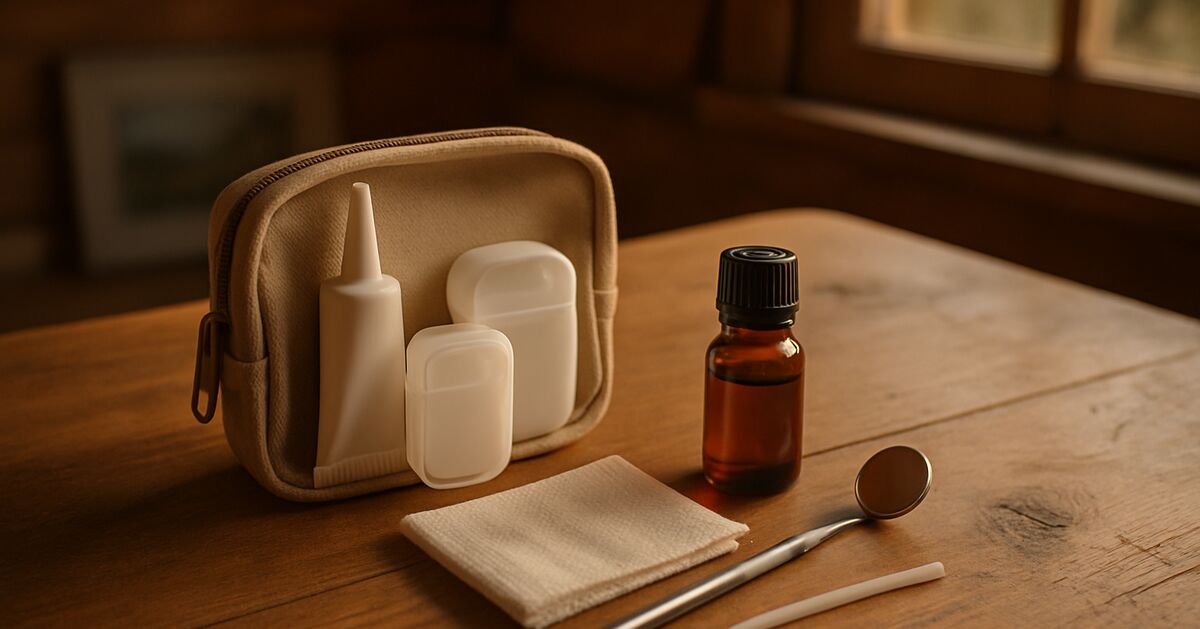
A toothache that starts on a Friday night, when the nearest dentist is an hour away and closed until Monday, has a way of reordering your priorities fast. Off-grid living changes a lot of things about health care, but nothing exposes the gap quite like a dental emergency. You can't drive to urgent care in fifteen minutes. You probably don't have a standing relationship with a dentist who'll see you same-day. And unlike a cut or a sprain, a bad tooth doesn't wait politely for a weekday appointment.
This isn't a post about avoiding the dentist. Regular checkups matter more, not less, when you live remotely, because small problems caught early stay small. This is about the gap between "it happened" and "I can get professional care," and what you can honestly do to survive that gap without making things worse.
Most first-aid thinking is built around wounds, fractures, and cardiac events, things covered well in a general off-grid first-aid kit. Teeth don't fit that model cleanly.
A dental infection doesn't stay local. The mouth has direct, short pathways into the jaw, sinuses, and neck tissue, and from there, into the bloodstream. An abscessed tooth that seems like "just pain" at first can progress to facial swelling and, less often, to a serious infection that threatens the airway or spreads through the body. This is one of the few off-grid medical situations where "give it a few more days and see" carries real, escalating risk rather than just discomfort.
The other complicating factor is that dental pain is loud. It's hard to sleep, hard to eat, hard to think clearly around a toothache, which pushes people toward whatever makes the pain stop right now, sometimes at the expense of what actually helps.
Knowing the difference between "manage until you can get seen" and "this needs a dentist or ER today" is the single most useful piece of judgment to build before you need it, which is the same philosophy behind building real medical skills off-grid generally: the skill isn't a trick, it's a decision tree.
A lost filling or small chip. If a filling falls out or a small piece of tooth chips away but there's no sharp pain to hot, cold, or biting, you likely have time. Temporary dental filling material (sold as a kit, often called Cavit or a similar zinc oxide eugenol paste) can be pressed into the hole to protect it from food and temperature until you're seen. This is cheap, shelf-stable, and worth having even if you never think you'll need it.
A cracked tooth with no visible pulp exposure. Rinse with warm salt water, avoid chewing on that side, and use over-the-counter pain control. Over-the-counter pain relievers such as ibuprofen or acetaminophen can help; ask your dentist or pharmacist which one, or what combination, is appropriate for you and whether you have any contraindications.
A knocked-out permanent tooth. This is a genuine race against time, but it's also one of the few dental emergencies where the right first move can save the tooth entirely. Pick it up by the crown (the chewing surface), never the root. Rinse it gently with milk or saline if it's dirty, don't scrub it. If you can, gently reinsert it into the socket and have the person bite down softly on gauze to hold it in place. If that's not possible, store it in milk (not water) or a tooth-preservation product if you have one. Time matters a great deal: the sooner the tooth is back in the socket or in milk and in front of a dentist, the better its chances, so treat it as an immediate trip. This is worth knowing before it happens, because nobody thinks clearly enough to remember "milk, not water" in the moment unless it's already stored somewhere in memory.
Loose tooth from trauma. Leave it alone as much as possible, avoid wiggling it, soft food only, and get it evaluated when you can. Leave splinting to a dentist, since improvised wire or floss can put uneven force on an already injured tooth.
Object wedged between teeth. Floss first, gently. Never use a metal pick that could gouge the gum, and never use a knife tip or anything rigid that can slip.
This is the one that trips people up. A dental abscess is a pocket of infection at the root of a tooth or in the gum, and it behaves differently than mechanical tooth damage.
Watch for:
An abscess is not something a filling kit or ibuprofen fixes. Pain relief buys time, it doesn't treat the infection. If you have antibiotics on hand as part of a broader medication stockpile and know from prior professional guidance what's appropriate to use in a genuine emergency, that's a bridge, not a cure. The tooth still needs to be drained, treated, or removed by a professional. Swelling that's spreading toward the eye, affecting breathing, or causing difficulty swallowing is not a "wait until Monday" situation under any circumstances. That's an ER trip, full stop, even if it means a long drive at 2 a.m.
The reason this deserves more weight than a sprained ankle is simple: infections in the head and neck can compromise an airway. That's rare, but it's the scenario that turns a dental problem into a life-threatening one, and it's exactly the kind of low-probability, high-consequence event that off-grid planning is supposed to account for.
A lot of off-grid first-aid kits stop at gauze and antiseptic and never touch teeth specifically. A dedicated dental kit is small, cheap, and sits in a drawer for years until the one week it matters. Worth including:
None of this replaces training. If you can find a wilderness first-aid or wilderness EMT course that includes a dental module, it's genuinely worth the day, in the same way it's worth learning to splint a fracture before you actually need to.
Here's the honest truth that doesn't get said enough: the best dental emergency plan is not having one. Off-grid life often means less frequent dental visits, and that gap tends to widen slowly and invisibly. A small cavity caught early is usually a simple filling, while the same tooth left unchecked for a long stretch can need more involved work.
If you're planning a move, or you've already made one, treat "find and use a dentist regularly" as seriously as you'd treat sourcing water or power. That means:
Diet matters more off-grid too, in ways people don't expect. Well water is not fluoridated the way many municipal supplies are, so have yours tested and ask your dentist what that means for you, and note that dried fruit and vinegar ferments bring sugar and acid contact with teeth. None of that means avoid those foods, it means rinse with water after eating them and don't treat brushing as optional just because you're tired from a long day of physical work.
Set your own rules ahead of time, while you're calm, not in the middle of a bad night. A reasonable line looks like this:
If you're genuinely unsure where a symptom falls, our FAQ page covers some of the broader emergency-planning basics, and it's always worth reviewing your general emergency plan and contacts, the kind covered in a phone tree and backup contact plan, so you're not figuring out who to call while also managing pain and a decision about driving at night.
Living remotely doesn't mean you're on your own for everything. It means the buffer between "notice a problem" and "get it fixed" is longer, and your job is to manage that buffer safely, not to become your own dentist. Stock the kit, know the red flags, and keep the checkups on the calendar. That combination handles almost everything that comes up, and for the rare case that doesn't, it at least buys you the time to get somewhere that can.
If you want more on building out the rest of your medical readiness, the blog's health and first aid archive has pieces on skill-building, medication storage, and emergency planning that pair well with this one, and our about page explains the thinking behind how we approach this whole site: practical first, hype never.
Affiliate disclosure: Some links on this site are affiliate links, including Amazon links: as an Amazon Associate I earn from qualifying purchases. Buying through one costs you nothing extra, and it never changes what I recommend.
Products appear here only when they match this article's subject. Selection is based on documented specs and owner reports, never on compensation; pages with no relevant gear carry none.
A multi-can kit of basic cooking staples from Emergency Essentials, for households rounding out a long-term storage pantry; check the current spec sheet for contents.
Researched, not personally tested
A getting-started page that walks new preppers through food, water, power and gear priorities, for readers who want a simple starting plan.
Why it's here: Here because the usual failure is buying things in the wrong order, not buying too little of them.
Researched, not personally tested
Practical gear rundowns, honest how-tos, and plain-English guides from someone doing the homework in the open.
I respect your inbox. See my privacy policy and affiliate disclosure.
I am building a place for off-grid people to swap real answers: a forum by topic, classifieds for gear and services, and real estate for off-grid land and homes. It is new, so the early members shape what it becomes. A free account lets you post in all three.
See my recommended off-grid gear

No ER ten minutes away means you have to be your own triage nurse. Here's how to tell a bad bee sting from the real emergency, and what to actually stock.
Read more about Allergic Reactions Off-Grid: Reading Anaphylaxis Risk Right →
In many off-grid disasters, the fire or flood itself isn't the decisive factor, it's the hour you waited too long to leave. Here's how to set real, numeric triggers before you need them.
Read more about Evacuation Triggers: Deciding to Leave Before the Road Does →
Tax sale and sheriff's auction land looks like a bargain, but redemption periods, hidden liens, and unseen parcels turn a lot of cheap acreage into an expensive lesson. Here's how to vet a listing before you bid.
Read more about Buying Land at Auction or Tax Sale: Off-Grid Traps to Avoid →One useful off-grid email a week: practical gear rundowns, honest how-tos, and plain-English guides. No spam, unsubscribe anytime.
I respect your inbox. See my privacy policy and affiliate disclosure.
New here, or not sure where this fits? Start here walks through the whole thing in order.